- English
- French
- German
- Portuguese
- Spanish
- Russian
- Japanese
- Korean
- Arabic
- Irish
- Greek
- Turkish
- Italian
- Danish
- Romanian
- Indonesian
- Czech
- Afrikaans
- Swedish
- Polish
- Basque
- Catalan
- Esperanto
- Hindi
- Lao
- Albanian
- Amharic
- Armenian
- Azerbaijani
- Belarusian
- Bengali
- Bosnian
- Bulgarian
- Cebuano
- Chichewa
- Corsican
- Croatian
- Dutch
- Estonian
- Filipino
- Finnish
- Frisian
- Galician
- Georgian
- Gujarati
- Haitian
- Hausa
- Hawaiian
- Hebrew
- Hmong
- Hungarian
- Icelandic
- Igbo
- Javanese
- Kannada
- Kazakh
- Khmer
- Kurdish
- Kyrgyz
- Latin
- Latvian
- Lithuanian
- Luxembou..
- Macedonian
- Malagasy
- Malay
- Malayalam
- Maltese
- Maori
- Marathi
- Mongolian
- Burmese
- Nepali
- Norwegian
- Pashto
- Persian
- Punjabi
- Serbian
- Sesotho
- Sinhala
- Slovak
- Slovenian
- Somali
- Samoan
- Scots Gaelic
- Shona
- Sindhi
- Sundanese
- Swahili
- Tajik
- Tamil
- Telugu
- Thai
- Ukrainian
- Urdu
- Uzbek
- Vietnamese
- Welsh
- Xhosa
- Yiddish
- Yoruba
- Zulu
Newborn baby chicks have fragile digestive systems and strict nutritional needs in their early growth stages. Poultry farmers and breeding practitioners always look for safe, nutritious and sustainable feed supplements to support chick healthy growth. Many beginners and commercial breeders wonder whether young chicks can consume insect based protein feed. Black soldier fly larvae (BSFL) have emerged as a popular green feed ingredient in modern poultry breeding. This article fully explains the safety, nutritional value, feeding methods and commercial procurement tips of this insect protein source for baby chicks. It provides practical and professional guidance for family breeding and large scale poultry farming.
Nutritional Advantages and Biological Characteristics of Black Soldier Fly Larvae
To judge whether an ingredient is suitable for baby chicks, it is essential to understand its biological traits and nutritional composition. BSFL have unique natural advantages that traditional plant feed lacks. These advantages perfectly match the rapid growth rules of young chicks in the early stage and make this insect material ideal for brooding feed formulas.
Basic Biological Traits of Black Soldier Fly Larvae
Black soldier fly larvae are the larval stage of Hermetia illucens insects. They are clean, pollution free organic insect resources with special growth characteristics. Unlike ordinary houseflies that carry a large number of bacteria and viruses, this insect bait does not spread diseases or pollute breeding environments. The larvae rely on organic waste for growth and realize resource recycling, which conforms to the sustainable development concept of modern breeding industry.
The growth cycle of BSFL is short and their reproduction speed is fast. Industrial standardized breeding can achieve stable annual output, which completely avoids the seasonal supply shortage of traditional natural insect feed. For poultry farms that need long term stable feeding supplements, this material serves as a reliable and continuous protein source for daily chick feeding.
Superior Nutritional Composition for Baby Chick Growth
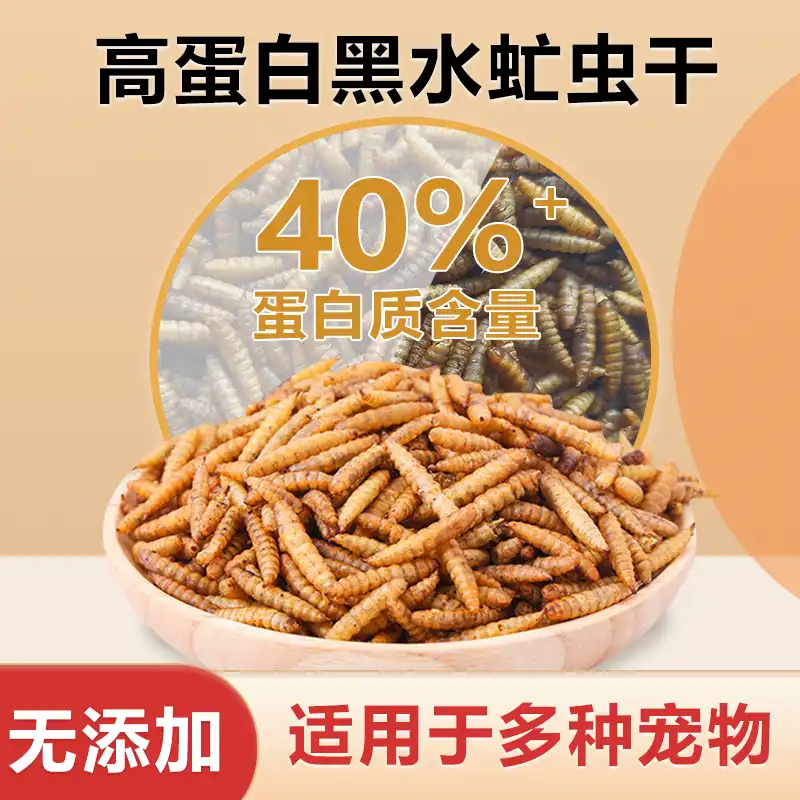
Black soldier fly larvae contain high density balanced nutrients required for baby chick growth. The dry weight of the larvae includes 40 to 45 percent crude protein and 23 to 36 percent crude fat. This high protein and high fat ratio provides sufficient energy for newborn chicks to adapt to external feeding and promote rapid body development, making it ideal early stage feed supplements.
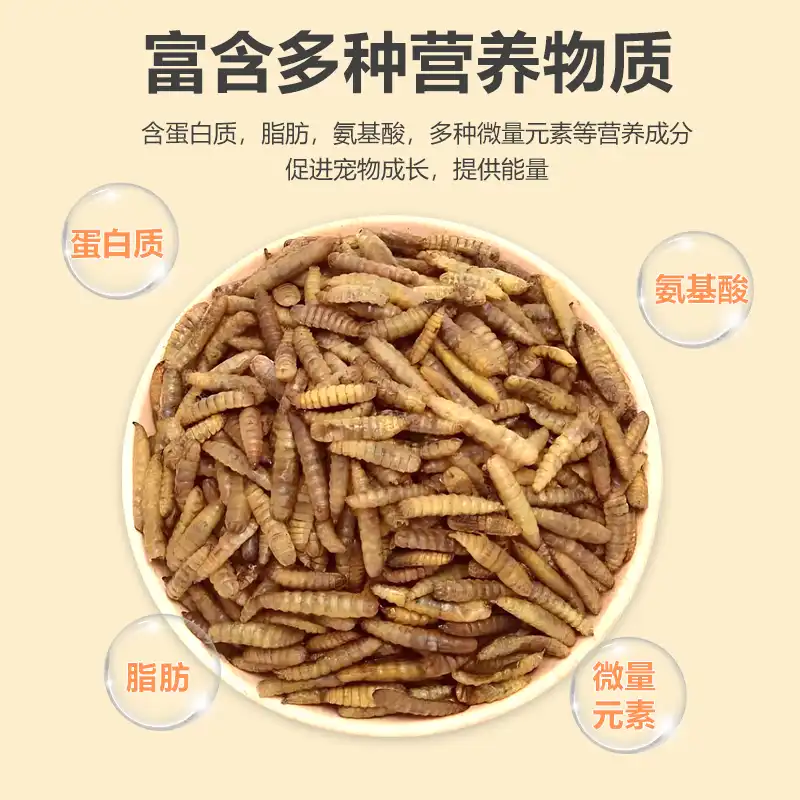
This insect ingredient is rich in various essential amino acids that baby chicks cannot synthesize independently. It contains high content of lysine, arginine and methionine. These amino acids play key roles in chick muscle growth, feather development and metabolic operation. Long term reasonable supplementation helps improve the growth uniformity of flocks and stabilizes early stage growth performance.
In terms of mineral elements, BSFL have a scientific calcium phosphorus ratio of 2.6 to 1. The calcium content reaches about 3 percent, which fully meets the bone development needs of young chicks. It effectively reduces the probability of leg weakness, skeletal dysplasia and other common problems in chick breeding, forming a unique advantage over ordinary feed materials.
Besides conventional nutrients, this insect material is rich in lauric acid. This unique medium chain fatty acid has natural antibacterial properties. It can inhibit harmful bacteria in the chick intestine, protect intestinal health, and enhance the basic immunity of young chicks in the vulnerable growth stage. This immune boosting feature makes BSFL highly suitable for fragile newborn chicks.
Environmental Protection and Industrial Value of Insect Protein Feed
The promotion of black soldier fly larvae in poultry breeding also has outstanding environmental protection value. Traditional poultry protein sources such as fish meal and soybean meal are restricted by resource shortages and high carbon emission problems. The industrial breeding of this insect protein consumes fewer resources and produces lower carbon emissions, making it a green alternative feed material.
This insect protein source can convert agricultural organic waste into high quality protein feed. It realizes the cyclic utilization of resources and reduces breeding costs. For modern breeding enterprises that pay attention to ESG environmental assessment, the application of BSFL helps optimize green breeding systems and enhance market competitiveness in the sustainable breeding industry.
Safety Verification and Breeding Benefits of Feeding Baby Chicks Black Soldier Fly Larvae
Nutritional superiority does not mean complete feeding safety. The tolerance of fragile young chicks to new feed ingredients is low. A large number of scientific studies and breeding practices have verified the safety of BSFL for baby chicks, as well as its practical breeding benefits in actual brooding production.
Scientific Safety Verification for Young Chicks
Black soldier fly larvae are completely safe for baby chicks after standardized processing and reasonable feeding. A large number of digestibility experiments show that the protein and fat components of the larvae can be easily absorbed by chick intestines. The chitin contained in the larval shell only accounts for 6 to 7 percent of dry weight. It will not cause intestinal blockage or indigestion in young chicks.
Chitin in these larvae also has positive physiological functions. It can help chicks clean intestinal waste and optimize intestinal microecology. Controlled feeding experiments show that replacing 33 percent of fish meal with BSFL will not affect chick organ development, blood indicators and physical health. It is a safe and reliable alternative protein ingredient for chick starter feed.
Standardized commercial BSFL products adopt professional sterilization technology. They do not carry harmful pathogens, heavy metals or mold toxins. There is no risk of disease transmission during feeding. It is safer than wild insects that chicks may forage naturally, further confirming its stable safety for poultry breeding.
Core Breeding Benefits for Baby Chicks
Feeding baby chicks with black soldier fly larvae can significantly improve flock immunity. The antimicrobial peptides and lauric acid in the larvae can inhibit the colonization of harmful bacteria such as Salmonella. It effectively reduces the incidence of intestinal diseases and mortality of young chicks during the brooding period.
This insect protein ingredient can optimize chick feed conversion efficiency. Balanced amino acids and easy to absorb nutrients make chicks gain weight evenly and healthily. It avoids slow growth and thin physique caused by single nutrition of traditional starter feed. Farmers can rely on BSFL to improve the overall growth quality of chick flocks.
Long term feeding of this insect feed can enhance the flock stress resistance. Young chicks are prone to stress response caused by temperature change and environmental conversion. The rich trace nutrients in BSFL can improve chick physical fitness and reduce stress induced eating cessation and slow growth.
Reasonable Risk Avoidance and Feeding Taboos
Although black soldier fly larvae are safe, improper feeding will still cause problems. Excessive single feeding will lead to nutritional imbalance. It may cause chick diarrhea and indigestion. Breeders must take this insect product as a feed supplement instead of a single staple food to ensure healthy chick growth.
Newly hatched chicks within 3 days have extremely weak digestive capacity. It is necessary to strictly control the feeding amount of BSFL. Gradual addition is required to help the intestinal tract adapt. Unsterilized raw larvae are forbidden to feed young chicks to avoid bacterial infection and maximize feeding safety.
Standard Feeding Methods and Application Scenarios
To maximize the value of BSFL, breeders need to master scientific feeding standards, product forms and feeding transition skills. Standardized operation can ensure chick health and stable breeding effects and fully release the nutritional advantages of this insect feed material.
Scientific Feeding Dosage and Stage Standards
There are clear dosage standards for feeding baby chicks with BSFL. For chicks aged 3 to 7 days, 3 to 5 larvae per bird per day is the optimal dosage. The small amount of supplement can provide high quality protein without increasing digestive burden, which suits the delicate physical condition of newborn chicks.
For chicks aged 1 to 3 weeks, the dosage can be increased to 8 to 10 larvae per bird per day. In commercial feed formula configuration, the proportion of BSFL is controlled at 5 to 15 percent of the total feed. This ratio can balance nutrition and ensure feed utilization efficiency.
All dosage adjustments need to follow the gradual increase principle. Observe chick feeding status, fecal condition and mental state in real time. Timely adjust the dosage according to the actual growth situation of the flock to make full use of the nutritional value of BSFL.
Applicable Product Forms and Feeding Advantages
Black soldier fly larvae have three mainstream feeding forms: live larvae, dried larvae and larval powder. Different forms adapt to different breeding scenarios. Live larvae can stimulate chick foraging instinct, improve flock activity and reduce stress behaviors, which is unique to fresh insect feed.
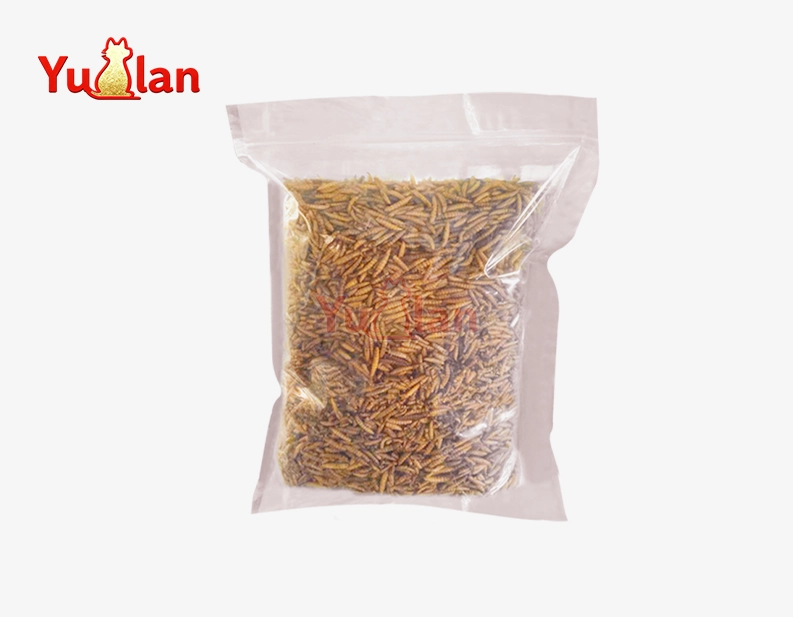
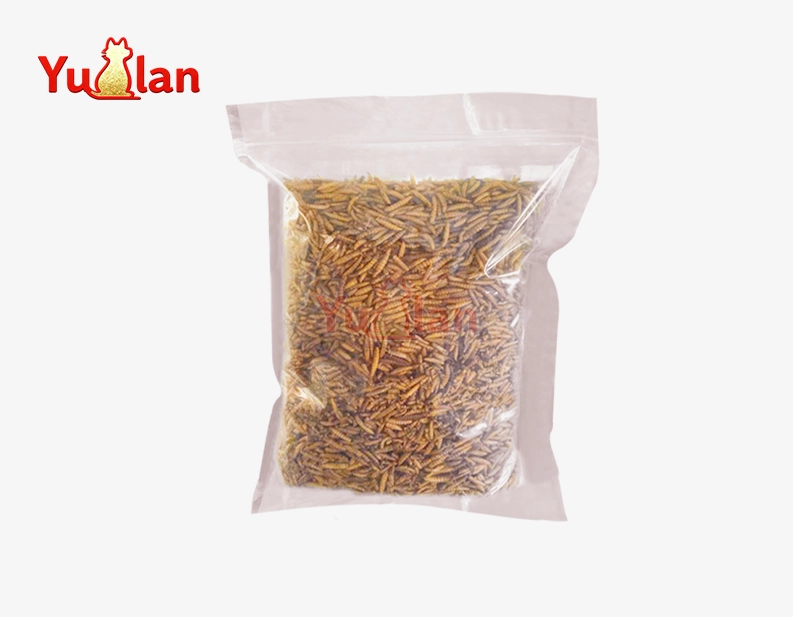
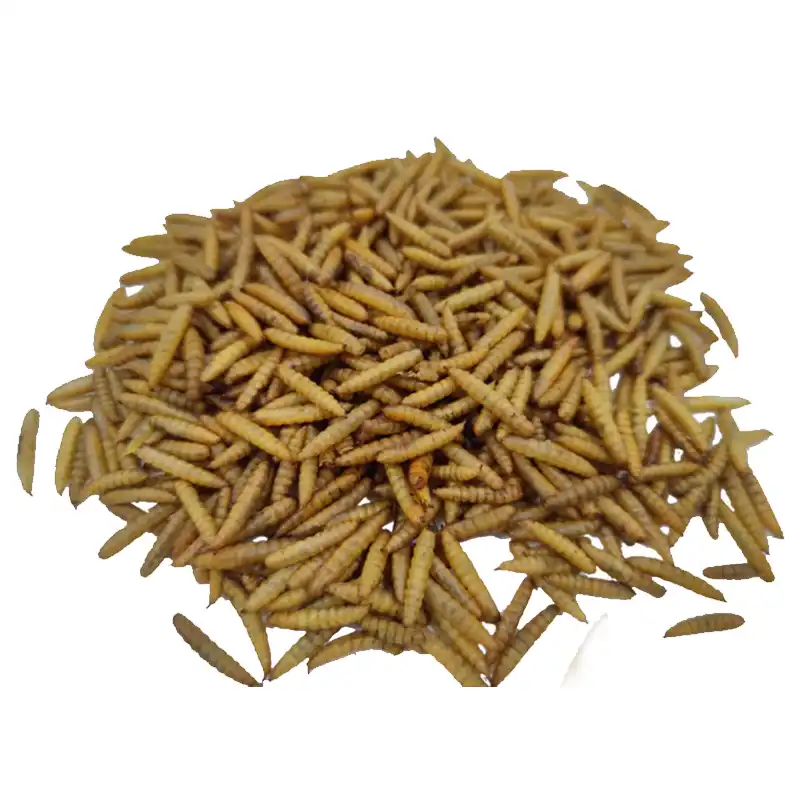
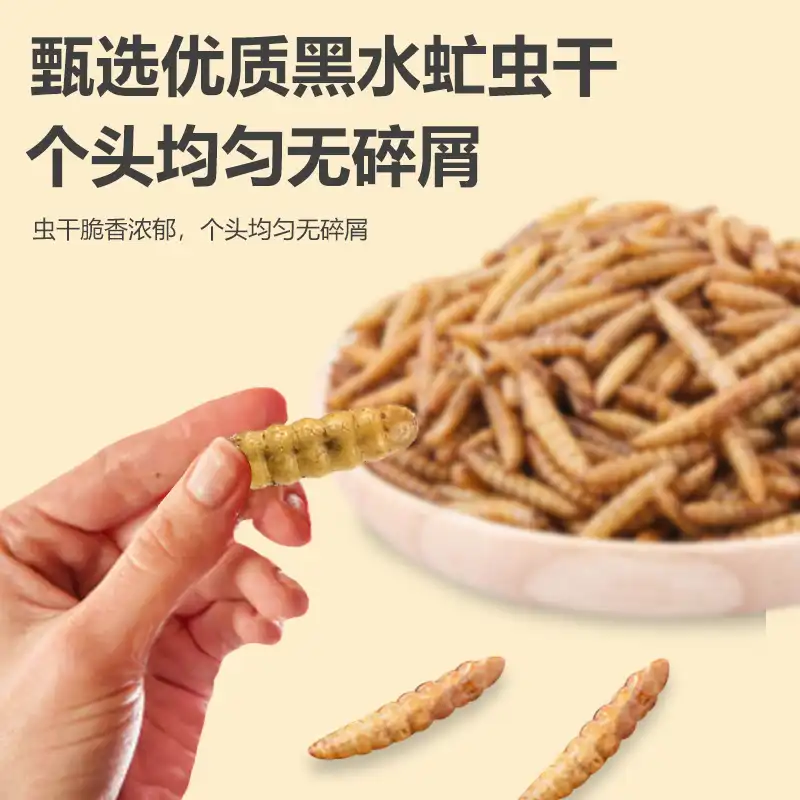
Dried BSFL have a long shelf life and are easy to store and transport. They are very suitable for large scale commercial farms and long term reserve use. After simple rehydration, dried larvae can restore good palatability and retain complete nutritional value.
Larval powder is more suitable for standardized feed mixing. It can be evenly blended into chick starter feed to ensure uniform nutritional intake of each chick. It avoids uneven feeding of strong and weak flocks and ensures balanced growth of the whole flock, expanding the application scope of BSFL in commercial breeding.
Feed Transition and Practical Operation Skills
When adding BSFL to chick daily feed, a 7 to 10 day transition period is required. Mix a small amount of larval products in the original starter feed at first. Gradually increase the proportion until reaching the standard feeding ratio, so that chicks can fully adapt to the new feed ingredient.
For individual chicks with poor appetite, place a small amount of larvae on the surface of conventional feed to induce feeding. This method can effectively improve chick feed intake and shorten the adaptation cycle to BSFL, ensuring smooth feeding transition.
Commercial Procurement Guide and Market Value Analysis
For large scale breeding farms and feed procurement merchants, selecting high quality BSFL products and stable suppliers is the key to ensure breeding benefits. Professional procurement standards can effectively control costs and guarantee product quality in long term batch purchasing.
Supplier Selection and Quality Inspection Standards
When purchasing BSFL in bulk, buyers must select formal manufacturers with complete production qualifications. Reliable suppliers have professional quality inspection laboratories to test protein content, microbial indicators and moisture of each batch of products, ensuring stable product quality.
Priority should be given to manufacturers with standardized sterilization and drying processes. Qualified BSFL products have no additives, no peculiar smell and uniform specifications. They meet national and international poultry feed safety standards for large scale breeding applications.
Bulk Procurement Strategy and Supply Chain Management
Long term bulk procurement of BSFL can effectively reduce unit cost. Signing annual cooperation contracts can lock in stable prices and avoid market price fluctuations. Diversified supplier reserves can prevent supply interruption in peak breeding seasons and ensure continuous supply.
Classified storage management is required after bulk procurement. Dried larval products are stored in sealed, cool and dry environments. Live larvae need constant temperature and humidity maintenance to ensure product activity and quality stability, and retain the feeding value of BSFL.
Conclusion
Baby chicks can safely eat Black soldier fly larvae as a high quality nutritional supplement in their early growth stage. This insect protein ingredient has high protein content, balanced amino acids and unique antibacterial and immune enhancement effects. It can effectively promote chick bone development, improve feed conversion efficiency and reduce flock disease rate. Compared with traditional plant feed and other protein sources, BSFL have the advantages of safety, sustainability and high cost performance. Breeders only need to follow staged feeding standards and gradual transition methods to avoid feeding risks. For family small scale breeding, it is an efficient and safe growth auxiliary feed. For commercial large scale farms and feed processing enterprises, BSFL are a green and profitable new feed ingredient that conforms to the development trend of modern poultry breeding. Standardized feeding and scientific procurement can maximize its breeding and economic value.
FAQs
What age can baby chicks start eating BSFL?
Baby chicks can start eating trace amounts of BSFL at 3 days old. Chicks within one week old have weak digestive ability and only need a small amount of supplementary feeding. After the second week of growth, chicks can officially incorporate the insect larvae into daily conventional feed. The whole feeding process must follow the gradual adaptation principle to avoid intestinal discomfort.
Can BSFL completely replace commercial chick starter feed?
BSFL can only be used as a high protein feed supplement, not a complete replacement for commercial chick starter feed. Although the larvae are rich in protein and minerals, they lack some comprehensive vitamins and carbohydrates required for chick full growth. The optimal adding proportion in daily feed is 5 to 15 percent to ensure balanced nutrition.
How to store bulk BSFL to maintain freshness?
Dried BSFL need to be stored in sealed, cool and dry environments away from direct sunlight. Reasonable ventilation can prevent mold and deterioration. Live larvae need constant temperature maintenance to maintain vitality. Regular stock inspection and rotation can ensure the freshness and feeding effect of bulk products.
Do BSFL have disease transmission risks for baby chicks?
Standardized commercial BSFL have no disease transmission risks. Professional physical sterilization technology removes harmful bacteria and microorganisms. Different from wild insects, artificially bred larvae have clean growth environments and stable quality, which will not cause chick infection and disease.
What are the core advantages of BSFL compared with traditional feed?
BSFL have higher protein digestibility than traditional soybean meal and other plant feeds. They contain unique lauric acid antibacterial ingredients to protect chick intestinal health. Meanwhile, the larvae have stable industrial supply, no seasonal restrictions and lower comprehensive breeding costs, with outstanding green and sustainable advantages.
Partner with Yunlan for Premium Black Soldier Fly Larvae Feed Solutions
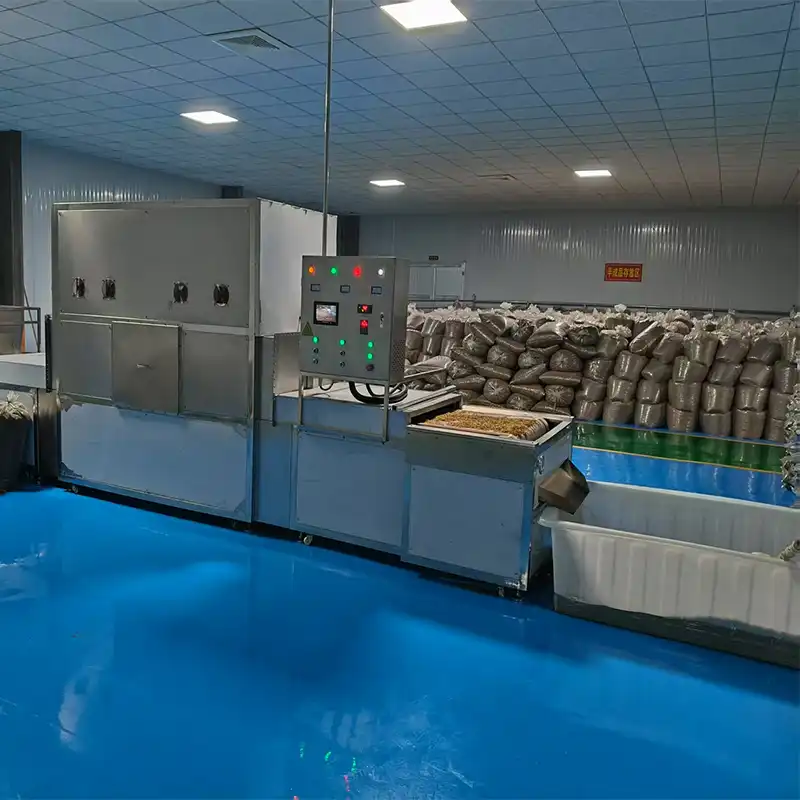
Yunlan is a professional global supplier focusing on insect protein feed research, development and production, with years of mature industrial supply chain experience in the poultry breeding industry. We specialize in providing high quality black soldier fly larvae products for poultry farms, feed processing factories and bulk procurement merchants worldwide. All our larvae adopt strict physical sterilization and microwave drying technology, with zero chemical additives and zero preservatives. The products have stable nutritional indicators, high digestibility and safe feeding performance. Our company has complete production qualifications and professional quality testing systems to support batch customized processing, private label services and bulk wholesale. We have a perfect global logistics system to realize stable supply and fast delivery for customers in multiple regions. Whether you need product sample testing, bulk preferential quotations or professional feed formula matching solutions, our professional team can provide one stop full cycle service. Contact our business team via minghuixu6717@gmail.com to obtain exclusive cooperation policies and technical guidance, and create efficient and green breeding benefits for your poultry breeding business.
References
-
Wang, Y. S., & Shelomi, M. (2017). Review of black soldier fly (Hermetia illucens) as animal feed and human food. Foods, 6(10), 91.
-
Makkar, H. P., Tran, G., Heuzé, V., & Ankers, P. (2014). State-of-the-art on use of insects as animal feed. Animal Feed Science and Technology, 197, 1-33.
-
Oonincx, D. G., Van Broekhoven, S., Van Huis, A., & van Loon, J. J. (2015). Feed conversion, survival and development, and composition of four insect species on diets composed of food by-products. PloS One, 10(12), e0144601.
-
Cullere, M., Tasoniero, G., Giaccone, V., Miotti-Scapin, R., Claeys, E., De Smet, S., & Dalle Zotte, A. (2016). Black soldier fly as dietary protein source for broiler quails: apparent digestibility, excreta microbial load, feed choice, performance, carcass and meat traits. Animal, 10(12), 1923-1930.
-
Spranghers, T., Ottoboni, M., Klootwijk, C., Ovyn, A., Deboosere, S., De Meulenaer, B., & De Smet, S. (2017). Nutritional composition of black soldier fly (Hermetia illucens) prepupae reared on different organic waste substrates. Journal of the Science of Food and Agriculture, 97(8), 2594-2600.
-
Schiavone, A., Dabbou, S., De Marco, M., Cullere, M., Biasato, I., Biasibetti, E., & Gasco, L. (2018). Black soldier fly larva fat inclusion in finisher broiler chicken diet as an alternative fat source. Animal, 12(10), 2032-2039.