- English
- French
- German
- Portuguese
- Spanish
- Russian
- Japanese
- Korean
- Arabic
- Irish
- Greek
- Turkish
- Italian
- Danish
- Romanian
- Indonesian
- Czech
- Afrikaans
- Swedish
- Polish
- Basque
- Catalan
- Esperanto
- Hindi
- Lao
- Albanian
- Amharic
- Armenian
- Azerbaijani
- Belarusian
- Bengali
- Bosnian
- Bulgarian
- Cebuano
- Chichewa
- Corsican
- Croatian
- Dutch
- Estonian
- Filipino
- Finnish
- Frisian
- Galician
- Georgian
- Gujarati
- Haitian
- Hausa
- Hawaiian
- Hebrew
- Hmong
- Hungarian
- Icelandic
- Igbo
- Javanese
- Kannada
- Kazakh
- Khmer
- Kurdish
- Kyrgyz
- Latin
- Latvian
- Lithuanian
- Luxembou..
- Macedonian
- Malagasy
- Malay
- Malayalam
- Maltese
- Maori
- Marathi
- Mongolian
- Burmese
- Nepali
- Norwegian
- Pashto
- Persian
- Punjabi
- Serbian
- Sesotho
- Sinhala
- Slovak
- Slovenian
- Somali
- Samoan
- Scots Gaelic
- Shona
- Sindhi
- Sundanese
- Swahili
- Tajik
- Tamil
- Telugu
- Thai
- Ukrainian
- Urdu
- Uzbek
- Vietnamese
- Welsh
- Xhosa
- Yiddish
- Yoruba
- Zulu
Many cat owners are confused about whether cat biscuits are safe for feline consumption. Ordinary human biscuits and pet snacks formulated for other animals are not suitable for cats. Only professionally developed feline snack products fit cats’ unique physical and nutritional needs. This comprehensive guide clarifies the safety, nutritional value, scientific feeding methods and purchasing norms of feline snacks, solving common doubts for cat owners and industry procurement practitioners.

Safety, Nutrition & Age-Specific Design
To judge whether biscuits are suitable for cats, it is necessary to first distinguish professional feline snacks from ordinary snacks on the market. Many people mistakenly believe that universal pet snacks can be fed to cats, but there are huge differences in nutritional ratios and safety standards behind different pet snacks. Qualified feline snacks are tailored according to feline metabolic characteristics and physical needs, with targeted ingredient ratios and functional designs.
Core Differences Between Feline Special Snacks and Ordinary Biscuits
Human biscuits contain high sugar, excessive salt and refined grain fillers. These ingredients will increase the burden on cats’ kidneys and digestive systems, and long-term feeding will easily cause obesity, hair loss and gastrointestinal discomfort. Dog snacks also cannot replace cat-specific products, because they lack key nutrients required by cats and have unbalanced mineral ratios.
Professional cat biscuits adhere to strict pet food safety standards. They take high-quality animal protein such as salmon and cod as the main raw materials, abandoning low-value grain fillers. The rich Omega-3 fatty acids in fish protein can effectively improve cat fur quality and relieve dry and sensitive skin. Meanwhile, the products add moderate and balanced taurine, an essential nutrient that cats cannot synthesize independently, to protect their vision and myocardial health.

In addition, natural mint and plant herbs are added to high-quality formulas. These natural ingredients can freshen cats’ breath and assist gastrointestinal peristalsis, effectively improving bad breath and mild indigestion problems in domestic cats. Different from the single taste of ordinary biscuits, professional feline snacks focus on both taste and practical nutritional value.
Dental Care Function of Professional Feline Snack Formulas
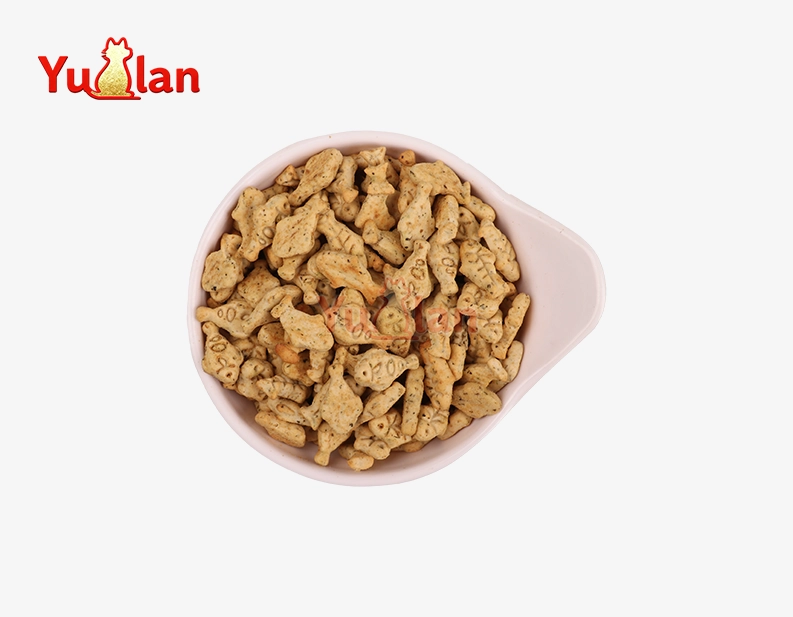
Most high-quality cat biscuits adopt innovative fish-shaped appearance designs. This design is not only for aesthetic purposes, but also has practical dental care functions. The uneven three-dimensional surface can produce moderate friction when cats chew. It mechanically cleans dental plaque and residual food stains on the tooth surface, reducing the formation of tartar.
For indoor cats with insufficient daily exercise, chewing dry snacks properly can also relieve emotional anxiety and enrich daily activities. Compared with soft wet food, dry snack textures are more conducive to grinding teeth and protecting gum health, forming a simple and effective daily oral care mechanism for cats.
Age-Matched Nutritional Formula Design
Cats in different growth stages have completely different nutritional needs, so professional cat biscuits are divided into kitten, adult cat and senior cat formulas. The kitten formula adopts mini and easy-to-bite specifications. It increases protein and trace element content to meet the rapid growth and development of bones and muscles of young cats.
The adult cat formula focuses on balanced nutrition and calorie control. It properly reduces fat content to avoid excessive calorie intake, which helps prevent obesity in sedentary indoor cats. It maintains basic dental care and daily nutritional supplementation functions to adapt to the stable metabolic level of adult cats.
The senior cat formula is more inclined to digestive health and joint protection. The formula uses high-digestibility raw materials to adapt to the weakened gastrointestinal function of elderly cats. It adds joint-protecting nutrients to relieve joint aging and discomfort, and the texture is moderately softened to facilitate chewing for elderly cats with weakened teeth.
After understanding the professional safety standards and functional characteristics of feline snacks, standardized feeding methods become the key to exerting snack value. Scientific portion control and feeding habits can avoid health risks and maximize the nutritional and care effects of professional formulas.
Scientific Feeding Rules & Product Selection Guide
Many cat owners have unreasonable feeding habits, such as excessive feeding or using snacks as staple food, which will affect cats’ daily nutritional balance. This chapter combines veterinary professional suggestions to sort out standardized feeding specifications, and provides targeted selection strategies for common problems such as cat food sensitivity and allergy, helping owners match suitable feline snacks accurately.
Veterinarian-Approved Feeding Portion and Frequency Standards
Professional veterinary institutions have clear norms for pet snack feeding. Qualified cat biscuits should not exceed 10% of the cat’s daily total calorie intake. This core standard ensures that snacks will not occupy the intake ratio of staple food, so as to avoid the problem of single nutrition or partial eclipse in cats.
For healthy adult cats, two to three small servings of snacks per day are the most appropriate. It is recommended to distribute the feeding amount in different time periods, which can increase the interaction between owners and cats while supplementing nutrition. For kittens with faster metabolism and weaker gastrointestinal tolerance, the daily feeding amount should be divided into 3 to 4 small times, with a single small dosage to avoid increasing gastrointestinal burden.
The specific feeding amount also needs to be adjusted according to the cat’s body size and activity level. Outdoor active cats with large exercise volume can appropriately increase the feeding amount. Indoor sedentary cats have low energy consumption, so strict portion control is required to prevent fat accumulation and fatty liver disease.
Selection Differences Between Grain-Free and Traditional Formulas
In the current pet food market, professional cat biscuits are mainly divided into grain-free formulas and traditional grain-containing formulas, which are suitable for different cat physical conditions. The grain-free formula uses peas, sweet potatoes and other ingredients to replace wheat, oats and other grains. It avoids grain allergens and is the best choice for cats with grain allergies, soft stools and sensitive intestines.
The traditional grain-containing formula uses mild rice and oats as carbohydrate sources. The ingredients are natural and easy to digest. The cost performance is higher, which is very suitable for healthy cats without food sensitivity. There is no absolute distinction between good and bad between the two formulas. The core of selection is to match the individual physical condition of the cat.
In daily selection, owners do not need to blindly pursue grain-free products. Healthy adult cats can stably eat traditional grain-containing formulas for a long time. Only cats with confirmed allergies and sensitive constitutions need to choose targeted grain-free and single-protein formulas.

Special Feeding Tips for Sensitive-Stomach Cats
Cats with fragile gastrointestinal tracts and food allergies need ultra-low-allergen snack products, and premium cat biscuits are the most ideal option. It is recommended to choose limited-ingredient products from formal manufacturers. This kind of product has a single and transparent ingredient list, no complex mixed raw materials, and can effectively reduce the risk of allergic reactions.
It is necessary to avoid products added with artificial pigments, synthetic preservatives and excessive flavoring agents. These chemical additives are important incentives for vomiting, diarrhea and skin allergies in sensitive cats. At the same time, although homemade snacks are controllable in raw materials, they lack professional nutritional ratio calibration and safety testing, and cannot replace commercially qualified products.
On the basis of mastering scientific feeding and selection methods, pet industry practitioners such as retailers and distributors need more professional procurement strategies. Stable supply, controllable cost and guaranteed quality are the core demands of B-end customers, and the next chapter will focus on professional procurement solutions.
B2B Procurement Strategies & Trusted Manufacturer Cooperation
For pet stores, distributors and veterinary clinics, the selection and procurement of feline snacks need to balance quality, cost and supply stability. Excellent procurement decisions can improve product competitiveness and customer satisfaction. This chapter sorts out practical bulk procurement cost control methods, supplier risk assessment standards, and recommends reliable high-quality manufacturers for long-term cooperative docking.
Cost-Effective Bulk Procurement and Order Management
Bulk wholesale procurement is the most effective way to reduce the unit cost of high-quality cat biscuits. Compared with retail small-batch purchases, standardized bulk orders can save 15% to 30% of comprehensive costs. The specific discount range can be further negotiated according to the annual order volume and long-term cooperation contracts with suppliers.

For stores with stable customer flow and fixed sales volume, subscription cycle purchasing is more suitable. This model can lock in stable market prices and fixed delivery cycles, reduce repeated order operation costs, and avoid inventory shortage or overstock problems. In addition, combined shipping with other pet supplies can effectively reduce overall logistics costs.
During the procurement process, buyers can negotiate preferential policies such as seasonal promotions, new customer discounts and payment term optimization with manufacturers. Multi-dimensional cost control can maximize the profit margin of terminal sales on the premise of ensuring product quality.
Supplier Qualification Audit and Risk Control Standards
Product qualification is the core basis for B-end procurement. Reliable suppliers that produce premium cat biscuits must have international authoritative certification qualifications, including AAFCO pet food nutrition compliance certification and FDA factory registration qualification, to ensure that the products meet global pet food safety standards.
Formal manufacturers will establish a complete quality management system, covering raw material screening, production line sanitation management, batch sampling testing and finished product storage management. Complete supply chain records and test reports can effectively avoid unqualified products from entering the terminal market.
In terms of risk control, professional procurement teams will reserve 2 to 3 alternative qualified suppliers. Diversified supplier resources can avoid supply interruption and quality fluctuations caused by single manufacturer’s production failures, and ensure the stability of terminal sales.
FAQs
Q1: Can professional feline snacks replace regular cat staple food?
A1: No. All feline snacks are only supplementary nutritional products, not complete staple food. They cannot cover all the nutritional elements required for cats’ long-term growth and survival. According to veterinary standards, snack intake must be controlled within 10% of daily calories, and 90% of nutritional supply needs to rely on balanced professional staple food.
Q2: How to choose safe snacks for cats with food sensitivities?
A2: It is recommended to choose low-allergy, limited-ingredient products from formal and qualified manufacturers. Prioritize grain-free and single-protein formulas without artificial additives. For cats with severe food allergies, it is necessary to consult a professional pet doctor before trying new snack products to avoid allergic risks.
Q3: What is the correct way to switch to new snack products?
A3: Cats have sensitive gastrointestinal tracts and are sensitive to food changes. It is necessary to complete the food transition slowly within 7 to 10 days. Mix a small amount of new snacks with the original products every day, gradually increase the proportion of new products, and observe the cat’s appetite and defecation status to avoid gastrointestinal discomfort.
Q4: Do cats in different growth stages need different snack formulas?
A4: Yes. Kittens need high-protein and easy-to-chew snack formulas to support growth and development. Adult cats are suitable for balanced nutritional formulas focusing on dental care and weight management. Senior cats need low-fat, easy-to-digest formulas with joint protection ingredients to adapt to aging physical functions.
Conclusion
The answer to “Can cats eat biscuits?” is clear: cats cannot eat human or dog biscuits, but can safely eat professionally developed feline-specific snack products. High-quality feline snacks supplement missing nutrients, assist in dental care, and improve the interactive experience between owners and pets under scientific feeding standards.
For individual cat owners, standardized feeding and targeted product selection are the keys to safe use. For B-end procurement practitioners, it is necessary to balance product quality, cost control and supply stability, and choose formal and powerful manufacturers for long-term cooperation. High-quality feline snacks can effectively enrich terminal product lines and improve market competitiveness.

Professional Manufacturer Cooperation & Brand Cooperation Invitation
To obtain long-term stable high-quality cat biscuits and professional B-end supporting services, choosing a powerful professional manufacturer is the key. Yunlan is a senior pet snack manufacturer with 20 years of professional production experience, focusing on the R&D and production of high-quality feline nutritional snacks.
The company’s modern production base in Suqian City adopts advanced protein processing technology and strictly implements international pet food production standards. It has 97 authorized production patents and nearly 100 million yuan of long-term R&D investment, continuously iterating product formulas to adapt to market demand changes.
The core products cover functional dental care formulas, natural fresh breath formulas and high-protein nutritional formulas. The products use natural mint, high-quality salmon and cod raw materials, which are safe, healthy and rich in nutrition, and are deeply recognized by terminal consumers.
Yunlan provides exclusive customized services for B-end partners, including formula customization, packaging optimization, regional exclusive agency rights and free sample trial services. It supports tailored pricing plans for retailers, distributors and veterinary institutions.
If you want to cooperate with a high-quality and reliable feline snack manufacturer to expand your pet product business, please contact our professional procurement team via email: minghuixu6717@gmail.com. We will provide you with detailed product catalogs, qualification documents and exclusive B2B cooperation solutions.
References
- Association of American Feed Control Officials. Pet Food Labeling Guide. AAFCO Official Publication, 2024.
- Journal of Feline Medicine and Surgery. Nutritional Requirements of Cats: Updated Guidelines for Commercial Pet Food. Volume 26, 2024.
- American Veterinary Medical Association. Pet Food Safety and Quality Standards. AVMA Guidelines for Veterinary Practitioners, 2024.
- Pet Food Industry Magazine. Global Market Trends in Feline Treats and Supplements. Annual Industry Report, 2024.
- International Association of Animal Nutrition. Comparative Analysis of Cat vs Dog Nutritional Requirements. Research Bulletin Volume 18, 2024.
- Veterinary Clinics of North America: Small Animal Practice. Dental Health Benefits of Functional Pet Treats. Volume 54, Issue 3, 2024.