- English
- French
- German
- Portuguese
- Spanish
- Russian
- Japanese
- Korean
- Arabic
- Irish
- Greek
- Turkish
- Italian
- Danish
- Romanian
- Indonesian
- Czech
- Afrikaans
- Swedish
- Polish
- Basque
- Catalan
- Esperanto
- Hindi
- Lao
- Albanian
- Amharic
- Armenian
- Azerbaijani
- Belarusian
- Bengali
- Bosnian
- Bulgarian
- Cebuano
- Chichewa
- Corsican
- Croatian
- Dutch
- Estonian
- Filipino
- Finnish
- Frisian
- Galician
- Georgian
- Gujarati
- Haitian
- Hausa
- Hawaiian
- Hebrew
- Hmong
- Hungarian
- Icelandic
- Igbo
- Javanese
- Kannada
- Kazakh
- Khmer
- Kurdish
- Kyrgyz
- Latin
- Latvian
- Lithuanian
- Luxembou..
- Macedonian
- Malagasy
- Malay
- Malayalam
- Maltese
- Maori
- Marathi
- Mongolian
- Burmese
- Nepali
- Norwegian
- Pashto
- Persian
- Punjabi
- Serbian
- Sesotho
- Sinhala
- Slovak
- Slovenian
- Somali
- Samoan
- Scots Gaelic
- Shona
- Sindhi
- Sundanese
- Swahili
- Tajik
- Tamil
- Telugu
- Thai
- Ukrainian
- Urdu
- Uzbek
- Vietnamese
- Welsh
- Xhosa
- Yiddish
- Yoruba
- Zulu
The recommended frequency of feeding cats freeze-dried cat grass biscuits is not based on any scientific data. Even a little serving once or twice weekly is enough for a healthy adult cat. Calories per biscuit, total treat consumption, product ingredients, and individual cat tolerance all play a role in determining how often to feed the cat these treats.
In general, a cat's daily calorie intake shouldn't be more than 10% treats. The majority, at least 90%, should come from a cat-specific, life-stage-appropriate, balanced food. Additionally, be sure to follow the serving instructions on the product's label. A veterinarian-approved plan may be necessary for cats with preexisting diseases, dietary sensitivities, obesity, or those on special prescription diets.
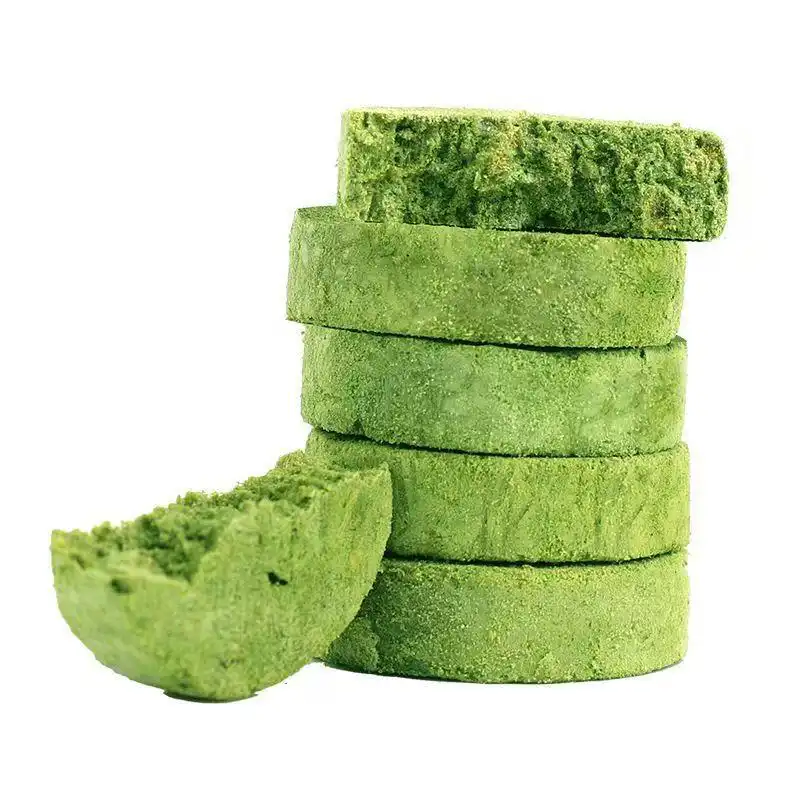
Freeze-Dried Cat Grass Biscuits Benefits
What Are Freeze-Dried Cat Grass Biscuits?
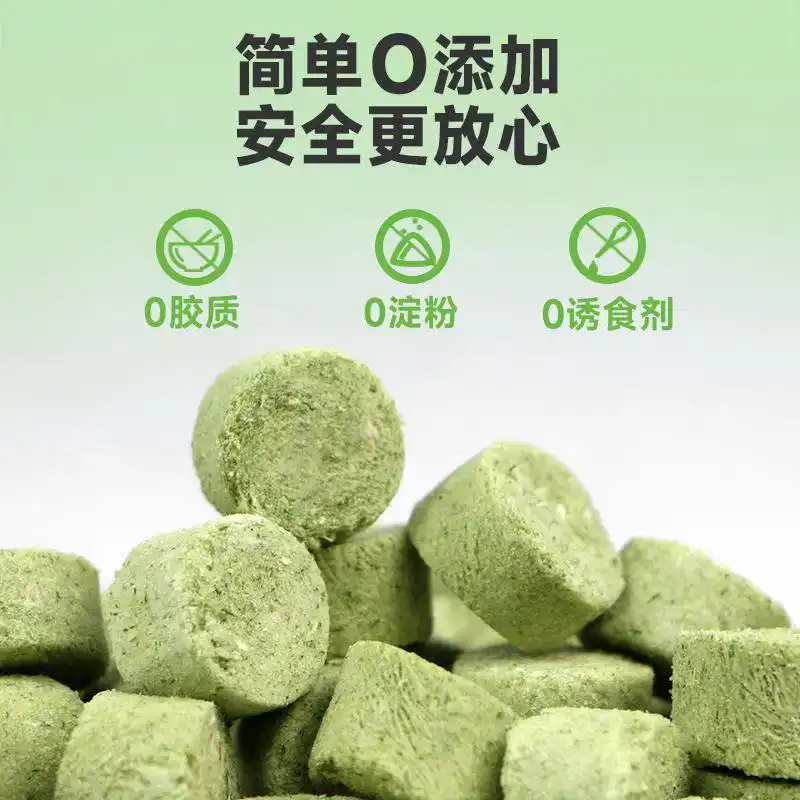
Sometimes called extra cat treats , freeze-dried cat grass biscuits are created using grass and shaped into small pieces . The product’s ingredient list might contain chicken, fish, carbs, sources of fiber, catnip, and more. Product formulas are not uniform. Because product titles don’t say it all. Ingredient listings in full are more crucial.
The marketing term "cat grass" is a little vague. Depending on the product it might be immature wheat, oats, barley or rye grass, however the exact plant should be explicitly stated. Catnip and cat grass are different plants. Catnip is added largely for its smell and attraction to behavior and grass is given as plant material.
Freeze drying may remove a lot of water from a product, although it uses low temperatures. It may help retain many of the attributes of the original ingredients, and also help create a dry, lightweight texture. But not all goods lose none of the nutritional content of their fresh ingredients when freeze-dried. The extent to which nutrients remain intact depends on the storage, processing, packaging, and formula.
Remember, freeze-drying is not the same thing as sterilizing. Biscuits containing raw chicken or any other animal food must be prominently marked as a manufacturer's pathogen-control measure. Dry is not free of potentially hazardous microorganisms. Cat owners should always do their homework.
Potential Benefits of Freeze-Dried Grass Treats
The biggest practical advantage of freeze-dried cat grass biscuits is the diversity, enrichment, and ease they may provide to a cat's diet and rewards system. Cats who like crunchy snacks may like their dry texture. Additionally, little bits may be used for pleasant interactions such as training, grooming, carrier practice, and more.
Domestic cats often indulge in the habit of eating plants. According to studies, the majority of cats don't show any symptoms of illness just before they scarf down some plants. But some felines throw up subsequently. So, it would be misleading to claim that eating grass may cure indigestion, constipation, or any other gastrointestinal ailment.
Some dietary fiber might be provided by a biscuit that contains grass. The precise quantity is proportional to the grass type and percentage used in the recipe. A product with a little quantity of grass in it could not have enough fiber to have any discernible impact on digestion. If you're interested about the product's guarantyd analysis and fiber content, you may inquire about it from the producer.
And catnip is in several of the recipes as well. Tho reactions vary greatly, this might pique the curiosity of certain cats in the reward. Some felines become rather energetic and even playful. Some respond more quietly, while others show no obvious interest at all. Instead of thinking of catnip as a vital vitamin, consider it an enrichment factor.
What These Treats Cannot Replace?
This is vital to provide a well-rounded diet for cats and freeze-dried grass biscuits should not be used in place of that unless the product is carefully manufactured and labeled as such. Most biscuits are snacks that may be served on an as-needed or intermittent basis. They would be denied the perfect balance of taurine, minerals, vitamins and fatty acids that cats require for long term optimum health.
These treats also should not be advertized as a solution for medical problems such as hairballs, ongoing vomiting, constipation or any other comparable difficulties. You can’t just say “detoxifies the body” or “prevents constipation” or “eliminates hairballs” and not back it up with evidence. The fact that grass is in a biscuit recipe , it does not mean there is enough proof that it can provide these results.
The answer to frequent vomiting of hairballs is not to provide more incentives. Hairballs are a product of over-grooming, skin disorders, parasites, dietary intolerances or irregular bowel movements. If your cat begins to exhibit other symptoms or vomits hairballs on a regular basis, it's time to see the vet.
After you know what the goodies are for and whether there are any limits on what you may use, the next thing to do is decide how much and how often the reward is given. Controlling the frequency is more important than keeping to a set quantity of calories each week.
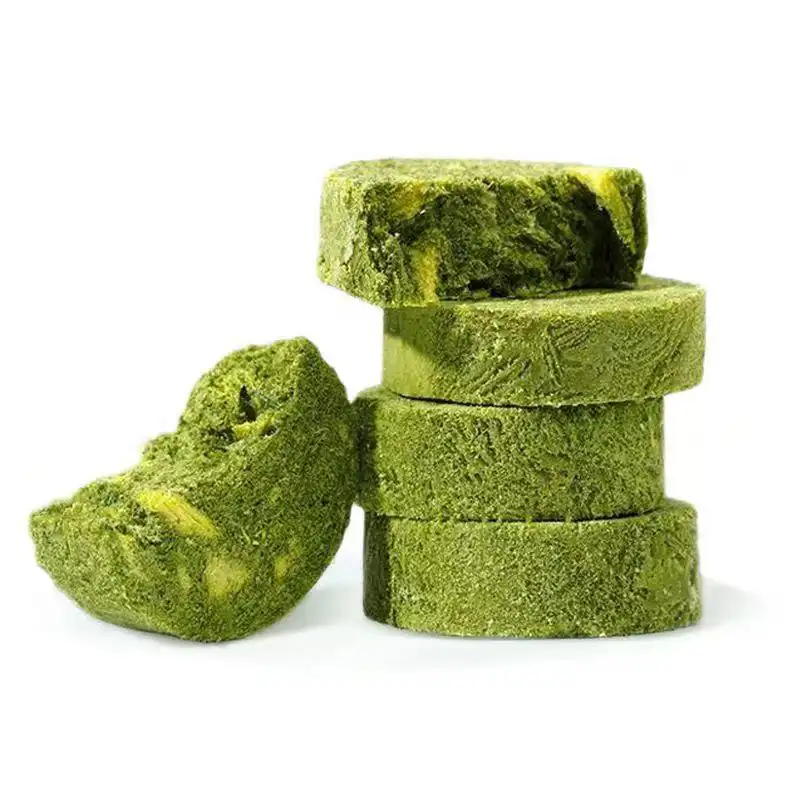
How Often Should You Feed Cats Freeze-Dried Grass Biscuits?
Use Calories to Set the Feeding Limit
Start with the cat's daily calorie needs when estimating a portion of freeze-dried cat grass biscuits. Less than ten percent of the total should come from all edible items, including toppings, treats, table meals, dental snacks, and supplemental items. This 10% number is applicable to all goodies put together. This in no way implies that 10% of the total may come from a single serving.
The basic calculation is:
Daily treat calorie limit = estimated daily calorie requirement × 0.10
Next, subtract the calories supplied by any other treats. Divide the remaining allowance by the calories in each biscuit. If the package does not list calories per biscuit or per gram, contact the manufacturer before establishing a regular feeding schedule.
|
Example maximum daily treat calories for an average healthy adult cat in ideal body condition |
|
|
Cat’s Body Weight |
Maximum Calories From All Treats |
|
3 kg |
About 20 kcal per day |
|
4 kg |
About 22 kcal per day |
|
5 kg |
About 25 kcal per day |
|
6 kg |
About 26 kcal per day |
|
7 kg |
About 28 kcal per day |
Rather than individualized feeding recommendations, these statistics serve as examples. Factors such as a cat's level of activity, age, body composition, surroundings, and health may all affect its real caloric demand. Also, you don't have to hit the maximum every single day.
As an example, a healthy 4-kilogram cat may be allowed around 22 kcal per day in treats. Five biscuits would provide 20 calories if each biscuit carries 4 calories. But if the cat has already eaten an 8-calorie dental treat, there are only about 14 calories left. If that's the case, the remaining limit would be used up by three biscuits, each with 4 calories.
A Practical Weekly Feeding Schedule
You may provide the suggested freeze-dried cat grass biscuit anywhere from once a day to two to three times a week. No better style. The optimal pattern is one that doesn’t cut into the allowed calories and doesn’t make the cat hungrier between meals.
But for owners who have a range of delicacies to feed, a realistic option is to feed two or three times a week. Maybe makes it easier to count calories. That’s not to say it’s supposed to be a universal veterinary rule. “If the overall caloric intake is controlled and the product is well tolerated, it is fine to give a cat a little more often.
If the biscuit is not too large or caloric it may be acceptable for everyday eating. It may also be useful if the treat is for medical, instructive or predictable enrichment purposes. Never save the calories from an unfinished treat for a bigger portion down the road. If your cat misses a day of sweets, you can’t offer it double the goodies the next day.
It is better if the whole family is in agreement. There is a great risk of the cat being overfed by multiple family members. Helpful is a simple box for daily goodies. Each morning top it up with the day's whole allotment. If it is empty, you should not provide any more sweets that day.
Adjusting Frequency for Kittens, Adults, and Senior Cats
How often you should give your cat freeze-dried grass cookies is not based on its age alone. It is more helpful to consider the product's label, calorie level, ingredients, and the cat's health rather than imposing a strict age limit.
A balanced and comprehensive growth diet is essential for kittens. Despite having tiny stomachs, they have significant nutritional needs. It doesn't take long for treats to supplant healthy eating habits. Be sure to check the label to see whether the grass biscuit is appropriate for the kitten's age before feeding it. Prior to feeding a very young kitten treats, make sure to consult a veterinarian and use a very little portion.
In most cases, the typical treat-calorie guideline can be followed by healthy adult cats. In that case, too, physical exertion and health are critical. A sedentary indoor cat could have a lower caloric need than an active outdoor cat of the same weight. Instead of waiting for obesity to set in, cut down on snacks when you see a rise in weight.
An automated weekly or biweekly routine is not necessary for senior cats. Treats are well-tolerated by some senior cats. Other people have calorie deficits, intestinal sensitivities, renal illness, or dental problems. Make sure the ingredients are compatible with the cat's health plan and choose an easy-to-eat texture. Consult the veterinarian for further information.
Tails that are overweight, have diabetes, food allergies, gastrointestinal issues, or are following a diet suggested by a veterinarian need personalized guidance. Even while it doesn't seem like much, even a little treat might throw off an elimination trial or prescription diet.
Introducing the Treat and Monitoring Your Cat
Never give your cat a whole serving of freeze-dried cat grass biscuits all at once; start with just a little. Cut the biscuit into smaller pieces if it's on the big side. Keep a close eye on the cat the next day to see if it exhibits any strange symptoms like vomiting, diarrhea, constipation, decreased appetite, swelling, itching, or weird behavior.
If the first dose is well-tolerated, you may progressively raise it while still adhering to the prescribed treatment limit. It is best not to introduce several new meals all at once. It is simpler to determine the source of a bad response when you add products one at a time.
Keep an eye on the cat's weight and overall health as time goes by. Keep an eye on how the cat regularly consumes its food as well. You could be giving your cat treats too often if it waits for them and ignores its healthy food. Reducing access is preferable than just adding extra biscuits to make up for the rejected meal.
Grass biscuits may be compared to other goodies, like as fresh grass or catnip nibbles, when an acceptable frequency has been established. Despite their superficial similarities, the items are not interchangeable.
How to Choose and Use Freeze-Dried Cat Grass Biscuits Safely?
Check the Label, Ingredients, and Safety Controls
Make sure the freeze-dried cat grass biscuits are labeled as treats or snacks before you purchase them. A lot of sweets don't have all the nutrients your body needs. Words like "premium," "natural," and "healthy" should not be taken at face value without first checking the details.
The following information should be clearly shown on the package: list of ingredients, guarantyd analysis, net weight, feeding instructions, manufacturer contact details, lot number, and best-by date. It ought should be simple to locate calorie facts. If you can't find the calorie count on the package, contact the maker to find out how many calories are in one biscuit, one gram, or one kilogram.
Avoid generic "green plant" descriptions and instead seek for the particular kind of cat grass you're looking for. Verify whether the animal protein is raw or cooked if it contains chicken, fish, or any other kind of meat. You shouldn't provide a chicken-based product to a cat that has an established chicken allergy.
Make sure you inquire about pathogen controls for any items that include chicken or other animal ingredients. The employment of proven controls such as cooking, pasteurization, high-pressure processing, or any other method should be explicable by a competent maker. You can't assume that raw chicken is safe just because it's freeze-dried.
Because of the potential for cats to get deadly illnesses from eating raw or undercooked meat, this is a very essential consideration. Unpasteurized chicken, meat, eggs, and other components pose a danger of H5N1 infection, according to FDA guidelines. It's safer to buy heat-treated goods from vendors that have records of their quality control procedures.
Individual pet meals are not approved, certified, tested, or endorsed by AAFCO in the US. You can't rely on claims like "AAFCO approved" to guarantee quality. Rather, read the label and the product's intended use statement carefully.
Keep the product in the original container unless otherwise instructed. Secure the bag and shield it from any potential dangers, such as rain, heat, insects, and sunshine. You can't just say that every freeze-dried treat has a shelf life of 18–24 months. Follow the recommended use-by date on the packaging and toss out any item that shows signs of spoilage, such as mold, discoloration, or an off scent.
Signs That Mean You Should Stop Feeding the Treat
If your feline friend has a string of unpleasant side effects after consuming freeze-dried cat grass biscuits, such as vomiting, diarrhea, constipation, loss of appetite for regular food, or skin irritation, you should stop providing them to them. Veterinarian intervention is necessary in the event of extreme lethargy, collapse, trouble breathing, or enlargement of the face.
Pick a biscuit size that fits your feline friend's mouth. Divide big or tough chunks into smaller ones and keep an eye on the baby as they eat. It is possible to have a choking fit or an oral issue if you gag, cough, paw at your mouth, or have trouble swallowing.
If the new treat causes only a little shift in digestion, it may become better after you take it out. You shouldn't attempt a different serving frequency to treat symptoms that keep coming back. Get in touch with a vet to find out what's wrong.
In addition, you should see a doctor if you have recurrent hairballs, stomach pain, weight loss, vomiting on a regular basis, or retching without success. A snack should supplement a regular mealtime schedule. It should never put off the identification of a more serious problem.
FAQ
The following questions address common practical concerns about freeze-dried cat grass biscuits. Product formulas differ, so the package directions and advice from your veterinary healthcare team take priority.
Can I give my cat a grass biscuit every day?
Yes, some healthy adult cats can receive a small portion every day. Daily use is appropriate only when all treats combined remain below 10% of the cat’s daily calories. The treat must also be well tolerated and should not reduce interest in the main diet.
Is two to three times per week the best schedule?
Two to three times per week is a practical option, but it is not a universal medical rule. A tiny daily serving may be appropriate for one cat, while occasional feeding may be better for another. Calories, ingredients, body condition, and tolerance are more important than the number of days per week.
How many biscuits should I give in one serving?
Divide the remaining daily treat calories by the calories in one biscuit. For example, if your cat has 12 treat calories left and each biscuit contains 4 kcal, the calculated maximum is three biscuits. You do not have to feed the full allowance.
Will grass biscuits prevent hairballs?
There is not enough product-specific evidence to guarantee that a grass biscuit will prevent hairballs. Some forms of dietary fiber may influence the movement of swallowed hair, but the effect depends on the fiber source, amount, and complete diet. Frequent hairballs should be discussed with a veterinarian.
Are these biscuits safe for kittens?
Only use them if the label says the product is suitable for the kitten’s age. A kitten’s complete growth diet should remain the main source of calories. Begin with a very small piece and ask a veterinarian before offering treats to a very young kitten or one with digestive problems.
Choose Transparent Freeze-Dried Cat Grass Biscuits
The technical information may be requested before placing an order for freeze-dried cat grass biscuits if you are assessing them for retail, distribution, or private labeling. Verify the following: minimum order quantity, feeding instructions, pathogen-control paperwork, batch testing, shelf-life validation, kcal per biscuit, guarantyd analysis, raw or cooked status, and packaging alternatives.
If you have questions about product specs, formulation, packaging, sample, or private labeling, Yunlan is the person to talk to. Get in touch with the group and let them know who you're selling to, how many units you anticipate ordering, and the ingredients you like.
Email: minghuixu6717@gmail.com
References
The following sources support the nutritional, behavioral, labeling, and safety principles used in this guide to freeze-dried cat grass biscuits:
- World Small Animal Veterinary Association Global Nutrition Committee. Feeding Treats to Your Cat. WSAVA Global Nutrition Toolkit, 2024.
- Association of American Feed Control Officials. Treats and Chews. AAFCO Consumer Resources. Accessed August 4, 2026.
- U.S. Food and Drug Administration, Center for Veterinary Medicine. FDA Outlines Ways to Reduce Risk of HPAI in Cats. Updated January 17, 2025.
- Hart, B. L., Hart, L. A., Thigpen, A. P., and Willits, N. H. “Characteristics of Plant Eating in Domestic Cats.” Animals, vol. 11, no. 7, 2021, article 1853. DOI: 10.3390/ani11071853.
- Cannon, M. “Hair Balls in Cats: A Normal Nuisance or a Sign That Something Is Wrong?” Journal of Feline Medicine and Surgery, vol. 15, no. 1, 2013, pp. 21–29. DOI: 10.1177/1098612X12470342.
- Bol, S., Caspers, J., Buckingham, L., Anderson-Shelton, G. D., Ridgway, C., Buffington, C. A. T., Schulz, S., and Bunnik, E. M. “Responsiveness of Cats (Felidae) to Silver Vine, Tatarian Honeysuckle, Valerian and Catnip.” BMC Veterinary Research, vol. 13, 2017, article 70. DOI: 10.1186/s12917-017-0987-6.