- English
- French
- German
- Portuguese
- Spanish
- Russian
- Japanese
- Korean
- Arabic
- Irish
- Greek
- Turkish
- Italian
- Danish
- Romanian
- Indonesian
- Czech
- Afrikaans
- Swedish
- Polish
- Basque
- Catalan
- Esperanto
- Hindi
- Lao
- Albanian
- Amharic
- Armenian
- Azerbaijani
- Belarusian
- Bengali
- Bosnian
- Bulgarian
- Cebuano
- Chichewa
- Corsican
- Croatian
- Dutch
- Estonian
- Filipino
- Finnish
- Frisian
- Galician
- Georgian
- Gujarati
- Haitian
- Hausa
- Hawaiian
- Hebrew
- Hmong
- Hungarian
- Icelandic
- Igbo
- Javanese
- Kannada
- Kazakh
- Khmer
- Kurdish
- Kyrgyz
- Latin
- Latvian
- Lithuanian
- Luxembou..
- Macedonian
- Malagasy
- Malay
- Malayalam
- Maltese
- Maori
- Marathi
- Mongolian
- Burmese
- Nepali
- Norwegian
- Pashto
- Persian
- Punjabi
- Serbian
- Sesotho
- Sinhala
- Slovak
- Slovenian
- Somali
- Samoan
- Scots Gaelic
- Shona
- Sindhi
- Sundanese
- Swahili
- Tajik
- Tamil
- Telugu
- Thai
- Ukrainian
- Urdu
- Uzbek
- Vietnamese
- Welsh
- Xhosa
- Yiddish
- Yoruba
- Zulu
To start a black soldier fly larvae farm, you need to set up controlled breeding areas where adult flies can lay eggs in organic waste. After hatching, maggots eat dead things for 14 to 18 days, turning waste into protein-rich matter. Farmers have to control the weather, take care of breeding groups, find the best food sources, and gather when the food is at its healthiest. This environmentally friendly method meets the world's need for protein while turning waste organic material into useful animal feed. This is a chance that is becoming more popular among B2B procurement workers around the world.

Black Soldier Fly Larvae Farming Potential
Rapid Life Cycle and Nutritional Excellence
The life cycle of a black soldier fly larvae is very short, lasting only 40 to 45 days from egg to adult fly. Under ideal conditions, the larval stage lasts for 14 to 18 days and is the most important time for growth because this is when these insects turn organic waste into high-quality material. The nutrient value of mature, dried larvae is about the same as that of regular protein sources, with 40–45% crude protein and 23–36% crude fat. Their amino acid makeup is very well balanced, with lysine levels reaching 22.6-25.7 g/kg and arginine levels reaching 19.9-20.3 g/kg, based on the substrate.
Pay extra attention to the fatty part. Lauric acid makes up most of the fatty acid makeup, making up 40–60% of the total fat level and sometimes as much as 60.89%. The antibacterial qualities of this medium-chain saturated fatty acid are good for animal health. Also, larvae have a calcium content of about 3% and an ideal calcium-phosphorus ratio of 2.6:1, which is higher than many common feed ingredients. Six to seven percent of the dry weight is made up of chitin. Choline (about 1,100 mg/kg), B-complex vitamins, β-carotene, and lutein are some of the vitamins that make up the rest of the food.
Environmental Benefits and Market Applications
In addition to providing food, larval farming has big benefits for the earth. These bugs are very good at turning food waste, farm waste, animal manure, and waste from food processing into useful protein. Larvae can be used instead of at least 33.3% of fish meal in broiler feeds without affecting the birds' ability to grow. Studies with laying hens show that adding 5% larval powder raises the number of eggs they lay each day from 54.45% to 58.77%. When up to 8% of regular feed ingredients are replaced with larval meal, the results are good for all farming species, including tilapia, salmon, catfish, and shrimp.
The market for pet food is another one that is growing very quickly. Insects make up about 6% of a wild cat's natural food, and larval ingredients are now used in commercial products for dogs, cats, and snakes. More and more pet stores and grooming shops that cater to health-conscious pet owners carry goods made from insects. This wide range of needs in poultry, aquaculture, livestock, and pet animals makes the market very promising for B2B buyers who are thinking about producing larvae or forming supply partnerships.

Setting Up Your Black Soldier Fly Larvae Farm: Step-by-Step Process
Site Selection and Climate Control Requirements
To farm successfully, you need to carefully choose a location that takes temperature, room, and infrastructure into account. Larvae do best when the temperature is between 25°C and 30°C (77°F to 86°F) and the relative humidity is between 60 and 70%. Indoor spaces offer better environmental control, keeping activities safe from changes in the weather and attacks by animals. Outdoor systems require less money up front, but they need to be carefully considered in each area. Climates that are tropical or subtropical offer natural benefits, while temperate zones need greenhouses or production plans that depend on the seasons.
The amount of space needed grows as output goals do. Small test operations work in areas between 100 and 200 square meters, while industrial farms that aim to produce 5 to 10 tons of dried larvae per month usually take up 500 to 1,000 square meters. Layout design that works well divides areas where adult flies breed, areas where eggs are collected, areas where larvae grow, and processing facilities. Biosecurity rules keep pest species from spreading disease, and proper air systems control ammonia and wetness.
Sourcing Breeding Stock and Essential Equipment
Getting healthy breeding stock from licensed sellers is the first step in starting your production. Reputable breeders provide quality assurance paperwork that confirms the chickens' genetic health, lack of disease, and steady egg production rates. The first groups usually have between 5,000 and 10,000 adult flies that can lay hundreds of thousands of eggs every week. Genetic diversity is important; getting genes from different lines keeps inbreeding depression from hurting output over time.
Investments in equipment depend on the size and amount of technology of the farm. Breeding cages with mesh sides that let air flow, egg collection substrates like corrugated cardboard strips, larval rearing containers like stackable trays that make the best use of vertical space, climate control systems like heaters, fans, and humidifiers, and harvesting tools like screens and separators are all important parts. For managing age groups, batch production systems use separate bins, while continuous-flow designs use conveyor systems to move larvae automatically through the growth stages. Automation lowers the cost of labor but raises the amount of capital needed. Smaller businesses often start with human systems before moving up to automated ones.
Integrating Waste Management and Substrate Preparation
The quality of the substrate has a direct effect on how fast larvae grow and what nutrients they get. Good feedstocks include food waste that has already been eaten, spent grains from breweries, processing waste from fruits and vegetables, and animal dung. The best carbon-to-nitrogen ratios are between 15:1 and 25:1, and the moisture level should stay between 60 and 70%. Too wet substrates create anaerobic conditions that smell bad, and too dry substrates slow down the rate of consumption.
Preprocessing materials makes them work better. By grinding or breaking things into smaller pieces (1-3 cm), you make more surface area for larvae to feed on. Some operators heat substrates to 70°C for 30 minutes, which kills bacteria and competing organisms but keeps the food's nutritional value. Feeding schedules give 50 to 100 grams of material per 1,000 larvae every day, with changes made based on how fast the larvae eat. At the same time, the bioconversion process creates a useful byproduct called frass. It is an organic fertilizer that is high in nutrients and contains helpful bacteria that can be used in farming or sold in stores.

Managing Black Soldier Fly Larvae Farm Operations for Maximum Yield
Optimizing Feeding Protocols and Growth Monitoring
To be operationally excellent, feeding must be carefully managed and matched to the steps of growth of the larvae. Newly hatching babies only need small amounts of material and a lot of water. As black soldier fly larvae grow through five instars over the course of 14 to 18 days, they eat more and more. The most they eat is in the last four to five days before they turn into pupae. Operators with a lot of experience change the makeup of the substrate based on the season, adding higher-energy ingredients during times of rapid growth to boost protein buildup.
Key success indicators that are tracked by growth monitoring methods include larval weight gain (target: 100–150 mg per larva at harvest), substrate conversion ratios (usually 2–4 kg of substrate gives 1 kg of fresh larvae), and mortality rates (keeping them below 5% is a sign of healthy conditions). Temperature and humidity sensors give real-time information about the surroundings, which sets off automatic changes that stop slowdowns caused by stress. Regular sampling—weighing groups of sample larvae every two to three days—allows for early discovery of nutritional shortages or contamination problems that need to be fixed.
Environmental Controls and Biosecurity Measures
Managing smells is a big problem that makes farms unprofitable, especially ones that are close to residential areas. Volatile chemicals can be neutralized by biofilters that contain wood chips or compost media and good air. Anaerobic breakdown, which is the main source of smell, can't happen if the ground stays at the right moisture level. Some sites use negative pressure systems to keep air moving inward, which stops smells from spreading to other areas.
Protocols for biosecurity protect crops from disease outbreaks and bug infestations. Cross-contamination between work zones is kept to a minimum with separate footwear, hand-washing areas, and staff flow patterns. Pathogens can't grow on equipment that is regularly cleaned with food-safe disinfectants. Insects like houseflies, bugs, and others can't get into breeding areas because of screen walls. These competitors take resources and could spread diseases. Different areas have different rules about how to follow them. For example, many areas need facilities to be registered, get licenses to handle waste, and have regular checks to make sure they're following food safety standards for animal feed products.
Harvesting Timing and Processing Options
The time of harvesting has a big effect on both the nutritional quality and the speed of operations. Prepupal larvae, which can be recognized by their darker color and tendency to move around, have the highest levels of protein while having lower levels of fat and moisture, which makes processing easier. Self-harvesting systems take advantage of this natural behavior: migrating prepupae climb ramps into collection bins and separate themselves from ground leftovers without having to be done by hand.
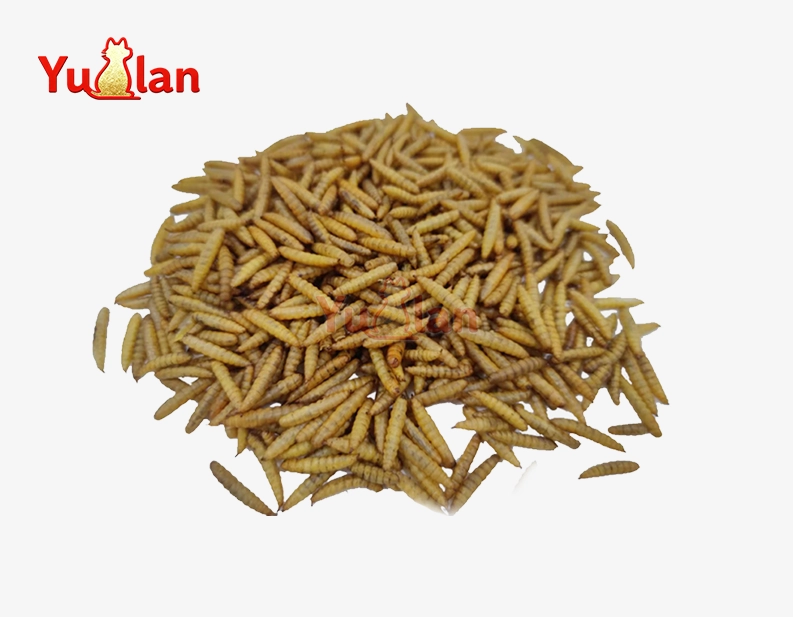
Processing choices depend on the market you want to reach and how much space you need. Fresh larvae are still the tastiest for pet treats and live animal food, but they need to be kept cool, so they can only be stored for one to two weeks. By blanching larvae at 90°C for two to three minutes and then freezing them, the nutrients are kept for months. When larvae are dried in an oven, a freezer, or an industrial dryer, the end moisture content is between 8 and 10 percent. This means that they can be stored at room temperature for more than a year. Grinding dried larvae into a meal that can be used to make feed makes them more valuable, while whole dried larvae are sold in specialty pet treat shops and fetch higher prices. Another way to add value to food is to remove the oil, which produces lauric acid-rich fats that can be used in industry along with protein-rich meal byproducts.

Conclusion
Black soldier fly larvae farming is a huge chance for B2B procurement workers who are looking for sustainable protein sources and new ways to deal with trash. When you consider that larvae grow quickly, have great nutrition, and are good for the earth, they make a strong option to traditional feed ingredients. Site selection, temperature control, substrate management, and biosecurity measures must all be carefully thought out in order for operations to run smoothly. Each of these factors affects the quality and consistency of the crops grown. When you compare larvae farming to other ways to get bug protein, you can see that it is more efficient, can be scaled up, and costs less. Strategic connections with certified providers make sure that you can get good breeding stock, processing tools, and finished goods that meet government standards. As the need for sustainable animal feed grows around the world, larvae farming gives pet stores, feed makers, and vet offices a competitive edge that fits with market trends toward being more eco-friendly and using resources more efficiently.
Partner with Yunlan for Your Black Soldier Fly Larvae Supply Needs
Yunlan is ready to help you get started with sustainable bug protein sources. We have a lot of experience coming up with new ingredients for pet food and animal feed. As a provider of black soldier fly larvae that cares about quality and the environment, we connect B2B clients with certified larval goods that meet strict safety standards. These clients include pet stores, online sellers, vet clinics, grooming shops, and wholesalers. Ruixin Cloud Wave Group, our parent company, runs production facilities that use their more than 20 years of experience in the supply chain, modern processing technologies, and full quality verification systems. We sell our goods in more than 60 countries and have agreements with some of the biggest online stores and more than 10,000 stores. We offer custom solutions that meet your specific needs, whether you need large amounts of dried larvae for making pet food, processed meal for aquaculture uses, or advice on how to add insect protein to your existing products. Get in touch with our experts at minghuixu6717@gmail.com or visit yunlanpets.com to find out how our black soldier fly larvae for sale can help you meet your sustainability goals and improve your product line. Let's work together to protect our world, love pets, and be open to new ideas.

FAQ
How long does it take for black soldier fly larvae to reach harvest size?
Larvae reach harvest size 14 to 18 days after hatching if temperatures stay between 25 and 30°C and humidity levels stay between 60 and 70%. When temperatures are cooler, this time frame is extended. When temperatures are warmer, growth may speed up a little, but above 35°C, there is a risk of heat stress.
What is the optimal substrate composition for maximum nutritional quality?
Better nutritional profiles are made from bases that are well-balanced and contain a variety of biological materials. Keeping the carbon-to-nitrogen ratio between 15:1 and 25:1 and the moisture content between 60 and 70% while mixing food industry waste with grain byproducts and veggie matter is the best way to get the highest protein concentration and growth rates. A range of substrates improves the balance of amino acids.
Can black soldier fly larvae farming reduce organic waste disposal costs?
Larvae break down organic matter quickly and efficiently, using 1-2 kg of food for every kg of new larvae they make. Facilities that handle garbage streams avoid the costs of dumping while making money from selling larvae and the nutrient-rich byproduct called frass. Many businesses say that their general trash management costs have gone down by 40 to 60 percent, and they've also found new ways to make money.
References
1. Makkar, H.P.S., Tran, G., Heuzé, V., & Ankers, P. (2014). State-of-the-art on use of insects as animal feed. Animal Feed Science and Technology, 197, 1-33.
2. Diener, S., Zurbrügg, C., & Tockner, K. (2015). Bioaccumulation of heavy metals in the black soldier fly, Hermetia illucens and effects on its life cycle. Journal of Insects as Food and Feed, 1(4), 261-270.
3. Wang, Y.S., & Shelomi, M. (2017). Review of black soldier fly (Hermetia illucens) as animal feed and human food. Foods, 6(10), 91-106.
4. Oonincx, D.G.A.B., van Broekhoven, S., van Huis, A., & van Loon, J.J.A. (2015). Feed conversion, survival and development, and composition of four insect species on diets composed of food by-products. PLoS ONE, 10(12), e0144601.
5. Cullere, M., Tasoniero, G., Giaccone, V., Miotti-Scapin, R., Claeys, E., De Smet, S., & Dalle Zotte, A. (2016). Black soldier fly as dietary protein source for broiler quails: Apparent digestibility, excreta microbial load, feed choice, performance, carcass and meat traits. Animal, 10(12), 1923-1930.
6. Gold, M., Tomberlin, J.K., Diener, S., Zurbrügg, C., & Mathys, A. (2018). Decomposition of biowaste macronutrients, microbes, and chemicals in black soldier fly larval treatment: A review. Waste Management, 82, 302-318.