- English
- French
- German
- Portuguese
- Spanish
- Russian
- Japanese
- Korean
- Arabic
- Irish
- Greek
- Turkish
- Italian
- Danish
- Romanian
- Indonesian
- Czech
- Afrikaans
- Swedish
- Polish
- Basque
- Catalan
- Esperanto
- Hindi
- Lao
- Albanian
- Amharic
- Armenian
- Azerbaijani
- Belarusian
- Bengali
- Bosnian
- Bulgarian
- Cebuano
- Chichewa
- Corsican
- Croatian
- Dutch
- Estonian
- Filipino
- Finnish
- Frisian
- Galician
- Georgian
- Gujarati
- Haitian
- Hausa
- Hawaiian
- Hebrew
- Hmong
- Hungarian
- Icelandic
- Igbo
- Javanese
- Kannada
- Kazakh
- Khmer
- Kurdish
- Kyrgyz
- Latin
- Latvian
- Lithuanian
- Luxembou..
- Macedonian
- Malagasy
- Malay
- Malayalam
- Maltese
- Maori
- Marathi
- Mongolian
- Burmese
- Nepali
- Norwegian
- Pashto
- Persian
- Punjabi
- Serbian
- Sesotho
- Sinhala
- Slovak
- Slovenian
- Somali
- Samoan
- Scots Gaelic
- Shona
- Sindhi
- Sundanese
- Swahili
- Tajik
- Tamil
- Telugu
- Thai
- Ukrainian
- Urdu
- Uzbek
- Vietnamese
- Welsh
- Xhosa
- Yiddish
- Yoruba
- Zulu
Cats can get a lot of nutrition from canned tuna and chicken as long as they are cooked and fed the right way. Cats need high-quality animal energy, which can be found in both tuna and chicken. Tuna has omega-3 fatty acids that make the fur shine and help the brain work. Chicken has balanced amino acids that give you lean protein. The buying staff should know that these foods work best as part of a healthy, whole diet and not as the only thing they eat. The important thing is to find foods that are made correctly, like those that are sterilized at 121°C and have 99% animal protein. These foods have to meet safety standards for things like mercury levels and salt content, as well as nutritional standards set by veterinarians.
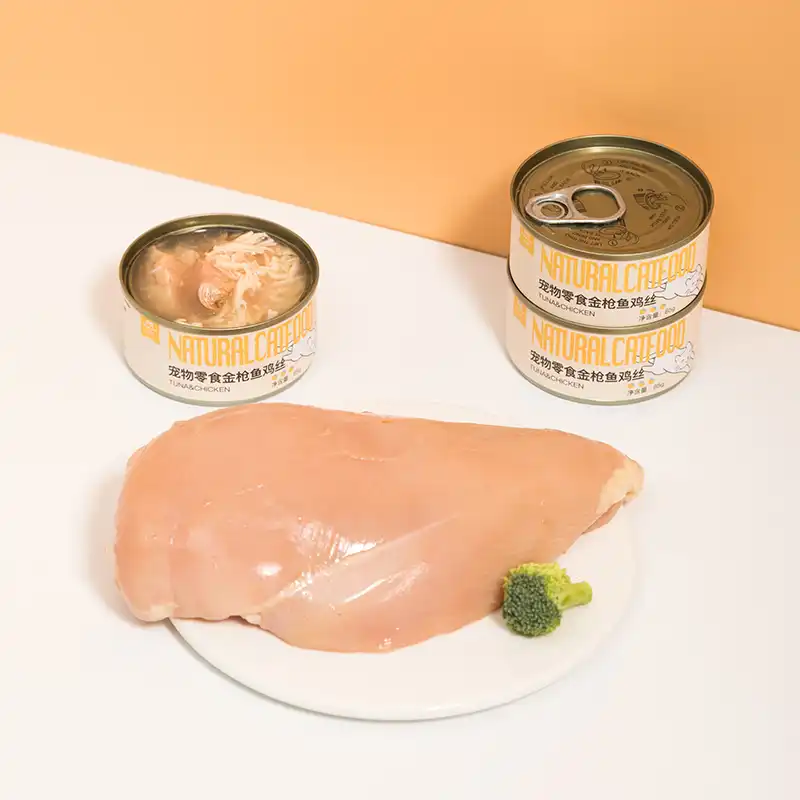
Nutritional Value of Canned Tuna and Chicken for Cats
Protein Quality and Bioavailability Comparison
Cat food that is good for them is made up of protein. One hundred grams of white tuna has about 20 to 25 grams of protein, while one hundred grams of chicken breast has about 23 to 27 grams. The bioavailability, or how well cats can use these proteins, is just as important to people who plan buying. Both of the ingredients are very healthy, which means that cats can easily change them into taurine, arginine, and methionine, which are all important amino acids. Studies by veterinary experts show that about 90–95% of the time, animal-based proteins are easier for cats' digestive systems to break down than plant-based proteins.
Essential Fatty Acids and Micronutrients
A lot of omega-3 fatty acids, mostly EPA and DHA, are found in deep-sea tuna. These acids help keep skin healthy, hair shiny, and inflammation low. Eighty grams of food normally has around 200 to 300 mg of omega-3s in it. Canned tuna and chicken both have a good mix of omega-6 fatty acids and a lot of niacin, vitamin B6, and phosphorus. However, chicken has fewer omega-3 fatty acids than some other foods. Tunes, chicken heart and dark meat all have taurine naturally, but the amounts are different. Every 100 grams of tuna has about 30 to 50 mg. Chicken heart and dark meat have more. When people in charge of buying things check how they're made, they should make sure that the companies that make them add the right amounts of supplements to meet AAFCO standards. These standards say that every kilogram of dry matter should have at least 1,000 mg of taurine.
Addressing Common Misconceptions
People who work in the pet food business often tell people that tuna is always better for you than chicken, which is not true. In fact, each element is good for you in its own way. Because it tastes great and is high in omega-3s, tuna is a great way to get picky eaters to eat or to help older cats with joint pain. It's easy to find and doesn't cost much to feed chicken every day because it has a lower risk of mercury. Products with both ingredients, like meat and vegetable mixes that have been cleaned through steam processing, give cats the right nutrition and meet their needs while lowering the problems that come with using only one ingredient.
Safety Considerations and Feeding Guidelines for Cats
Mercury, Sodium, and Preservative Concerns
The biggest worry about canned tuna and chicken products is that mercury can build up. Methylmercury builds up in the bodies of big fish that eat other fish. There are more in albacore tuna than in light tuna. It is against the rules for grown cats to get more than 10 to 15 percent of their weekly calories from tuna. Products made from white tuna that are sterilized by steam at 121°C are less likely to be contaminated than choices that are raw or barely handled. You should also think about how much salt is in the tuna. Regular tuna packed in brine can have up to 400 mg of sodium per 100 g, but low-sodium tuna stays below 100 mg. People whose job it is to buy things should look for items that have less than 0.3% sodium by weight.
Storage and Handling Best Practices
Keeping the product pure all the way through the supply chain affects how safe and tasty it is. After being cleaned at 121°C, canned goods are ready to be sold. They can last for 24 to 36 months if you store them right. Keeping an eye on the temperature while food is being stored and shipped keeps it healthy and stops it from going bad. What's written on the package is very important. Servings of 85 grams are the right size for an average adult cat, so there is less waste and the chance of getting sick when you open containers. When the cans are bought, quality control should make sure that they are whole, that they are packed properly, and that they have clear labels with set dates, batch codes, and storage instructions that meet FDA Pet Food Labeling standards.
Veterinary-Anchored Feeding Recommendations
Eating plans that are reasonable make sure that you get enough of all the nutrients you need and get the most out of good protein sources. About 250 to 200 calories a day are what a grown cat that weighs 4 kg needs. About 350 to 500 of those calories should come from protein. About 70 to 90 calories and 15 to 18 grams of protein are in 85 grams of healthy chicken or tuna. This is about a third of your daily protein needs. Veterinary professionals say that protein sources should be changed and that these foods shouldn't be the only thing fed. Instead, they should be added to meals or mixed with dry food. Procurement teams should think about portion-controlled packaging and clear feeding directions when they buy new goods. People who own pets will be more responsible, and the number of returns and complains will go down.
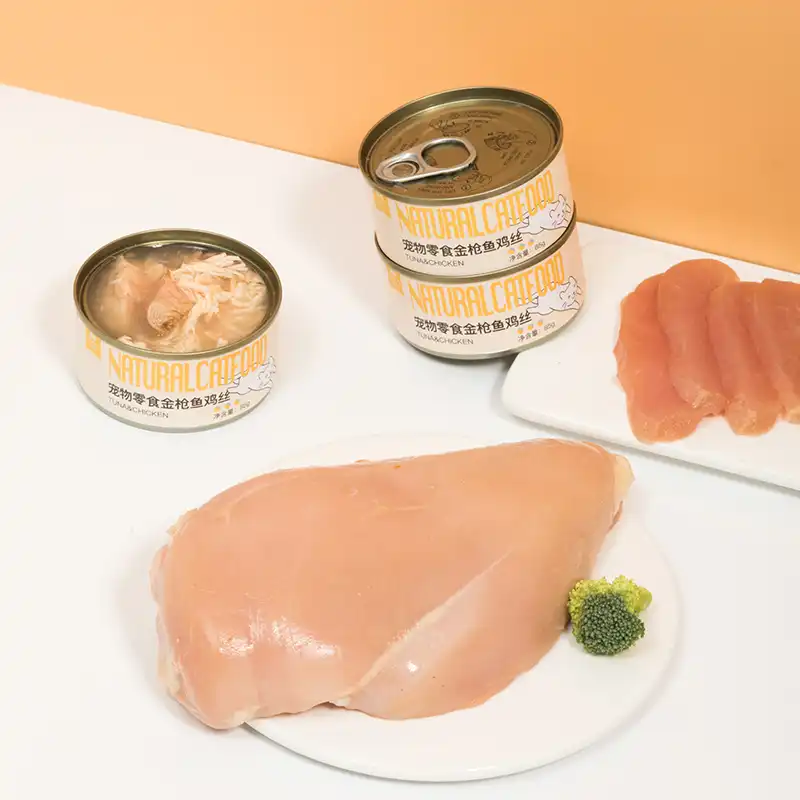
How to Use Canned Tuna and Chicken in Cat Food Preparation?
Integration Strategies for Balanced Formulations
For instance, companies that want to make high-end cat food can use canned tuna and chicken as the main ingredients in whole recipes. With the meat and soup mix method, cats eat both solid protein and fluids that are high in nutrients. This helps them stay fresh and gives them a lot of nutrition. This style is great for cats that don't like water or have kidney disease that doesn't go away. Making sure that the main ingredient panels have at least 99% animal protein and adding important vitamins, minerals, and amino acids is what formulation scientists need to do to get AAFCO Complete and Balanced approval. If your cat has a sensitive stomach, meat and vegetable mixes are good for them because they are easy on the digestive system. This means that more cats can buy foods that are made just for them.
Nutrient Preservation Techniques
How something is processed has a big impact on how good it is in the end. Pathogens can be killed by steam cleaning at 121°C, and nutrients that are damaged by heat are better protected than when food is processed in a regular roaster. This method keeps proteins' structures whole, which stops them from denature, which makes them less soluble. When natural tocopherols or ascorbic acid are added as antioxidants during processing, omega-3 fatty acids don't oxidize. This means that they stay stable for longer without the need for chemical stabilizers. When people who work in buying look for manufacturing partners, they should see how well the partners can make the things. This means keeping an eye on the temperature, making sure the equipment is balanced, and doing quality control tests to see how many nutrients were kept after processing.
Feeding Method Optimization
There are many ways that protein foods in a can can be used to feed animals and meet the needs of different people. These items can be fed on their own as meals, mixed with food to make it taste better and make it more moist, or used as useful training treats. A study of the market shows that people want easier-to-use, portion-controlled forms that make eating easier while still having the nutritional value. This need is perfectly met by the 85-gram per-can style, which makes preparation faster and takes away the need to guess. Concerns about the supply chain like packing that is light and can be stacked. This saves money on shipping and shelf space in stores. When trying to set up items fairly in pet food stores that are already very crowded, these are important things to keep in mind.
Conclusion
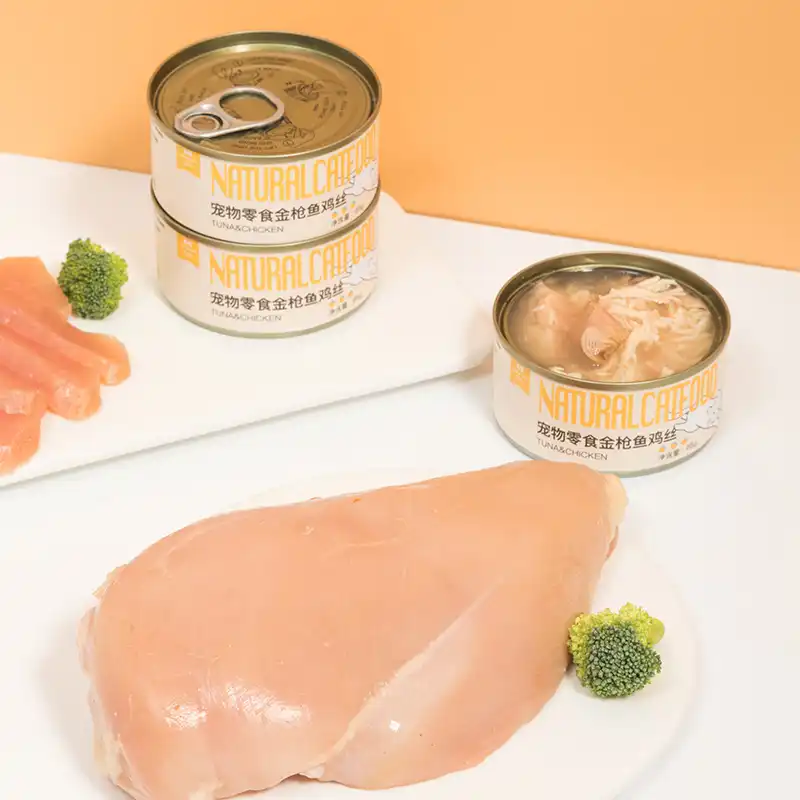
When carefully found and prepared correctly, canned tuna and chicken are essential components of premium cat food. People who work in buying have to weigh the health benefits of foods against the risks to safety. To do this, they look at sources based on how well they handle, how well they control quality, and whether they have sustainable licenses. In line with trends toward making things more human, the market is going toward clear, high-protein foods. This means that brands that put money into new ideas and using ethical sources will have chances. To keep growing, companies can build smart partnerships with manufacturers that can show they have cutting-edge technology, full control over the supply chain, and a history of success in the market. Cats get the nutrition they need from products like portion-controlled, steam-sterilized forms with 99% animal protein. These products also meet customer standards. This helps brands stand out in crowded markets and gets people to buy from them again.
FAQ
Can canned tuna and chicken provide complete nutrition for cats?
You can get a lot of protein and other important nutrients from both of these foods, but they shouldn't be the only ones in a meal. They should be used to finish the recipe instead. Foods that meet AAFCO standards and have extra vitamins, minerals, and taurine added have the right amount of nutrients. Your vet may tell you to feed your cat foods that are mostly animal protein and have the right nutrients to keep them healthy.
What are the risks of feeding cats tuna daily?
You could get too much mercury and not enough thiamine if you eat tuna every day. Vets say that tuna should only be eaten two or three times a week so that the body can get a variety of proteins. Things that use white fish from the deep sea and are cleaned with 121°C steam make these worries less real, but they're still there. Long-term health is very important for cats.
How can procurement teams verify supplier quality for canned cat food ingredients?
Review third-party certifications, such as the MSC for seafood sustainability, to make sure that HACCP rules are being followed. Check quality control paperwork, such as batch testing records, and look at systems that can track ingredients from where they are grown to where they are used in a product. Working with manufacturers who have a lot of patents and a past of putting money into research and development is also a good way to improve quality.

Partner with Yunlan for Premium Canned Tuna and Chicken Solutions
Yunlan connects people who work in buying with the best sources of canned tuna and chicken that meet the highest quality and environmental standards. We make goods that make customers happy and make them want to buy from us again. Some of the advanced production skills that Ruixin Cloud Wave Group uses are steam cleaning at 121°C, 99% animal protein recipes, and 85-gram portion-controlled packing. The fact that we work with top ingredient suppliers and use cutting-edge transportation methods means that our network covers more than 60 countries. Pet shops, e-commerce platforms, veterinary clinics, and wholesale dealers can use our unique sourcing services, which come with fair prices, flexible shipping times, and dedicated customer service. Email us at minghuixu6717@gmail.com to find out how our connections with companies that make canned tuna and chicken can help you add more products to your store and grow your business more quickly. To meet the needs of your business, yunlanpets.com offers a wide range of buying choices.
References
- National Research Council. (2006). Nutrient Requirements of Dogs and Cats. National Academies Press, Washington, DC.
- Association of American Feed Control Officials. (2025). Official Publication: Model Regulations for Pet Food and Specialty Pet Food Under the Model Bill. AAFCO Incorporated, Champaign, Illinois.
- Freeman, L.M., Chandler, M.L., Hamper, B.A., & Weeth, L.P. (2013). Current Knowledge about the Risks and Benefits of Raw Meat-Based Diets for Dogs and Cats. Journal of the American Veterinary Medical Association, 243(11), 1549-1558.
- Verbrugghe, A., & Bakovic, M. (2013). Peculiarities of One-Carbon Metabolism in the Strict Carnivorous Cat and the Role in Feline Hepatic Lipidosis. Nutrients, 5(7), 2811-2835.
- Pet Food Industry Magazine. (2025). Global Pet Food Market Trends and Forecast 2025-2028. Watt Global Media, Rockford, Illinois.
- Marine Stewardship Council. (2024). MSC Standards for Sustainable Fishing and Chain of Custody Certification. Marine Stewardship Council International, London, United Kingdom.