- English
- French
- German
- Portuguese
- Spanish
- Russian
- Japanese
- Korean
- Arabic
- Irish
- Greek
- Turkish
- Italian
- Danish
- Romanian
- Indonesian
- Czech
- Afrikaans
- Swedish
- Polish
- Basque
- Catalan
- Esperanto
- Hindi
- Lao
- Albanian
- Amharic
- Armenian
- Azerbaijani
- Belarusian
- Bengali
- Bosnian
- Bulgarian
- Cebuano
- Chichewa
- Corsican
- Croatian
- Dutch
- Estonian
- Filipino
- Finnish
- Frisian
- Galician
- Georgian
- Gujarati
- Haitian
- Hausa
- Hawaiian
- Hebrew
- Hmong
- Hungarian
- Icelandic
- Igbo
- Javanese
- Kannada
- Kazakh
- Khmer
- Kurdish
- Kyrgyz
- Latin
- Latvian
- Lithuanian
- Luxembou..
- Macedonian
- Malagasy
- Malay
- Malayalam
- Maltese
- Maori
- Marathi
- Mongolian
- Burmese
- Nepali
- Norwegian
- Pashto
- Persian
- Punjabi
- Serbian
- Sesotho
- Sinhala
- Slovak
- Slovenian
- Somali
- Samoan
- Scots Gaelic
- Shona
- Sindhi
- Sundanese
- Swahili
- Tajik
- Tamil
- Telugu
- Thai
- Ukrainian
- Urdu
- Uzbek
- Vietnamese
- Welsh
- Xhosa
- Yiddish
- Yoruba
- Zulu
One of the most important things that B2B sourcing workers look at when they are looking for protein sources for pet food recipes is how well they digest. Chicken soft sausage is a tasty and easy-to-digest food that can help dogs get their energy back quickly while also giving them protein. This item is great for dogs with sensitive stomachs or that are switching diets because it is soft and has nutrients that are easy for the body to absorb. Companies that sell and make pet food are always looking for ingredients that are good for your pet's stomach and taste good. For product development and market positioning, it's important to know everything there is to know about chicken soft sausage.
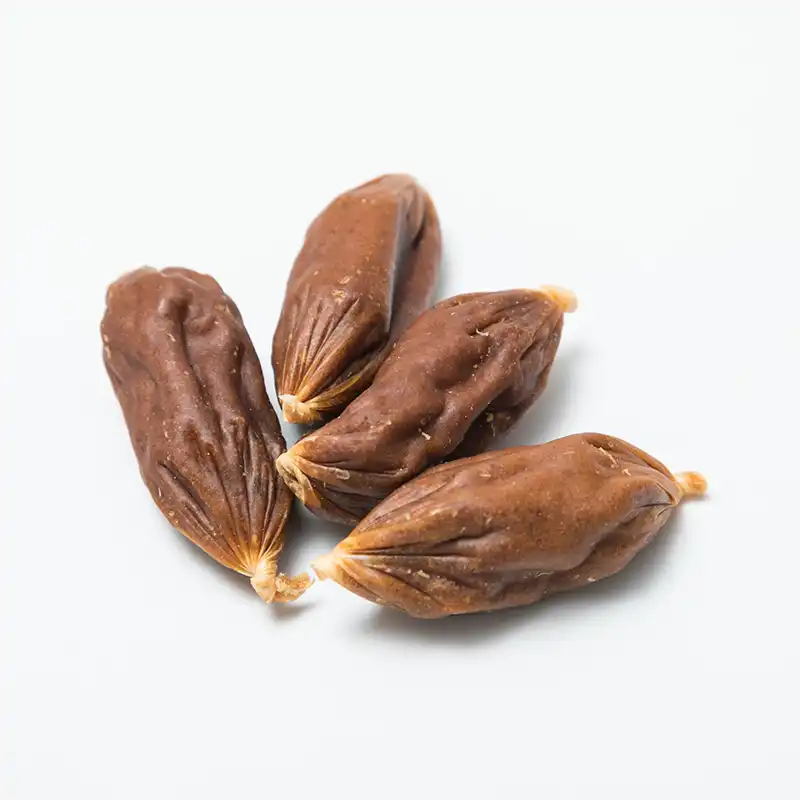
The Impact of Chicken Soft Sausage on a Dog's Digestive System
Protein Metabolism and Absorption Efficiency
Dogs are predators because their bodies are made to digest meat proteins. It is pepsin and trypsin that break down protein links into peptides and amino acids very quickly when dogs eat chicken soft sausage. Since it's soft, the stomach doesn't have to work as hard to break it down. This means that it empties faster—usually in 4 to 6 hours instead of 8 to 12 hours for harder protein sources. This faster passing makes fermentation less likely, which can lead to pain and gas.
Animal feeding studies have shown that chicken protein has a nutritional value above 80, which means it has more amino acids and can be used. chicken soft sausage is a gentle food that can help you when you have a stomach illness, are healing from surgery, or are changing your diet. If pet food companies add these qualities, their products will do well in veterinary and specialty stores.
Benefits for Digestive Health
Give dogs chicken soft sausage as part of their food. It can help them in many ways. Because it is easily digested, it lowers the amount of trash that is made and makes stools more regular, which is good for places that board and clean a lot of animals. Because it tastes good, people are more likely to eat it regularly, which keeps stomach from getting upset when people lose their hunger or miss meals.
People on elimination diets and people with food allergies can eat chicken because it is less likely to make them sick than beef or cheese. Less bad things happen because of the protein source. For instance, studies have shown that when dogs are exposed to chicken, less than 5% of them have allergic responses. However, that number jumps to 15-20% for popular beef formulations. Stores, both online and off, can confidently recommend these items to customers who are concerned about food allergies because they meet these safety standards.
Potential Digestive Challenges and Mitigation
Many good things about it, but some mistakes in production can make stomach problems worse. Osmotic diarrhea and thirst can happen if you eat or drink too much salt. When things aren't made well, the salt level can reach 1.5% or more. The salt amount should stay below 0.5% so that the digestive system can handle it best.
Sometimes, man-made preservatives like ethoxyquin, BHA, or BHT can hurt the walls of a dog's stomach, especially if the dog is young or old. Mixed tocopherols or rosemary extract are being used more and more for natural preservation because they work well for gut health and meet customer needs. Standards for quality control should require that ingredients be clear. This would help dealers and sellers make their high-end goods stand out in places where there are a lot of them.
Serve amounts that are too small or too big are also a risk. The digestive system can work too hard if you eat too much chicken soft sausage. This can make your stools loose or even make you throw up. Treats shouldn't make up more than 10% of a pet's daily caloric intake, according to clear feeding directions from makers. This makes sure they are used correctly in both stores and vet offices.
Comparing Chicken Soft Sausage With Other Sausage Types for Dogs
Chicken Versus Pork Formulations
Research that compares different foods shows that chicken soft sausage is sometimes better for digestion. There is almost twice as much fat in pig sausages as there is in chicken soft sausage. Some dogs, like Miniature Schnauzers and Yorkshire Terriers, are more likely to get pancreatitis because of this extra fat. Pork has about 250 calories per 100 grams compared to 180 calories for chicken sausage. This makes it harder to control amounts, which is a problem for veterinary offices that run weight loss programs.
The times that digestion works are also very different. Researchers who looked at how dogs' tummies worked found that chicken sausage empty the stomach 20–30% faster than foods made from pork. This makes it less likely that the dog will have pain or reflux. Different marketing tactics are used for different products because of these differences in how people's bodies work. Pet food for pets with sensitive stomachs, which you can buy online and in specialty pet shops, works better with soft chicken sausage.
Turkey and Alternative Protein Comparisons
Turkey soft sausage has about the same amount of protein and is about as easy to digest as chicken soft sausage. What's different is how the market sees it and how the costs are set up. Because of the higher costs of production, Turkey usually charges 10-15% more at bulk. This could change how buyers who use volume-based models figure out their profit.
If your dog is allergic to chicken, it can still get food from duck, deer, or fish, but these are only good for small groups of people. When procurement teams look at different types of products, they should make sure that the stock fits the types of buyers and buying habits that are seen across all shopping platforms.
Organic and Gluten-Free Variants
Clean-label recipes are stressed in the top area of chicken soft sausage to attract customers who care about their health. Farming chemical leftovers can be less of a worry if the food is organically approved and made without antibiotics or GMOs. The prices of these items have gone up by 30 to 50 percent. This means that pet shops and specialty stores can make more money on each sale while also helping health stories.
Fillers like wheat, corn, and soy can make sensitive dogs sick, but gluten-free recipes don't have any of those things. They need other thickening agents, like potato starch or tapioca, to keep their shape and help the body process them since they don't contain any grains. Put these unique options somewhere that people can see them. This helps distributors who work with markets that know a lot about food allergies, like coastal towns and rich suburbs.
Conclusion
Dogs' gut health can improve a lot when they eat chicken soft sausage that is made the right way and in a healthy way. It has a gentle texture, a lot of nutrients that give you energy, and a high bioavailability protein level. This type of product is useful for many B2B uses, from store treat deals to medical therapy diets. People who work in buying should give more weight to sellers who can show they are good at making things, are honest about their ingredients, and can think of new ideas. Dog food companies can make better buying decisions when they know about digestibility factors, the pros and cons of different protein sources, and practical feeding rules. This helps them improve their product lines, build stronger relationships with customers, and grow their businesses in the fast-paced global pet food market.
Partner With Yunlan for Premium Chicken Soft Sausage Supply
Yunlan is a trustworthy company that makes chicken soft sausage that are made to give cats the best food for gut health. They are ready to help you with your buying needs. We use cutting edge meat protein enzymolysis technology and strict quality control rules to make sure the products we send meet the high standards of pet stores, veterinary clinics, online shopping sites, and wholesale distributors in more than 60 countries, as well as the United States. We can offer customized formulas, low bulk prices, and reliable delivery networks because we have strong relationships with top transportation providers. Our brand sells more than 300 million yuan a year, and we have a number of patents that show we're always coming up with new ideas. Because we spend about 100 million yuan on research and development, you can use new food technologies that make your goods stand out and help you get a place in the market. You can email us at minghuixu6717@gmail.com to talk about how Yunlan's chicken soft sausage for sale can help your company. You can also look at all of our pet food choices that are meant to be good for gut health and make customers happy at yunlanpets.com.
FAQ
Can chicken soft sausage serve as a primary protein source for dogs?
Although chicken soft sausage is a good source of protein, most nutritionists say it should only be eaten as a treat or to add extra protein to meals. It's important for meals to have extra nutrients, like minerals and vitamins that aren't usually found in treats. That's why vets and people who make pet food should come up with complete meals that give pets all the vitamins and protein they need.
What additives should B2B buyers avoid in chicken soft sausage for sensitive dogs?
Colors made in a lab, like Red 40 or Yellow 5, are not good for you and may cause allergic responses. The standards for buying things shouldn't allow these colors. Carrageenan is sometimes used to make things thicker, but animals that are sensitive to it have been shown to get stomach pain when they eat it. Garlic and onion powders are sometimes added to food to make it taste better, but they contain chemicals that are bad for dogs and shouldn't be used at all. Good providers tell you everything you need to know about the ingredients they use, so you can make an informed choice.
How do pet food safety standards apply to chicken soft sausage products?
If a company wants to make cat food, they have to follow the AAFCO rules and make sure their products are safe and healthy. If you want to sell your goods in other countries, you may need to follow EU rules or trade standards that are unique to that country. For B2B buyers, it's important to look at the licenses of sellers and ask for proof of third-party tests to show that there aren't any problems with pathogens, heavy metals, or contamination.
References
1. Case, L.P., Daristotle, L., Hayek, M.G., and Raasch, M.F. (2011). Canine and Feline Nutrition: A Resource for Companion Animal Professionals (3rd ed.). Maryland Heights: Mosby Elsevier.
2. Fascetti, A.J., and Delaney, S.J. (2012). Applied Veterinary Clinical Nutrition. Ames: Wiley-Blackwell.
3. National Research Council. (2006). Nutrient Requirements of Dogs and Cats. Washington, D.C.: The National Academies Press.
4. Gross, K.L., Yamka, R.M., Khoo, C., Friesen, K.G., Jewell, D.E., Schoenherr, W.D., Debraekeleer, J., and Zicker, S.C. (2010). Macronutrients. In M.S. Hand, C.D. Thatcher, R.L. Remillard, P. Roudebush, and B.J. Novotny (Eds.), Small Animal Clinical Nutrition (5th ed.). Topeka: Mark Morris Institute.
5. German, A.J., Holden, S.L., Bissot, T., Morris, P.J., and Biourge, V. (2010). A High Protein High Fibre Diet Improves Weight Loss in Obese Dogs. The Veterinary Journal, 183(3), 294-297.
6. Laflamme, D.P., Izquierdo, O., Eirmann, L., and Binder, S. (2014). Myths and Misperceptions About Ingredients Used in Commercial Pet Foods. Veterinary Clinics of North America: Small Animal Practice, 44(4), 689-698.