- English
- French
- German
- Portuguese
- Spanish
- Russian
- Japanese
- Korean
- Arabic
- Irish
- Greek
- Turkish
- Italian
- Danish
- Romanian
- Indonesian
- Czech
- Afrikaans
- Swedish
- Polish
- Basque
- Catalan
- Esperanto
- Hindi
- Lao
- Albanian
- Amharic
- Armenian
- Azerbaijani
- Belarusian
- Bengali
- Bosnian
- Bulgarian
- Cebuano
- Chichewa
- Corsican
- Croatian
- Dutch
- Estonian
- Filipino
- Finnish
- Frisian
- Galician
- Georgian
- Gujarati
- Haitian
- Hausa
- Hawaiian
- Hebrew
- Hmong
- Hungarian
- Icelandic
- Igbo
- Javanese
- Kannada
- Kazakh
- Khmer
- Kurdish
- Kyrgyz
- Latin
- Latvian
- Lithuanian
- Luxembou..
- Macedonian
- Malagasy
- Malay
- Malayalam
- Maltese
- Maori
- Marathi
- Mongolian
- Burmese
- Nepali
- Norwegian
- Pashto
- Persian
- Punjabi
- Serbian
- Sesotho
- Sinhala
- Slovak
- Slovenian
- Somali
- Samoan
- Scots Gaelic
- Shona
- Sindhi
- Sundanese
- Swahili
- Tajik
- Tamil
- Telugu
- Thai
- Ukrainian
- Urdu
- Uzbek
- Vietnamese
- Welsh
- Xhosa
- Yiddish
- Yoruba
- Zulu
Buyers who source dog treats face a tough mix of claims and customer questions. Pet parents want soft chew snacks that avoid upset stomachs and food reactions. Retail teams want products with clear benefits and stable shelf life. This page explains why the combination known as duck wrapped in french fries for dogs answers both sides, and how a full-chain manufacturer can help you move from concept to container.
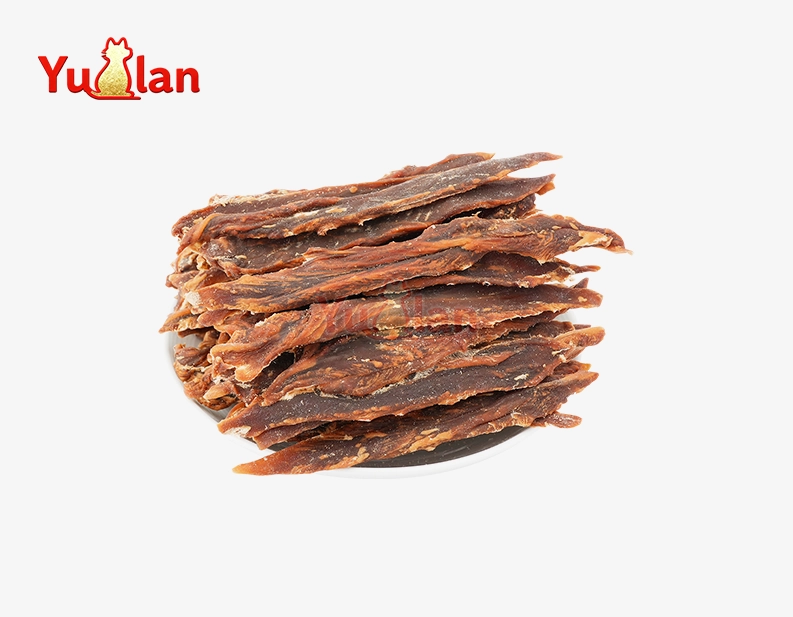
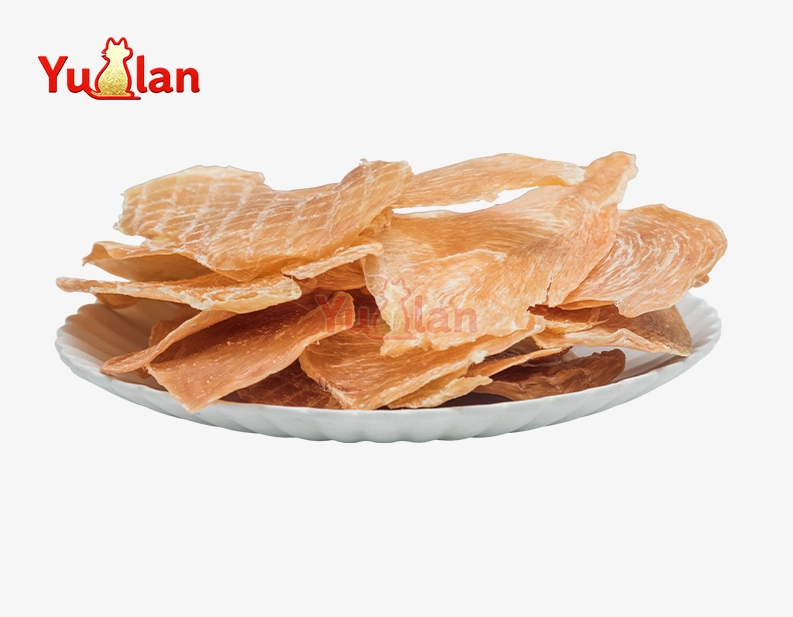
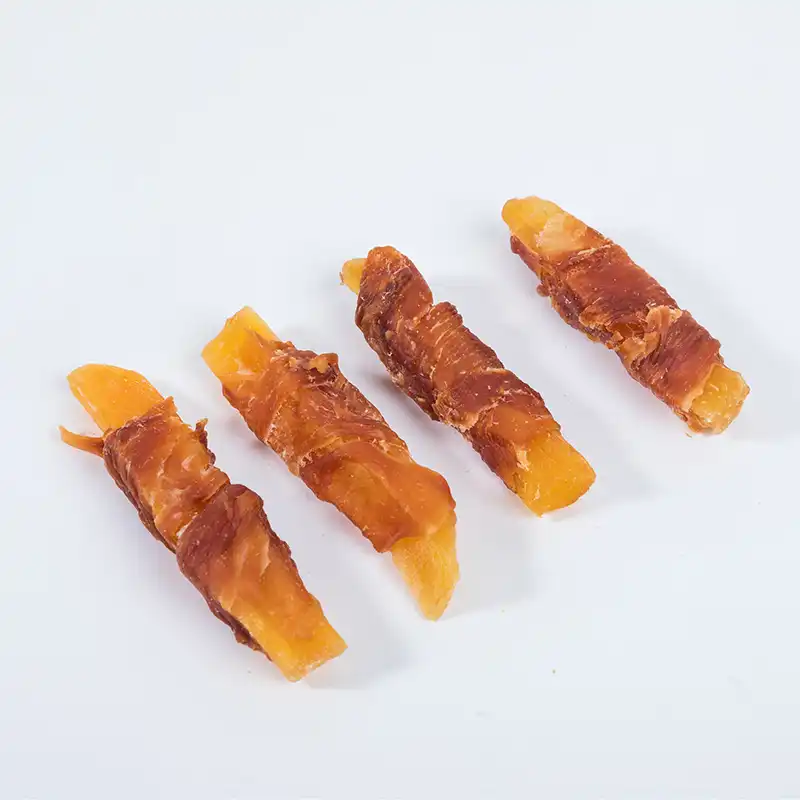
The snack is not fast food potato fries. The “fries” are strips of sweet potato dried at low temperature until chewy. The wrap is real duck breast. Together they give a low fat, cooling protein plus fiber rich chew. The profile supports gentle digestion, palatability without heavy fat, and easy logistics for distributors who ship long distances to more than 60 markets.

Why Pair Duck Breast with Sweet-Potato “Fries” for Canines
Digestive Comfort From a Cool, Lean Protein
Duck wrapped in french fries for dog is different from chicken and beef. Veterinary food therapy lists duck as a cooling meat that may calm heat-type inflammation. The protein is lean while still rich in essential amino acids. USDA data show raw duck breast has about 140 kcal and only 2 grams fat per 100 g, with 23 g protein. Lower fat reduces pancreatic load in sensitive dogs. For dogs with food sensitivities, duck is called a novel protein that often avoids chicken or beef triggers. Many limited ingredient diets use duck for this reason. Thus the core wrap offers easy digestion and a lower allergen risk.
Fiber-Rich Sweet Potato Supports Stool Quality
The outer “fries” strip is sweet potato, not fried white potato. Slow drying at roughly 60–75 °C lowers moisture to about 14–18 percent. The texture stays soft and pliable rather than brittle. Sweet potato supplies soluble fiber, vitamin A as beta-carotene, and vitamin C. The American Kennel Club notes plain cooked sweet potato is safe and aids digestive health in moderation. The fiber supports regular stools and feeds beneficial gut bacteria. Because drying keeps sugars intact without oil, the chew is low residue for the stomach while still giving a satisfying bite.
Chewy Texture Aids Engagement Without Grease
Chewing matters for training and dental comfort. Low temperature processing leaves the sweet potato slightly elastic. The outer chew slows a fast eater and wraps around the duck center. Dogs stay occupied longer and swallow less air. Unlike rawhide, the strip breaks down with gastric enzymes, reducing blockage risk. The final piece feels soft, not greasy, so hand contact is clean for owners. That clean hand feel helps placement near checkout and sample displays.
Sensory and Health Gains Valued by Retail Buyers
Allergy-Friendly Profile for Sensitive Dogs
Food allergy signs often trace to common proteins like chicken and beef. Dermatology clinics list itching, ear swelling, and loose stools as markers. Duck can work as a novel limited protein while dogs heal. Pairing it with sweet potato avoids grains, gluten, and soy. PetMD ranks sweet potato among safer carb choices when served without butter or salt. This two-ingredient plan fits elimination protocols that owners review with vets. Retailers can market the snack as a short ingredient treat for sensitive dogs, which lowers returns and customer complaints.
Natural Palatability Reduces Artificial Flavor Needs
Premium buyers resist treats that rely on strong spray palatants. A duck wrapped in french fries for dog has natural aroma and a slightly sweet note that dogs notice. Sweet potato adds light sweetness that improves acceptance among picky eaters. The twin aroma lets manufacturers limit chemical attractants. Yichong Biology under Ruixin Yunlan focuses on natural pet seasonings because it cuts artificial load. Clean label stories help Amazon and Tmall listings meet tight search terms such as “limited ingredient dog chews.” The result is a snack that tastes good and still reads simple.
Shelf Life and Logistics From Low-Temp Drying
Moisture drives mold and rancidity. By drying sweet potato strips to low water activity, the treat remains stable for 12–18 months in oxygen barrier bags. The duck center is also dried low enough to stop microbial growth. Gaoying Irradiation Company in the Suyu cluster provides final microbial reduction as needed. This gives partners a product that ships by sea without cold chain. Retailers see fewer breakage losses because the strip bends rather than shatters. For online channels, lower returns improve margin and ratings.

B2B Opportunities With Ruixin Yunlan’s Full-Chain Capability
Performance data matter, but buyers also weigh who makes and validates the treat. Suqian Ruixin Yunlan Technology runs a full chain from research to OEM export. The group supports three core brands, Yihe, Paihao, and Maodali, each over 300 million yuan yearly. The scale means proven demand and stable cash flow for shared tooling. Export reach spans more than 60 countries, plus over 200 China distributors and 10,000 stores. This network lets a partner test private label packs fast, then roll wider with channel tools already in place.
Consistent Supply, Custom OEM Formats, and Global Reach
Raw material access comes from nearby Yike Food and Charoen Pokphand Foods for poultry and from regional sweet potato farms. JD Logistics Park in Suyu supports pallet flow. Management holds over 20 years ODM experience for top global brands. They keep quality, cost, and delivery on target. Advanced methods such as meat protease hydrolysis and bone crisping improve texture while preserving nutrients. Because lines are flexible, you can order short “fries,” long twist, or bulk club sizes. Third-party irradiation and QA cut time at destination ports.
R&D and Safety Backed by Patents and Core Technology
From 2022 to 2025, Ruixin Yunlan invested nearly 100 million yuan in R&D. As of December 2025, the group holds 97 authorized patents, including 19 invention patents. Its pet food center tests raw material screening and formula nutrition before scale. Core work on natural seasonings and plant cat litter shows an ESG focus. For duck wrapped in french fries for dogs, this means each batch meets digestibility, moisture, and microbial spec, plus traceability documents needed for FDA or EU entry.

Contact Us for Samples, Specs, and Contract Pricing
If you review duck wrapped in french fries for dog catalogs for gentle protein SKUs, this snack meets sensitive stomach lines and premium chew aisles. We provide private label artwork, aroma kits, and stability reports. Our team offers small pilot runs to lower your launch risk. For quotes, shelf life data, or to match nutritional targets in the EU or USA, reach our export desk. Please email minghuixu6717@gmail.com. We respond with samples and OEM terms quickly.
FAQs
Q1: Is the sweet-potato “fries” part the same as human fast-food fries?
A: No. The fries are only sweet potato strips dried low and slow. No oil, salt, or frying is used. The result stays soft, chewy, and lower fat than fried treats.
Q2: Can dogs with chicken allergy switch to this duck snack safely?
A: Duck is a novel protein for many dogs, so it may avoid chicken triggers. Introduce the treat slowly. Always run diet changes under veterinarian watch for strict allergy cases.
Q3: How long does the chew stay fresh for export?
A: Low moisture and sealed barrier film give about 12 to 18 months stability. Final shelf life is confirmed by lot testing and irradiation per customs rules.
Q4: Do you support custom bag sizes or shapes for private label?
A: Yes. As an OEM partner, we adjust length, thickness, and retail packs. We back this with label review, stability docs, and capacity that serves 60 plus country markets.
References
- U.S. Department of Agriculture, FoodData Central. Duck Breast Nutrient Profile.
- American Kennel Club. Fruits and Vegetables Dogs Can and Cannot Eat.
- PetMD. Can Dogs Eat Sweet Potatoes.
- Brooks WW. Veterinary Nutritional Consultations. Cooling Proteins in Food Therapy. VCA Animal Hospitals Knowledgebase.
- Gfeller RW et al. Food allergy review for dogs and cats. Journal of the American Veterinary Medical Association, selected allergen studies.