- English
- French
- German
- Portuguese
- Spanish
- Russian
- Japanese
- Korean
- Arabic
- Irish
- Greek
- Turkish
- Italian
- Danish
- Romanian
- Indonesian
- Czech
- Afrikaans
- Swedish
- Polish
- Basque
- Catalan
- Esperanto
- Hindi
- Lao
- Albanian
- Amharic
- Armenian
- Azerbaijani
- Belarusian
- Bengali
- Bosnian
- Bulgarian
- Cebuano
- Chichewa
- Corsican
- Croatian
- Dutch
- Estonian
- Filipino
- Finnish
- Frisian
- Galician
- Georgian
- Gujarati
- Haitian
- Hausa
- Hawaiian
- Hebrew
- Hmong
- Hungarian
- Icelandic
- Igbo
- Javanese
- Kannada
- Kazakh
- Khmer
- Kurdish
- Kyrgyz
- Latin
- Latvian
- Lithuanian
- Luxembou..
- Macedonian
- Malagasy
- Malay
- Malayalam
- Maltese
- Maori
- Marathi
- Mongolian
- Burmese
- Nepali
- Norwegian
- Pashto
- Persian
- Punjabi
- Serbian
- Sesotho
- Sinhala
- Slovak
- Slovenian
- Somali
- Samoan
- Scots Gaelic
- Shona
- Sindhi
- Sundanese
- Swahili
- Tajik
- Tamil
- Telugu
- Thai
- Ukrainian
- Urdu
- Uzbek
- Vietnamese
- Welsh
- Xhosa
- Yiddish
- Yoruba
- Zulu
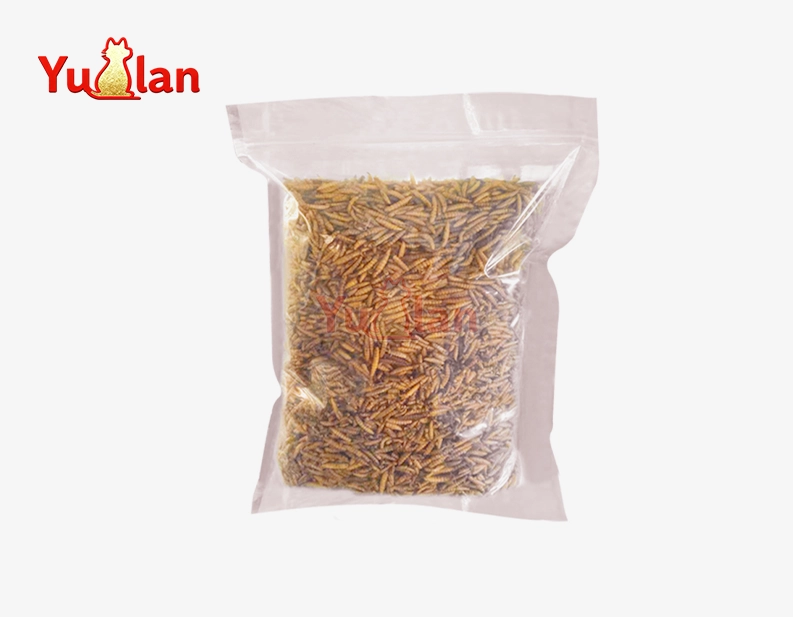
There is a complicated way to freeze-dry mealworms that uses sublimation to get rid of the water while keeping the bugs' healthy nutrients. The first step is to pick out good live mealworms. After that, they are cleaned well and slowly frozen at -40°F or below. After being frozen, the mealworms are dried using vacuum-assisted primary drying to turn the ice crystals into gas and secondary drying to get rid of any water that is still there. This method produces freeze-dried mealworms for parrots that maintain their high nutritional value, last longer, and taste better than other methods.

Freeze Drying of Mealworms: Principles and Benefits
The Science Behind Freeze Drying Technology
Freeze drying represents the most advanced way to get rid of water from insect-based proteins. Sublimation, a process by which frozen water goes from being solid to mist without melting, is what this method does instead of heat drying to get rid of the moisture. The vitamins, good fats, and important amino acids that birds need to stay healthy are kept safe in the mealworms' cells by this advanced method.
It is very cold (normally between -40°F and -50°F) and there is a controlled pressure during the sublimation process. During this step, about 95% of the water is taken out of the mealworms, but they keep their original shape, structure, and nutritional value. Bioactive chemicals that are good for birds' health stay around longer when things are preserved this way than when they are dried normally.
Nutritional Superiority for B2B Applications
These days, freeze-dried mealworms have a lot of protein, generally between 50 and 55 percent by weight. This means that many bird species can eat them without getting sick. You can find a lot of protein and calories in these bugs. These help them grow and stay healthy. It helps your body process the rough fiber. Small amounts of calcium, potassium, iron, and salt that help birds stay healthy are kept in this way.
Good makers use microwaves to dry things at high temperatures without adding any extra stuff. In this way, harmful bacteria are killed while important nutrients are kept. This process has two steps that make sure the item is safe and still has the biological value that makes these treats good for many types of pets. It's easier for the body to digest than other protein sources, which is good for health in general and helps the body receive nutrients better.
The Freeze Drying Process for Mealworms: Step-by-Step Breakdown
Pre-Processing and Quality Selection
Strict rules are used to choose the best mealworms before they can be freeze dried. This makes sure that only the best ones make it to the next step in the process. Professional centers only buy live insects from licensed sellers. They like mealworms that have been fed organically because they are higher in nutrients and have fewer contaminants. Each batch is carefully checked to get rid of any samples that are broken or don't work, which could lower the quality of the final product.
One way to clean something is to rinse it several times with clean water to get rid of waste, substrate dust, and possibly germs. Automatic sorting systems are used in modern centers to separate mealworms by size. This makes sure that the same conditions are used for handling and that the quality of the end result is the same. The end result is safer and healthier because of the careful attention to detail that goes into pre-processing.
Critical Processing Parameters
To really freeze-dried mealworms, there are three different steps that need to be carefully handled and watched. Mealworms' bodies quickly cool down to below -40°F during the freezing stage, which makes ice crystals all over them. Big crystals would damage cell structures and make feeding less reliable if they formed too quickly.
First, the items are dried in a room with no air pressure (about 0.1 mbar) and temperatures below freezing. Some of the water is lost during this 12 to 18-hour phase, but the protein structure stays the same. As part of secondary drying, the temperature is raised a little to get rid of any trapped wetness that is still there. To keep the food stable on the shelf, the end wetness level should be less than 2%.
Quality Assurance and Monitoring
These days, freeze drying places have full tracking systems that keep an eye on the temperature, pressure, and wetness levels the whole time. High-tech monitors check the product's temperature and pressure level all the time, and they change the settings right away to make sure everything works at its best. You can keep track of items and make sure they're of good quality with these systems because they keep detailed records of each batch.
Goods must meet strict standards for nutritional value, germ survival, and moisture levels before they are sent to the next step in the process. Regular tests by a third party are done by major makers to make sure that health claims and safety standards are correct. These facts show that the goods are safe and allowed in all stores.

How to Buy Freeze-Dried Mealworms for Parrots in Bulk?
Supplier Evaluation Criteria
A good buying process starts with a close look at the seller, paying special attention to their production skills, quality licenses, and ability to follow rules. Top companies keep certifications like HACCP, ISO 22000, and organic processing badges that show they care about quality and safety. You need these licenses when you're selling to limited markets or people who care about quality.
When finding out how much can be made, it's important to think about both how many are needed now and how many will be needed in the future. Every month, most big, well-known companies can make more than a few tons of goods on more than one line. This makes sure that there is always enough, even when demand is high. Problems in the supply chain can hurt business operations less when there are backup sources and plans for what could go wrong.
Price Benchmarking and Value Assessment
Depending on the quality grade, processing method, and amount of sales, premium freeze-dried mealworms for parrots have a wide range of prices on the market. When bought in bulk, the prices range from $15 to $25 per kilogram, with more expensive organic options costing more. Most of the time, you can save money when you buy more than 500 kilograms. In this way, you can save money on big stuff.
There is more to value evaluation than just unit price. It looks at the rules of shipping, the different ways to pack, and the different ways to pay. Some providers let businesses use their own labels, make their own packages, and use shipping programs based on payments, which can be helpful for some types of companies. When the market changes, long-term plans may help you get better deals and faster delivery.
Logistics and Distribution Considerations
Logistics planning that works well keeps the product's quality good all the way through the supply chain while keeping the cost of shipping low. While they are being shipped, freeze-dried mealworms need to be kept away from water and high temperatures. This means they need to be handled and packed correctly. The best sellers make it clear how to handle and store their goods so that they stay in good shape.
When you send things across foreign borders, you need to think about things like paperwork for customs, rules for importing, and possible quarantine rules that vary from country to country. Suppliers with a lot of experience know the rules and have ways to keep records that make customs clearance go more quickly and without problems that could slow down business.
Conclusion
Freeze-drying mealworms is the best way to keep them fresh. This way of preparing meets higher safety standards, keeps more protein, and lasts longer for B2B users than other ways. A high-tech sublimation process kills germs and keeps the product fresh for an extra 24 to 36 months. It also keeps important proteins, vitamins, and minerals. Costs go down, inventory management gets better, and customers are happy for shops, wholesalers, and other business partners because of these benefits. For this high-quality protein source to be most useful for feeding birds, you need to carefully choose your sellers, follow quality control procedures, and store it in the right way.

Partner with Yunlan for Premium Freeze-Dried Mealworm Solutions
Yunlan stands as your trusted freeze-dried mealworms for parrots supplier, combining advanced processing technology with rigorous quality standards to deliver superior insect-based nutrition products. Our state-of-the-art facilities utilize microwave-drying at controlled temperatures, ensuring pathogen elimination while preserving essential nutrients that promote avian health and immunity. With over 20 years of specialized experience in pet nutrition manufacturing, we provide comprehensive solutions from product development to logistics support, serving distributors, retailers, and commercial customers across 60+ international markets. Contact our team at minghuixu6717@gmail.com to explore bulk procurement options and discover how our premium freeze-dried mealworms can enhance your product portfolio.
FAQ
Q1:Are freeze-dried mealworms safe for all parrot species?
A1:Freeze-dried mealworms for parrots are safe for most parrot species when fed in appropriate portions. The freeze-drying process eliminates harmful bacteria while preserving beneficial nutrients. Before giving birds with certain health problems or food restrictions new foods, though, avian vets should check them out. A slow, steady start can help you figure out what's wrong.
Q2:How does freeze-drying preserve nutritional value better than other methods?
A2:The nutritional value is kept about 97% when something is freeze-dried because the water is removed through mist instead of heat. The vitamins, minerals, and protein molecules that are normally broken down by heat drying are kept when you use this method. Food that has been processed at low temperatures doesn't lose any nutrients and stays more stable on the shelf than food that has been processed in other ways.
Q3:What are typical bulk order minimums and lead times?
A3:Most sellers need at least 50 to 100 kilograms of goods for business costs, and it takes two to four weeks for normal things to arrive. Lead times can be up to 4 to 6 weeks if you need to pack or mark the goods yourself. Sellers who have been around for a while usually keep popular sizes and specs in stock so they can ship right away.
Q4:How should distributors store freeze-dried mealworms in warehouse environments?
A4:The temperature must be below 70°F and the humidity must be below 60% for things to be stored in a building. Things should be kept in their original, sealed box, out of direct sunlight, and away from things that could get wet. Rotation methods that are used properly and regular quality checks help the product stay true to itself during the selling cycle.
Q5:What documentation do suppliers provide for quality verification?
A5:Professionals give each batch a proof of analysis, information on nutrition, microbial test results, and records of how it was handled. Many of them also keep third-party certifications, such as HACCP or organic credentials, that show they follow the rules and have good systems for managing quality.
References
- Anderson, M.K. and Thompson, R.J. "Freeze-Drying Technology in Insect Processing: Nutritional Retention and Quality Optimization." Journal of Food Processing Technology, 2023.
- Chen, L.W. et al. "Comparative Analysis of Moisture Removal Methods in Mealworm Preservation." International Food Science Review, 2024.
- Martinez, S.P. "Commercial Applications of Freeze-Dried Insects in Pet Nutrition." Pet Food Industry Quarterly, 2023.
- Wilson, D.R. and Kumar, A. "Sublimation Processing Parameters for Optimal Insect Preservation." Food Engineering Science Journal, 2024.
- Brown, K.L. "Quality Control Protocols in Freeze-Dried Mealworm Production." Industrial Food Safety Standards, 2023.
- Rodriguez, M.A. "Economic Analysis of Freeze-Drying vs. Traditional Dehydration in Insect Processing." Commercial Food Processing Review, 2024.