- English
- French
- German
- Portuguese
- Spanish
- Russian
- Japanese
- Korean
- Arabic
- Irish
- Greek
- Turkish
- Italian
- Danish
- Romanian
- Indonesian
- Czech
- Afrikaans
- Swedish
- Polish
- Basque
- Catalan
- Esperanto
- Hindi
- Lao
- Albanian
- Amharic
- Armenian
- Azerbaijani
- Belarusian
- Bengali
- Bosnian
- Bulgarian
- Cebuano
- Chichewa
- Corsican
- Croatian
- Dutch
- Estonian
- Filipino
- Finnish
- Frisian
- Galician
- Georgian
- Gujarati
- Haitian
- Hausa
- Hawaiian
- Hebrew
- Hmong
- Hungarian
- Icelandic
- Igbo
- Javanese
- Kannada
- Kazakh
- Khmer
- Kurdish
- Kyrgyz
- Latin
- Latvian
- Lithuanian
- Luxembou..
- Macedonian
- Malagasy
- Malay
- Malayalam
- Maltese
- Maori
- Marathi
- Mongolian
- Burmese
- Nepali
- Norwegian
- Pashto
- Persian
- Punjabi
- Serbian
- Sesotho
- Sinhala
- Slovak
- Slovenian
- Somali
- Samoan
- Scots Gaelic
- Shona
- Sindhi
- Sundanese
- Swahili
- Tajik
- Tamil
- Telugu
- Thai
- Ukrainian
- Urdu
- Uzbek
- Vietnamese
- Welsh
- Xhosa
- Yiddish
- Yoruba
- Zulu
Because more people want sustainable protein sources, raising black soldier fly larvae has gone from being a niche farming practice to a regular way for feed companies, pet food companies, and waste management companies to get their protein needs met. As traditional protein sources like fish meal get harder to find and cost more, insect-based choices become more appealing. They are better for the environment, contain more nutrients, and cost a lot less.
For vets, pet shops, wholesalers, and business-to-business buyers, knowing how something is made is a good way to judge the skills of a supplier, check the quality of the product, and make smart buying choices. This in-depth guide goes over every part of raising larvae, from picking out breeding stock to preparing the crop when it's done. It also talks about how this long-term source of protein is a great investment because it is good for the economy and the earth.

Understanding Black Soldier Fly Larvae Production: Lifecycle and Biology
The Four Developmental Stages
This is the life cycle of the black soldier fly (Hermetia illucens). It has four stages: egg, larva, pupa, and adult. Flies only live for five to eight days as adults. From 500 to 900 eggs are laid by females in groups near food sources during that time. These eggs will hatch in three to four days, letting out tiny black soldier fly larvae that start eating dead things right away.
If everything goes well, the larval stage, which is the most important for business, lasts for 14 to 18 days. During this time, each larva can grow its body by more than 10,000 times, which is a very efficient way to turn biological matter into protein-dense matter. For the next few days, the larvae stop eating and look for dry places to pupate. This is the prepupal stage. Pupae are eggs that hatch into flies. They stay in this stage for one to two weeks before becoming adults.
Environmental Requirements for Maximum Yield
How fast things grow and how many people stay alive depend a lot on the temperature. It has been found that black soldier fly larvae grow fastest between 27°C and 30°C. They grow a lot more slowly when the temperature is below 20°C or above 35°C. It's also important to keep the relative humidity between 60 and 70%. This keeps the ground from drying out and stops conditions that help germs grow.
What's in the ground has a direct effect on the nutrients that the larvae get. The larvae grow faster and get better fatty acid profiles when they eat organic leftovers that are well-balanced and have the right amount of protein, carbs, and vitamins. On average, fully grown larvae have 2.6 times as much calcium as phosphorus, which is a lot more than most other protein sources. This is great for animals that are growing because it helps their bones grow.
Nutritional Composition and Market Value
For animals, fish, and pets, larvae protein has the right mix of amino acids to meet their needs and go beyond them. Essential amino acids, like lysine (22.6-25.7 g/kg), methionine (7.1-8.7 g/kg), and arginine (19.9–20.3 g/kg), are present in amounts that help animals grow as well as they can.
Forty to sixty percent of all teenage fat is made up of lauric acid. This acid naturally helps animals that eat it keep their guts healthy by killing germs. Some of the vitamins that larvae have in large amounts are choline (about 1,100 mg/kg) and B-complex vitamins. They also have good pigments, like lutein and beta-carotene, that make egg whites darker and animals healthier in general.

Step-by-Step Guide to Producing Black Soldier Fly Larvae
Establishing Your Breeding Colony
The first thing that needs to be done for production to go well is to get healthy breeding stock from reliable sources. It's much easier to take care of groups when adults black soldier flies don't need to be fed. Places where animals breed should have enough lighting, either natural or artificial. This is because lighting and other cues in the area affect how the animals bond.
Girls will lay their eggs where it is easy to collect them if you give them good places to do so. A lot of places of business put strips of folded cardboard on top of the bins where the larvae are kept. Cracks in the cardboard make it easy to move groups of eggs to containers that have already been set up. This attracts females that lay eggs.
Substrate Selection and Preparation
How fast the black soldier fly larvae grow and what nutrients they have in the end are both affected by the quality of the ground. Bases can be made from food processing waste, spent grains from brewing, vegetable trimmings, restaurant food waste before it's been eaten, and even animal manure. The ground should stay wet (60–75%) but not too wet, because too much water makes conditions that aren't good for growth, which stops eggs from developing.
Size of the particles is important. When you roughly grind or chop materials, air can flow easily through the base mass. This keeps it from getting packed down, which would use up too much oxygen. Microbes and larvae should eat food that has a carbon-to-nitrogen ratio of 20 to 25:1. People in business often mix different kinds of trash to get a uniform material makeup and get the best bioconversion results.
Managing Environmental Conditions
The most important thing to do to make sure that output runs are reliable is to keep the temperature in check. Insulated barns with heating systems stay the same temperature no matter what the weather is like outside. The air flow, temperature, and humidity are all checked and changed automatically in real time in some high-tech companies.
There should be enough wind to keep the ammonia and heat from building up too much. It also gives air to the larvae so they can breathe and to microbes so they can grow. But surfaces that get too much air flow can dry out too quickly, which means they need to be checked and changed for wetness more often. It takes practice to find the right mix, and monitors that are placed outside and send data back all the time can often help.
Harvesting and Processing
By figuring out the best time to meet, you can get more done and keep the quality of the result the same. Adult larvae that are about to pupate typically move away from places where they can eat to find dry places to pupate. Businesses use self-harvesting ramps to make the most of this habit. If you gather by hand, you will need to use the right-sized mesh screens to separate the larvae from the extra ground.
The food can be sold fresh, processed and frozen, or dried out after the party. Dried larvae are very helpful for business-to-business (B2B) marketing because they last longer and weigh less. The nutrients stay the same when you dry things the right way. Most of the time, temperatures between 60°C and 70°C are enough to get rid of water without damaging nutrients that are sensitive to heat. A quality control test should be done on the goods before they are sold to customers to make sure they have the right amount of protein, are safe for bacteria, and don't have any other problems.

Key Technology and Equipment for Efficient BSFL Farming
Essential Production Infrastructure
These tools are made to make the best use of space, work, and cleanliness so that you can raise black soldier fly larvae on a large scale for business. Businesses can change the size of their modular raising containers as they need to. These are usually plastic bins that can be stacked and have holes in them for air flow. Automated base supply systems make sure that feeding plans are always followed and cut down on the work that needs to be done.
A lot of money is spent on temperature control equipment, but it pays off by making output more stable. A heater, a dryer or mister, and an air tool can keep the environment at its best at any time of the year. How stable and energy-efficient these systems are determines how much they cost to run and how well they can predict what will happen.
Selecting Reliable Equipment Suppliers
You should look at more than just the initial buy price when deciding who to buy tools from. How long something lasts affects how much it costs in the long run. When parts are made in a wet environment, stainless steel parts don't rust as quickly as steel or plastic parts. How easy something is to clean affects biosecurity rules and how quickly work gets done. It's easier to clean things that don't have cracks or spots that are hard to get to.
When machinery breaks down, having extra parts and expert help from the seller on hand can make or break project plans. There is a lot more value in vendors who offer thorough training, quick fixing help, and easy access to new parts than in vendors who only sell goods.
Emerging Technologies and Automation
In modern factories, IoT devices and AI-driven tracking systems are being used more and more to keep an eye on temperature, humidity, ground wetness, and even larval biomass by checking how much they weigh. These systems send out alerts when factors move out of goal areas. People can quickly fix the issue before it gets worse.
Automated feeding systems give out the right amount of material at the right time. This makes bioconversion more efficient while also lowering the cost of work. Also, automatic systems that use vibrating screens, moving belts, or optical sorting can handle a lot of stuff with little help from a person. This makes things much more regular and improves output a lot.

Conclusion
It is possible to help the environment and make money at the same time by making black soldier fly larvae. The life cycle of these insects is easy, they can bioconvert materials well, and they are very healthy. They are very important for the future of animal food because of this. There are better things to buy if you know how larvae are made if you run a chain of pet stores, an online store, a medical center, a grooming shop, or you work with wholesalers and resellers.
Today, there is technology that can be used to make a lot of high-quality bug protein that is all the same. As new tools are made, they become more useful and need less work. Also, as rules are eased, new market opportunities appear. No longer does B2B buying staff have to decide if they should use insect protein or not. Instead, they have to think about how quickly it can be added and which providers can give their processes the quality, stability, and help they need.
Partner with Yunlan for Premium Black Soldier Fly Larvae Solutions
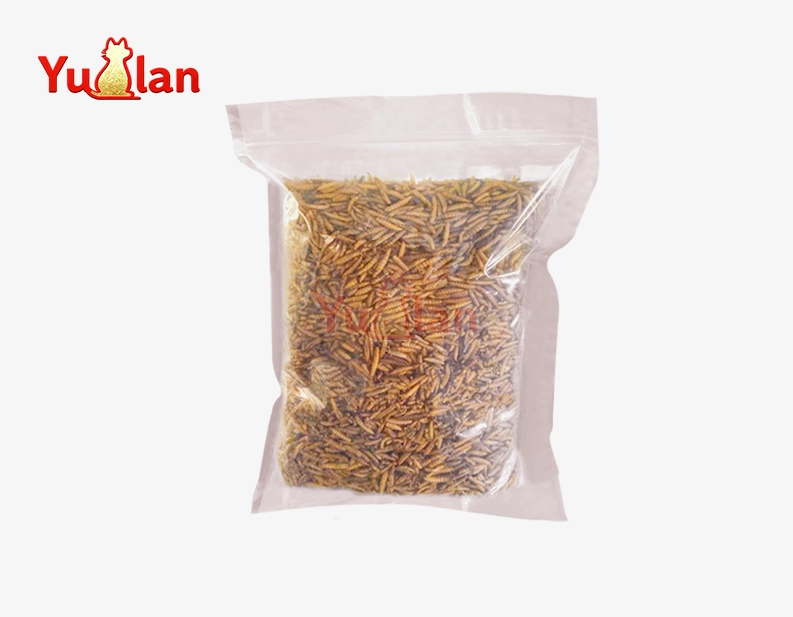
Yunlan now sells black soldier fly larvae that are safe for use in businesses as a high-quality protein source. Ruixin Cloud Wave Group has decades of knowledge in pet feeding and coming up with new feeds, which makes this possible. Biosecurity rules are very strict about how our black soldier fly larvae are raised. They will always have the same nutritional profiles because of this. These profiles meet the strict needs of pet food makers, vets, and feed sellers all over the United States.
Yunlan's all-around method combines a supply chain that has been shown to work with making high-quality larvae. We know what business needs B2B clients have because we work with over 10,000 stores and over 200 wholesalers. We can offer solutions that fit right into how they already buy things. If your company needs technical support or stable products, our experienced team can help. This is true whether you need big dried larvae for making pet food, special formulations for veterinarian therapeutic diets, or reliable supply contracts for selling in stores.
We sell and make black soldier fly larvae, and we want sourcing managers, product creators, and business owners to learn more about how sustainable insect protein can make your products stand out and be good for the environment at the same time. Visit yunlanpets.com or email our team at minghuixu6717@gmail.com to talk about your needs, get samples of our goods, and learn why top pet food brands choose Yunlan as their bug protein partner.
FAQ
What temperature range produces the healthiest black soldier fly larvae?
Between 27°C and 30°C (80°F and 80°F) is the best temperature range for larvae to grow. This is the best time for food quality, growth rates, and death rates. When temps drop below 20°C, growth slows down a lot. When temperatures stay above 35°C for a long time, more plants die and shorter biomass outputs are achieved.
How long does the complete production cycle take from egg to harvestable larvae?
The eggs should hatch in three to four days, the black soldier fly larvae should grow for fourteen to eighteen days, and the pupae should be ready to be picked as soon as they stop eating. Temperature, the quality of the ground, and the number of black soldier fly larvae can change how long it takes to harvest the eggs. Usually, it takes between 18 and 23 days.
Can black soldier fly larvae completely replace fish meal in pet food formulations?
Scientists have found that larvae can be used instead of 30–50% of fish meal in most recipes for cat food. The food will still taste good, be easy to digest, and be healthy. It is technically possible to replace the whole food, but depending on the type of pet, it may need more changes to the amino acid balance and the way it is made.
What regulatory approvals are needed to sell larvae-based pet food in the United States?
Because they are dried, black soldier fly larvae can be used to make food for dogs, cats, and other pets. When they make cat food, companies have to follow normal rules, like putting the right labels on it, reporting their facilities, and using good manufacturing practices. But they don't need any special rights to make food for bugs; they just need to use items that are okay.
References
1. Barragan-Fonseca, K.B., Dicke, M., & van Loon, J.J. (2017). Nutritional value of the black soldier fly (Hermetia illucens L.) and its suitability as animal feed – a review. Journal of Insects as Food and Feed, 3(2), 105-120.
2. Makkar, H.P.S., Tran, G., Heuzé, V., & Ankers, P. (2014). State-of-the-art on use of insects as animal feed. Animal Feed Science and Technology, 197, 1-33.
3. Wang, Y.S. & Shelomi, M. (2017). Review of black soldier fly (Hermetia illucens) as animal feed and human food. Foods, 6(10), 91.
4. Oonincx, D.G.A.B. & de Boer, I.J.M. (2012). Environmental impact of the production of mealworms as a protein source for humans – a life cycle assessment. PLoS ONE, 7(12), e51145.
5. Henry, M., Gasco, L., Piccolo, G., & Fountoulaki, E. (2015). Review on the use of insects in the diet of farmed fish: Past and future. Animal Feed Science and Technology, 203, 1-22.
6. Müller, A., Wolf, D., & Gutzeit, H.O. (2017). The black soldier fly, Hermetia illucens – a promising source for sustainable production of proteins, lipids and bioactive substances. Zeitschrift für Naturforschung C, 72(9-10), 351-363.