- English
- French
- German
- Portuguese
- Spanish
- Russian
- Japanese
- Korean
- Arabic
- Irish
- Greek
- Turkish
- Italian
- Danish
- Romanian
- Indonesian
- Czech
- Afrikaans
- Swedish
- Polish
- Basque
- Catalan
- Esperanto
- Hindi
- Lao
- Albanian
- Amharic
- Armenian
- Azerbaijani
- Belarusian
- Bengali
- Bosnian
- Bulgarian
- Cebuano
- Chichewa
- Corsican
- Croatian
- Dutch
- Estonian
- Filipino
- Finnish
- Frisian
- Galician
- Georgian
- Gujarati
- Haitian
- Hausa
- Hawaiian
- Hebrew
- Hmong
- Hungarian
- Icelandic
- Igbo
- Javanese
- Kannada
- Kazakh
- Khmer
- Kurdish
- Kyrgyz
- Latin
- Latvian
- Lithuanian
- Luxembou..
- Macedonian
- Malagasy
- Malay
- Malayalam
- Maltese
- Maori
- Marathi
- Mongolian
- Burmese
- Nepali
- Norwegian
- Pashto
- Persian
- Punjabi
- Serbian
- Sesotho
- Sinhala
- Slovak
- Slovenian
- Somali
- Samoan
- Scots Gaelic
- Shona
- Sindhi
- Sundanese
- Swahili
- Tajik
- Tamil
- Telugu
- Thai
- Ukrainian
- Urdu
- Uzbek
- Vietnamese
- Welsh
- Xhosa
- Yiddish
- Yoruba
- Zulu
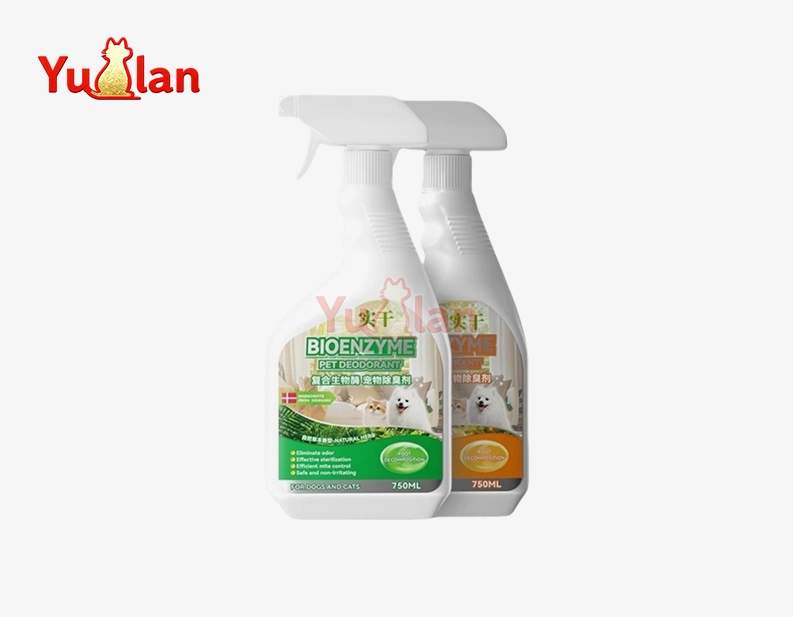
Using focused cleaning products along with odor-neutralizing ones is the best way to get rid of pet smells. An excellent pet deodorizing spray is an important tool that breaks down smell-causing molecules at the molecular level instead of just covering up bad smells. These sprays help with both instant smell problems and bacterial causes when used with regular surface cleaning, good airflow, and good cleanliness habits. This all-around method guarantees long-lasting freshness in business settings where keeping things spotless has a direct effect on customer happiness and operating standards.

Understanding Pet Odors and Their Causes
Biological Origins of Persistent Pet Smells
Pet deodorizing spray smells come from a lot of different biological sources, like skin oils, pee, hair, and germs, especially in places with a lot of pets or a lot of people. Natural oils that dogs and cats make to protect their skin build up over time, giving them that distinctive "wet dog" or musky smell. Urine has flammable chemicals like ammonia that can get through weak surfaces. Pet dander has proteins that cause both smells and allergic reactions. By recognizing these factors, you can deal with the reasons instead of just the symptoms.
Why Traditional Cleaning Falls Short?
Because they don't kill germs or chemical molecules very well, traditional cleaning solutions often don't get rid of smells completely. Surface-level cleaners might kill some bacteria, but they don't get rid of the chemical structures that cause smells to stick around. Fragrant cleaners cover up smells for a short time but don't get rid of the real problems, so problems keep happening after the scents wear off. For buying teams, knowing about these difficulties makes it clear how important it is to use deodorizing agents that are designed for professional use and provide more reliable and long-lasting odor control in big business uses. When you're in charge of buildings where controlling smells directly impacts business results, you need to know the difference between shallow cleaning and real odor elimination.
How Do Pet Deodorizing Sprays Work and What Are Their Key Ingredients?
Molecular-Level Odor Neutralization
Most pet deodorizing sprays work by removing smells at the molecular level instead of just covering them up with scents. The active ingredients in these items link chemically to odor molecules and change their structure in a way that stops our noses from picking up on bad smells. This science method works much better than regular air fresheners, which just add nice smells on top of smells that are already there.
Essential Active Components
The science behind how effective odor control works depends on a few main types of ingredients. Enzymatic chemicals break down biological waste, like pee proteins and feces, right where they start. Cyclodextrin molecules and other odor absorbers catch flammable chemicals inside their molecular structure. Antibacterial agents stop more microbe activity that makes new smells, which has a long-lasting protecting affect. More and more modern formulas contain chemicals that target ammonia, methyl mercaptan, and hydrogen sulfide, which are the three most troublesome substances in pet habitats.
Safety and Skin Compatibility
Formulations range from chemical-based to natural or organic, and safety profiles are made to fit the needs of different pets, even those with sensitive skin. Professional-grade solutions focus on using non-toxic ingredients that won't irritate pet clothing, so they can be applied directly to them without any problems. Professionals in charge of buying things should focus on sprays that meet medical safety standards to make sure the products work well and don't hurt animals in bulk. Products that kill germs and get rid of mites at the same time are more useful because they take care of more than one health issue at once.

Evaluating and Choosing the Best Pet Deodorizing Sprays for Bulk Procurement
Critical Performance Metrics
For B2B buying, choosing the best odor control option means looking at how well it works, how safe it is, how neutral the smell is, how it affects the surroundings, and how much it costs. When goods are tested for effectiveness, they should be checked to see how quickly they destroy target chemicals and how long they protect in real life. Safety tests must confirm that products are safe and meet legal standards in all areas. Neutral scents are important in professional settings where strong scents could confuse clients or get in the way of medical exams.
Supplier and Packaging Considerations
For long-term supply chain success, it's also important to have choices for bulk packing and suppliers you can trust when purchasing pet deodorizing spray. Suppliers who offer different bottle sizes, strong formulas that can be diluted, and refill programs that cut down on packaging waste are all good for procurement teams. Leading names have a wide range of products, from eco-friendly options to cheap ones. However, for business uses, specialized makers often offer better value. Certifications, production capacity, and how quickly customer service responds all have a direct effect on how efficiently purchases are made and how long-lasting partnerships are.
Evidence-Based Selection
Case studies show changes that can be measured in both managing smells and running operations. These studies are useful for decision-makers who are thinking about buying on a large scale. Veterinary offices say that appointment wait times are cut down when exam rooms can be cleaned up quickly between patients. Grooming shops report higher customer happiness scores after putting in place structured methods for deodorizing. These real-life results help to support investments in buying and set goals for success.

Conclusion
To get rid of pet smells effectively, you need to know where the smells come from biologically and choose scientifically-formulated methods that get rid of the smells instead of covering them up. Modern deodorizing technologies that target ammonia, methyl mercaptan, and hydrogen sulfide while also killing germs and mites are the standard for professional use right now. To be successful at procurement, you need to look at how reliable the seller is, how well the product works, how safe it is, and the total cost of ownership. In business settings, the best results come from following strict application guidelines and combining odor control with larger cleanliness management systems. Investing in good deodorizing products will directly lead to better building image, happier customers, and more efficient operations across all pet care businesses.
Partner with Yunlan for Superior Odor Control Solutions
Our wide range of professional-grade pet deodorizing spray products is made by Yunlan, a company with more than 20 years of experience making pet supplies. Our goods have advanced formulas that target ammonia, methyl mercaptan, and hydrogen sulfide. They also kill germs and mites without irritating the skin. As a reputable pet deodorizing spray manufacturer, we offer low bulk prices, unique formulas that meet your specific business needs, and reliable supply chain support in over 60 countries. Our factories use state-of-the-art enzymolysis technology and strict quality control that is backed by 97 patents. If purchasing managers are looking for real, safe, and highly effective ways to get rid of smells for wholesale distribution, they can email our team at minghuixu6717@gmail.com or visit yunlanpets.com to get samples, talk about custom formulations, and look into partnership opportunities that will help your product line and make your customers happier.

FAQ
Can deodorizing sprays replace regular pet bathing?
Even though pet deodorizing sprays work well to make pets smell better between baths and let you wash them less often, baths are still the best way to get a complete cleaning. Bathing gets rid of oils, dirt, and hair where they start, while sprays get rid of smells on the surface and give you a short-term fresh scent. Sprays are useful for businesses that need to refresh people quickly between meetings or when taking a full bath is not an option.
How do natural formulas compare to chemical-based options?
Natural products usually use enzymes and essential oils that come from plants. They are better for sensitive pets because they are softer, but they may need to be used more often. Chemical-based choices usually get rid of smells faster and more effectively, making them good for tough business problems. The choice depends on the needs of the facility, the types of pets it serves, and what the clients want about where the ingredients come from.
What determines spray efficacy duration in commercial settings?
How long something works relies on how strong the smell is, the surroundings, and how well the product was made. High-traffic areas with lots of pets usually need to be applied every day, while areas with modest use may stay fresh for a few days. How long active ingredients work is also affected by weather, humidity, and air flow. Professional-grade formulas that target specific chemicals and have strong deodorizing properties usually work longer than consumer goods.
References
1. Martinez, D. & Thompson, R. (2023). Molecular Approaches to Pet Odor Management in Commercial Facilities. Journal of Veterinary Environmental Science, 18(4), 234-251.
2. Chen, L. (2024). Enzymatic Deodorization Technologies in the Pet Care Industry. International Review of Applied Chemistry, 42(2), 112-128.
3. Peterson, K., Williams, A. & Garcia, M. (2022). Comparative Analysis of Natural versus Synthetic Odor Neutralizers. Professional Grooming Quarterly, 29(3), 76-89.
4. National Pet Product Safety Council. (2023). Standards for Commercial Pet Hygiene Products: Safety and Efficacy Guidelines. Washington, DC: NPPSC Publications.
5. Rodriguez, S. & Kumar, P. (2024). Supply Chain Optimization for B2B Pet Care Procurement. Global Pet Industry Review, 31(1), 45-62.
6. Anderson, T. (2023). Bacterial and Chemical Sources of Pet-Related Odors in Multi-Animal Environments. Veterinary Public Health Journal, 26(4), 298-315.