- English
- French
- German
- Portuguese
- Spanish
- Russian
- Japanese
- Korean
- Arabic
- Irish
- Greek
- Turkish
- Italian
- Danish
- Romanian
- Indonesian
- Czech
- Afrikaans
- Swedish
- Polish
- Basque
- Catalan
- Esperanto
- Hindi
- Lao
- Albanian
- Amharic
- Armenian
- Azerbaijani
- Belarusian
- Bengali
- Bosnian
- Bulgarian
- Cebuano
- Chichewa
- Corsican
- Croatian
- Dutch
- Estonian
- Filipino
- Finnish
- Frisian
- Galician
- Georgian
- Gujarati
- Haitian
- Hausa
- Hawaiian
- Hebrew
- Hmong
- Hungarian
- Icelandic
- Igbo
- Javanese
- Kannada
- Kazakh
- Khmer
- Kurdish
- Kyrgyz
- Latin
- Latvian
- Lithuanian
- Luxembou..
- Macedonian
- Malagasy
- Malay
- Malayalam
- Maltese
- Maori
- Marathi
- Mongolian
- Burmese
- Nepali
- Norwegian
- Pashto
- Persian
- Punjabi
- Serbian
- Sesotho
- Sinhala
- Slovak
- Slovenian
- Somali
- Samoan
- Scots Gaelic
- Shona
- Sindhi
- Sundanese
- Swahili
- Tajik
- Tamil
- Telugu
- Thai
- Ukrainian
- Urdu
- Uzbek
- Vietnamese
- Welsh
- Xhosa
- Yiddish
- Yoruba
- Zulu
Ear care is an essential part of daily health management for cats and dogs. Ear mites, bacterial infections, fungal inflammation and allergic otitis are common ear problems in pets. Many novice pet owners adopt incorrect operation methods when treating pet ear diseases, which leads to poor treatment effects, repeated inflammation and increased pet stress. This complete scientific guide systematically sorts out ear disease judgment, standardized medication steps, safety taboos and pet stress relief methods, guiding owners to complete professional and efficient ear treatment with pet ear drop.
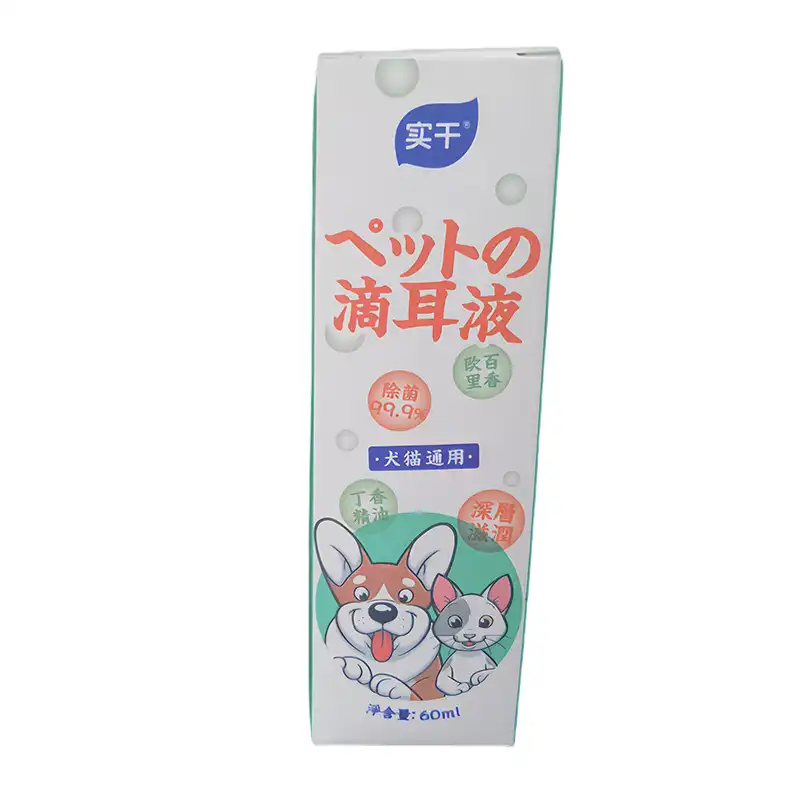
Judge When You Need Pet Ear Treatment
Before carrying out any ear medication operation, pet owners need to accurately identify pet ear lesions and judge the timing of intervention. Blind medication without clear etiology is the main cause of chronic recurrent otitis. This chapter introduces common pet ear abnormal symptoms, corresponding disease types and the importance of professional diagnosis to lay a foundation for standardized use of ear medicine.
Common Ear Symptoms That Require Medication Intervention
Dogs and cats have special L-shaped ear canals. Moisture, dirt and parasites are easy to accumulate in the deep canal, which induces various ear diseases. Owners need to pay close attention to their pets’ daily ear behaviors and physical changes.
Typical abnormal signs include frequent ear scratching, continuous head shaking, peculiar ear odor, red and swollen ear canal openings, and abnormal ear discharge. Living in high-humidity environments, frequent bathing or swimming, and contact with messy outdoor environments will greatly increase the risk of ear infection in pets.
Mild early symptoms should never be ignored. Timely and standardized intervention can effectively prevent minor inflammation from deteriorating into intractable chronic ear diseases, and pet ear drop is the most direct and effective household treatment product for such problems.
Classification of Ear Medicines for Different Ear Lesions
Veterinary ear medicines are divided into single-effect formulas and compound formulas according to their functions, aiming at different types of pet ear diseases respectively. Targeted medication is the core of efficient treatment.
Antibacterial formulas are suitable for bacterial otitis characterized by yellow-brown thick discharge and peculiar stench. Antifungal formulas target fungal infection with black waxy ear wax and sweet musty odor. Antiparasitic formulas are specially used to eliminate ear mites, which can solve intense itching and coffee-ground-like ear residues caused by parasites.
In addition, anti-inflammatory formulas are applicable to allergic otitis with simple swelling and no obvious pathogen infection. Compound formulas integrate multiple active ingredients to treat mixed infections of bacteria, fungi and parasites. Choosing the right pet ear drop according to symptoms can maximize the treatment effect.
Professional Diagnosis Must Precede Formal Medication
Personal subjective judgment cannot replace professional veterinary diagnosis. Before starting any ear treatment plan, pet owners must take their pets to a regular pet hospital for examination.
Veterinarians will observe ear discharge under a microscope to accurately determine the specific pathogen and lesion degree. This precise diagnosis avoids the problem of blind medication and invalid treatment.
Random purchase and use of ear medicines based on superficial symptoms will not only delay the best treatment time, but also induce drug resistance of pathogens. Professional diagnosis is the premise of safe and effective use of pet ear drop.
After confirming the pet’s ear disease type and obtaining professional medication guidance, standardized pre-medication preparation is the key to ensure smooth treatment and good absorption effect. Sufficient preparation can greatly reduce pet resistance and optimize the whole medication process.
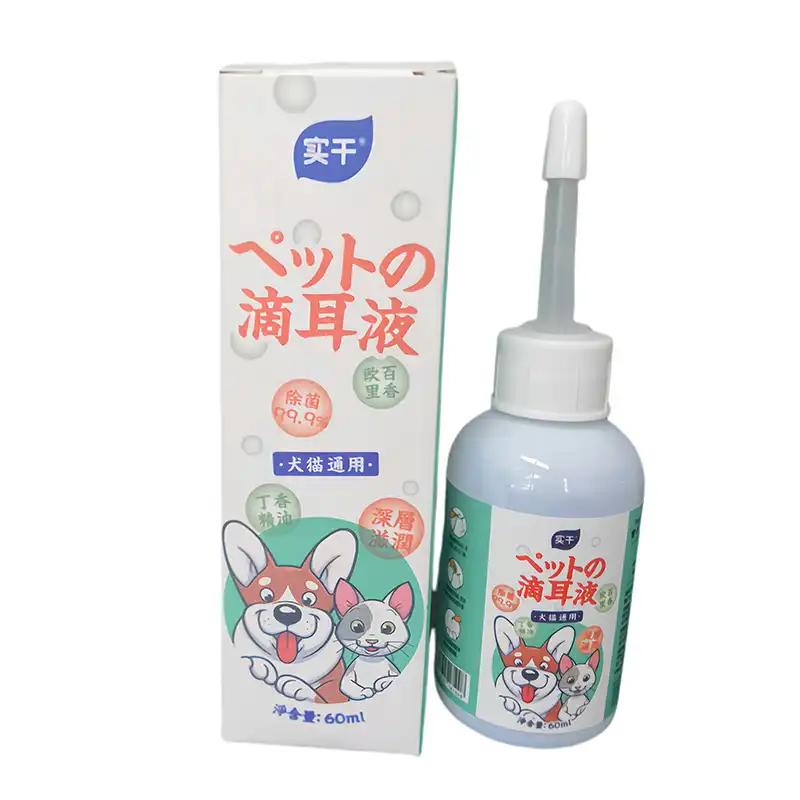
Standard Operation: Step-by-Step Guide to Apply Ear Medicine
The correct ear medication process is divided into pre-operation preparation, core dripping operation and post-medication nursing. Every standardized detail determines the final treatment effect and pet comfort. This chapter adopts simple and easy-to-understand short sentences to sort out the whole process, suitable for all pet owners to learn and operate.
Complete Preparations Before Medication Operation
First of all, create a suitable treatment environment. Choose a quiet, bright and fixed space, keep away from noisy environments and other pets, and eliminate external interference to calm the pet’s mood.
Prepare all required supplies in advance, including veterinary-prescribed ear medicine, sterile cotton balls, professional pet ear cleaning solution, clean towels and pet reward snacks. It is strictly forbidden to use cotton swabs, which will push dirt deep into the ear canal and scratch delicate ear tissues.
Adjust the medicine temperature reasonably. Cold liquid will cause strong discomfort and resistance in pets. Roll the medicine bottle back and forth between your palms for 3 to 5 minutes to warm it up naturally. Never heat it with a microwave to avoid destroying active ingredients or scalding ear skin, so that the pet ear drop can exert the best efficacy.
Complete external ear cleaning before dripping. Dip a cotton ball in professional ear cleaning solution to wipe the ear flap and the outer entrance of the ear canal to remove surface dirt, ensuring that the subsequent medicine can directly contact the inflamed lesion.
Core Dripping Skills to Maximize Efficacy
Fix the pet in a comfortable and safe posture first. Hold small cats and dogs stably on your lap; let large dogs stand or sit naturally. Do not force restraint to avoid aggravating pet resistance. For irritable pets, you can ask a helper to assist in fixation.
Straighten the pet’s curved ear canal. Gently pull the ear flap upward and backward to straighten the L-shaped ear canal, so that the liquid medicine can flow smoothly to the deep lesion with the help of gravity.
Strictly control the medication dosage in accordance with the veterinarian’s instructions. Generally, mild otitis requires 3 to 5 drops each time. Insufficient dosage cannot cover the lesion, while excessive dosage will cause waste and ear irritation.
After dripping the liquid medicine, massage the base of the pet’s ear for 20 to 30 seconds in a circular motion. The faint squishing sound indicates that the liquid medicine is evenly distributed in the ear canal, which is a key step to give full play to the effect of pet ear drop.
Post-Medication Care After Dripping
After the massage, release the pet’s head freely. Let the pet shake its head naturally. This behavior helps the liquid medicine spread fully in the ear canal and discharge loose residual dirt.
Use a clean cotton ball to wipe off excess liquid medicine and overflowing secretions on the surface of the ear. Only clean the visible outer ear part, and do not extend the cotton ball into the deep ear canal to avoid secondary damage.
Feed pet snacks or give verbal praise immediately after the operation. Establish positive behavioral hints to reduce the pet’s fear of ear medication and lay a good foundation for subsequent repeated treatment with pet ear drop.
Standard medication steps are the basis of treatment, but avoiding wrong operations and reducing pet stress are the guarantees of long-term cure. Next, we will sort out common medication risks, stress relief training methods and professional medical assistance timing.
Safety & Experience: Avoid Risks and Reduce Pet Resistance
Improper ear medication will not only fail to treat diseases, but also cause secondary damage to the pet’s ear canal. Long-term repeated medication is easy to make pets resist the operation. This chapter summarizes high-frequency medication mistakes, safety specifications and desensitization training skills to ensure safe and efficient treatment.
Common Dangerous Mistakes in Ear Medication
Never use human ear medicine instead of special veterinary ear medicine. Human ear care products contain irritating ingredients and inappropriate drug concentrations, which will cause damage to pets’ fragile ear canals.
Do not insert the dropper deep into the ear canal. The pet’s ear canal has sharp bends. Deep insertion will easily scratch ear tissues and cause pain. Just place the dropper at the ear entrance and let the liquid medicine flow in naturally to ensure safe delivery of pet ear drop.
Do not stop medication in advance. Many owners stop treatment after the pet’s superficial symptoms disappear. The residual pathogens will recur and even produce drug resistance, turning mild inflammation into refractory chronic diseases.
Avoid cross-infection of bacteria. Do not share cleaning supplies and droppers between the left and right ears or different pets. Wash hands thoroughly before and after each medication to cut off the infection path.
Desensitization Training to Lower Pet Medication Resistance
Carry out daily ear desensitization training in peacetime. Gently stroke the pet’s ear flap during grooming and feeding, and gradually extend the touching time to let the pet adapt to ear contact operations.
Fix a unified medication time and scene. Choose the period when the pet is slightly tired after exercise. Avoid medication before and after meals when the pet is in a bad mood, and form a stable behavioral habit.
For extremely resistant pets, adopt two-person cooperative operation. One person comforts and fixes the pet, and the other person completes the dripping operation. Scientific auxiliary training can effectively reduce pet anxiety during the use of pet ear drop.
Timely Professional Help Signals
Observe the pet’s ear status and behavioral changes after continuous medication. Once the symptoms worsen, seek veterinary help in time.
If the ear discharge increases, the odor intensifies, or the pet shows obvious pain and screaming when touching the ear, it indicates that the current medication scheme is not applicable.
Repeated ear diseases after a complete course of treatment may be caused by underlying problems such as allergies and ear structural abnormalities. Professional systematic examination is needed to solve the root cause and avoid repeated medication failure of pet ear drop.
To solve the doubts of pet owners in actual operation, we have sorted out high-frequency consultation questions in daily ear care, and attached professional brand solutions and authoritative academic references to improve the comprehensiveness and professionalism of the guide.
FAQs
① How often should I apply ear medicine to my pet?
The medication frequency depends on the pet’s lesion type and veterinary prescription. Bacterial otitis usually requires twice-daily medication, while fungal infection is mostly treated once a day. Do not adjust the frequency arbitrarily to ensure the stable efficacy of pet ear drop.
② Can I use the same ear medicine for dogs and cats?
A few compound ear medicines are suitable for both dogs and cats, but the dosage varies greatly according to weight. Some ingredients safe for dogs are toxic to cats. Professional veterinary confirmation is required before cross-species use.
③ What to do if pets resist ear medication fiercely?
Adhere to long-term desensitization training and use high-value snacks to build positive medication associations. If the resistance is serious, consult a veterinarian to replace liquid medicine with ointment or cleaning wipes, so as to improve the adaptability of pet ear drop treatment.
④ How long will it take to see improvement after medication?
Most pets have relieved itching and odor within 3 to 5 days of standardized medication. Complete recovery takes 1 to 4 weeks according to the severity of the disease. If there is no improvement for one week, please return to the hospital for reexamination.
⑤ Is head shaking normal after dripping medicine?
Mild head shaking within 5 minutes after medication is a normal physiological reaction, which helps the liquid medicine spread evenly. Continuous violent head shaking indicates ear irritation, and medication should be suspended for inspection.
Professional Pet Ear Care Solution: Yunlan Pet Ear Care Series
Selecting safe, mild and efficient professional ear care products is the key to solve pet ear problems permanently. Yunlan is a professional pet care manufacturer focusing on the R&D and production of pet ear health products, with mature production technology and professional R&D team.
The brand’s ear care products are developed for bacterial, fungal, mite and mixed ear infections respectively. The formula is mild and non-irritating, suitable for cats and dogs of all ages, and effectively solves various common ear problems. We support bulk wholesale for pet hospitals and chain pet stores, and provide trial samples for individual pet owners.
If you need to obtain product catalogs, technical parameters, preferential cooperation policies and customized formula services, please contact our professional business team via email: minghuixu6717@gmail.com. We provide one-stop professional solutions for pet ear health care with high-quality pet ear drop products.
References
-
Thompson K R, Allaby E J, Lewis T D. Veterinary Dermatology: Ear Disease Management in Companion Animals[J]. Journal of Veterinary Medicine, 2024, 45(3): 234-248.
-
Martinez L S. Clinical Guidelines for Topical Otic Therapy in Dogs and Cats[M]. 2nd ed. Professional Publishing, 2023.
-
Chen M W, Li H T. Antimicrobial Resistance in Pet Ear Infections: Prevention Through Proper Otic Medication Administration[J]. Companion Animal Health Review, 2024, 12(7): 89-102.
-
Rodriguez A P, Williams J K. Behavioral Techniques for Stress-Free Veterinary Otic Treatment[J]. Animal Behavior and Training Quarterly, 2023, 28(4): 156-171.
-
Davis R M. Comparative Efficacy of Different Otic Formulations in Canine and Feline Ear Disease[J]. Veterinary Therapeutics Annual, 2024, 19: 345-362.
-
Foster S L, Graham P C. Owner Compliance and Treatment Outcomes in Long-Term Pet Ear Disease Management[J]. Journal of Applied Veterinary Research, 2023, 31(6): 423-437.