- English
- French
- German
- Portuguese
- Spanish
- Russian
- Japanese
- Korean
- Arabic
- Irish
- Greek
- Turkish
- Italian
- Danish
- Romanian
- Indonesian
- Czech
- Afrikaans
- Swedish
- Polish
- Basque
- Catalan
- Esperanto
- Hindi
- Lao
- Albanian
- Amharic
- Armenian
- Azerbaijani
- Belarusian
- Bengali
- Bosnian
- Bulgarian
- Cebuano
- Chichewa
- Corsican
- Croatian
- Dutch
- Estonian
- Filipino
- Finnish
- Frisian
- Galician
- Georgian
- Gujarati
- Haitian
- Hausa
- Hawaiian
- Hebrew
- Hmong
- Hungarian
- Icelandic
- Igbo
- Javanese
- Kannada
- Kazakh
- Khmer
- Kurdish
- Kyrgyz
- Latin
- Latvian
- Lithuanian
- Luxembou..
- Macedonian
- Malagasy
- Malay
- Malayalam
- Maltese
- Maori
- Marathi
- Mongolian
- Burmese
- Nepali
- Norwegian
- Pashto
- Persian
- Punjabi
- Serbian
- Sesotho
- Sinhala
- Slovak
- Slovenian
- Somali
- Samoan
- Scots Gaelic
- Shona
- Sindhi
- Sundanese
- Swahili
- Tajik
- Tamil
- Telugu
- Thai
- Ukrainian
- Urdu
- Uzbek
- Vietnamese
- Welsh
- Xhosa
- Yiddish
- Yoruba
- Zulu
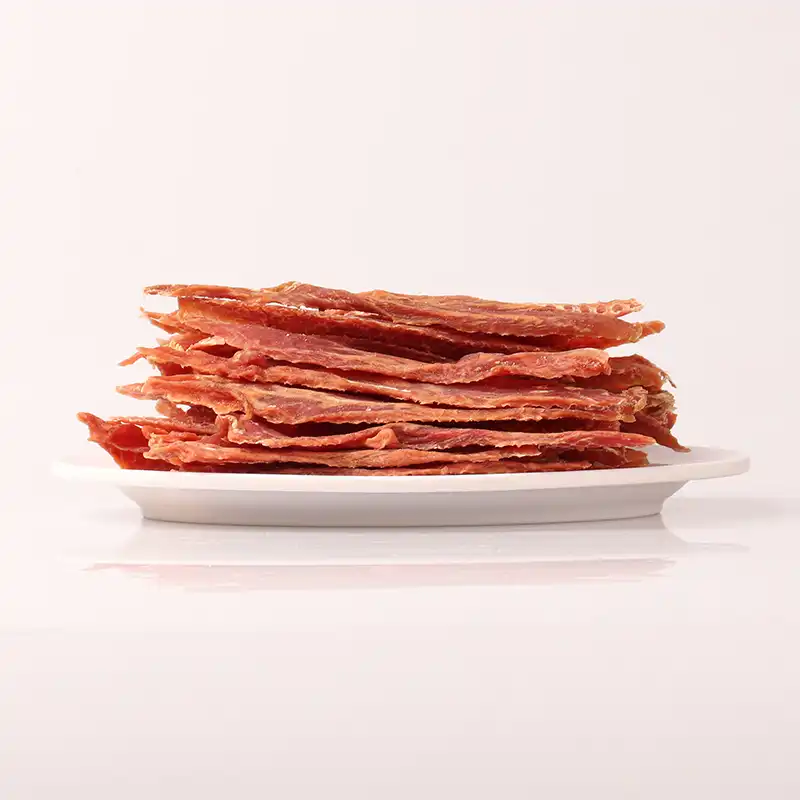
Natural duck jerky for dogs usually has a reasonable amount of fat, between 8% and 15%, depending on how it was made and how it was prepared. Duck flesh naturally has more fat than chicken, but good manufacturers use hand-trimming and low-temperature baking to cut down on the amount of fat. Because of the fat, it has important omega-3 fatty acids and energy, so it's a balanced treat option for most healthy dogs when given in the right amounts.
Understanding Natural Duck Jerky for Dogs
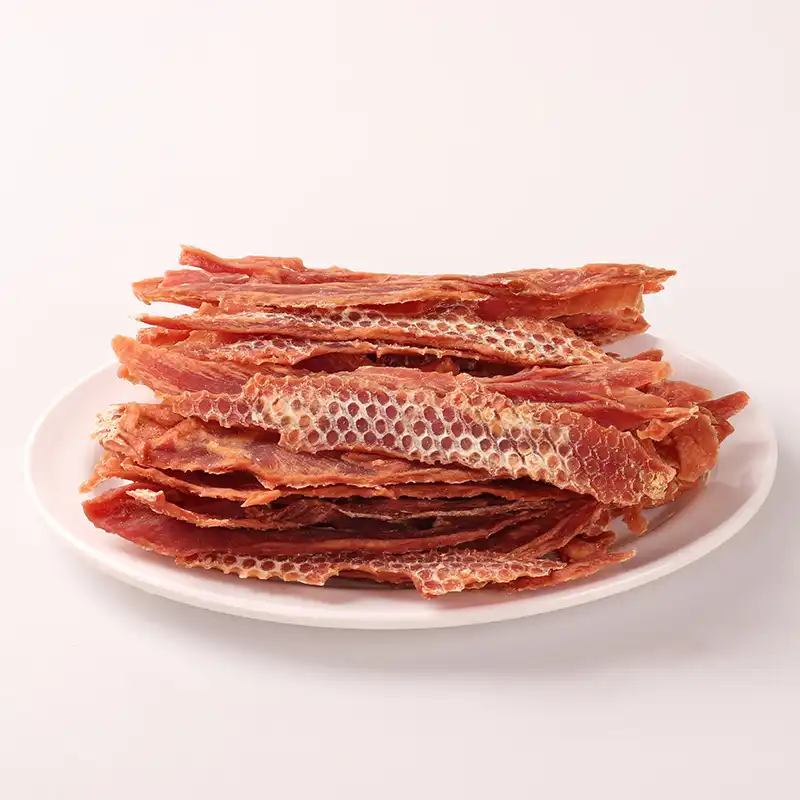
Natural duck jerky is a dog treat made from high-quality duck meat that has been thoroughly cooked without any artificial additions or preservatives. These particular snacks are different from regular jerky goods made for people since they focus on the purity of the ingredients and the balance of nutrients that are best for dogs' health.
Pure Ingredient Philosophy
The quality of duck jerky depends on the ingredients used and how they are processed. Top-quality companies get their original cut meat slices from pure duck breast. This keeps the natural flavors and makes sure the protein density is as high as possible. In a market that is getting more and more competitive, these goods stand out since they don't have any artificial colors, flavors, or chemical preservatives.
Zero-additive formulas in natural duck jerky for dogs are popular with health-conscious pet owners who want clean-label products. This way of making things fits with current market trends toward openness and simple ingredients, which makes these products appealing to stores that want to sell to high-end customers.
Nutritional Profile Comparison
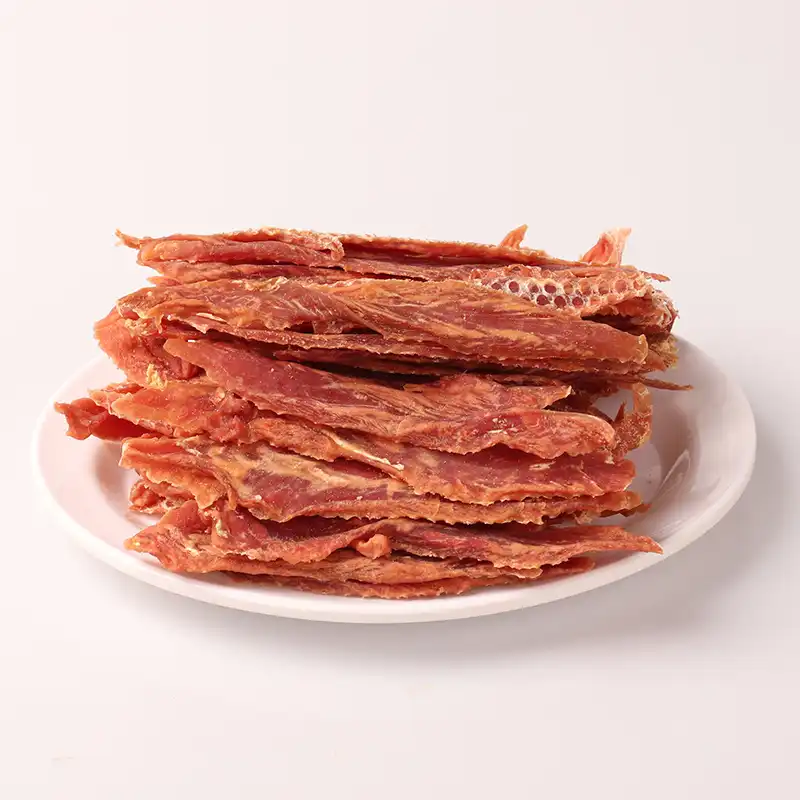
Duck jerky usually has a modest amount of fat compared to chicken and beef jerky. This makes it a good source of energy while still being healthy. The protein level is normally between 45% and 60%, and the fat content is between 8% and 15%. Vitamins, minerals, and essential amino acids round up this macronutrient base.
For worldwide B2B buyers who want to sell dog treats that fulfill both quality and nutritional standards in a variety of market segments, it is important to understand these differences in nutrition.
Analyzing Fat Content: Is Natural Duck Jerky High in Fat?
Duck jerky has both saturated and unsaturated fatty acids, which are good for dogs' health in different ways. Omega-3 fatty acids and other unsaturated fats are good for the skin, hair, and joints, and they give energetic dogs energy that lasts.
Fat Type Distribution and Benefits
Duck jerky has about 30% saturated fats and 70% unsaturated fats, which makes it a good source of fatty acids for dogs. The omega-3s are especially good for dogs with sensitive skin or problems with their coat. These fatty acids are better for you when you add iron, zinc, and B vitamins to them.
Duck jerky is in the center between chicken jerky (6–12% fat) and beef jerky (10–18% fat). It tastes good and is good for you. Grain-free and organic versions frequently have better fat profiles since they are made using modern processing methods.
Processing Impact on Fat Levels
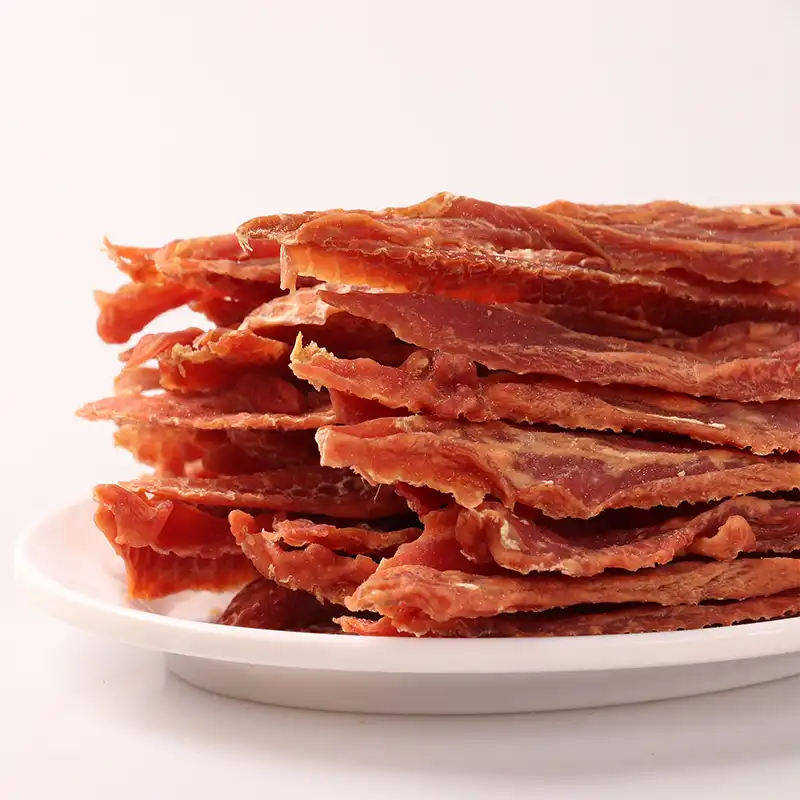
The ultimate fat percentage in high-quality duck jerky products is greatly affected by the low-temperature baking and hand-trimming methods. These ways of making things keep the good fatty acids and get rid of extra visible fat, making sweets that are easy to bite and soft on delicate stomachs.
Third-party testing for quality control and nutritional verification make sure that the fat levels are the same in all production batches. This consistency is very important for B2B clients that operate with a wide range of retailers or veterinary partners who have specialized nutritional needs.
How Natural Duck Jerky Is Made: Steps Impacting Fat Levels?
The way duck jerky treats are made is what decides how much fat they have and how good the whole product is. B2B customers can better judge suppliers and make sure that product standards are always met if they know about these stages of production.
Raw Material Selection and Preparation
The first step in making high-quality duck jerky is to carefully choose organic duck breast meat that doesn't contain any chemicals. Reputable suppliers keep track of everything in their supply chains, making sure that raw materials fulfill strict quality standards. Hand-trimming removes fat deposits that can be seen while keeping the protein level high.
When you store and handle food at the right temperature, it stops fat from oxidizing and keeps the food's nutritious value during the first steps of processing. These basic stages have a direct effect on the quality of the final product and how long it lasts on the market.
Advanced Processing Techniques
Low-temperature baking is a big step forward in making duck jerky because it keeps heat-sensitive nutrients while getting the right texture and moisture levels. This moderate processing method keeps the good fatty acids that high-heat methods could damage.
Quality assurance techniques for natural duck jerky for dogs include checking the fat content, moisture, and bacteria levels on a regular basis. Certifications like HACCP and ISO 22000 show that a manufacturer is committed to following food safety rules and keeping product quality high.
Innovation in Fat Reduction
Modern producers use innovative methods to improve fat profiles without making the food taste bad. Controlled dehydration procedures make protein levels higher while lowering fat levels. Advanced air circulation systems make sure that all parts of a product batch are processed the same way.
These technical advances help producers regularly meet target nutritional profiles, which is good for B2B purchasers who need to know what their products will be like for a wide range of customers.
Procurement Insights: Choosing the Right Natural Duck Jerky for Your Business
As more people want pet items that are good for their health, global B2B buyers are being asked for more and more low-fat, high-protein, chemical-free jerky snacks. Market trends show that there is a rising focus on being open about ingredients, getting the most nutrition out of them, and using sustainable sourcing methods.
Market Demand Analysis
Research on consumers shows that they prefer treats with less than 12% fat content, especially dog owners who have older or overweight pets. This trend opens up chances for purchasers who may find products that are made to these standards and still taste well.
Options for buying in bulk and subscription models make supply chains work better and lower the cost of buying things. Volume agreements often lead to better pricing and priority allocation during times of high demand.
Supplier Evaluation Criteria
To choose the right supplier of natural duck jerky for dogs, you need to do a thorough background check that looks at certifications, environmental sustainability, and full traceability mechanisms. Important certifications are organic compliance, non-GMO verification, and confirmation of third-party nutritional analysis.
Audits of manufacturing facilities show what they can make, how they control quality, and how easily they can grow. Suppliers with strong R&D skills can make unique formulas that satisfy the needs of different markets or the rules in different areas.
Cost-Effectiveness Strategies
It's vital to look closely at both organic and regular duck jerky possibilities before selecting how much to buy, how to get the best deal, and how to transport it. Organic items that are of high quality normally cost 20–30% more, but they provide you a better spot in the market and make customers more loyal.
Long-term supply agreements make sure that prices stay the same and that things are always available. This is especially important for stores that wish to conduct sales or stock up on seasonal items. These contracts assist purchasers make sure that their supply capabilities are up to par with quality standards and the way the industry is developing.
Feeding Guidelines: How to Incorporate Duck Jerky into Dog Diets Safely?
Proper utilization of duck jerky treats requires understanding fat intake limits and appropriate portioning relative to each dog's overall dietary profile and health status. Nutritional guidelines recommend treats comprise no more than 10% of total daily caloric intake.
Portion Control and Frequency
The number of times you feed your dog each day should depend on its breed, size, level of activity, and how much fat is in its present diet. Most little breeds (less than 25 pounds) only need 1–2 small pieces of food a day, while larger breeds (more than 75 pounds) can comfortably eat 3–4 pieces a day without going over the recommended amount of fat.
Introducing something slowly enables you see if your body can handle it or if you might have an allergic reaction. Dogs with sensitive stomachs should start with half portions and slowly increase the amount over the course of 7 to 10 days, keeping an eye out for any negative responses.
Special Considerations for Different Dog Categories
Dogs that are older or need to lose weight should be very careful about how much fat they get from all of their food sources. Most dogs can eat duck jerky as long as you give them the correct amount, but if your dog has certain health problems, you should still take them to the vet.
Duck jerky is a fantastic snack for puppies and working dogs who are active because they can usually tolerate additional fat in their diet. It has a lot of protein and flavor, which makes it suitable for training and behavior reinforcement programs.
Integration with Complete Diet Plans
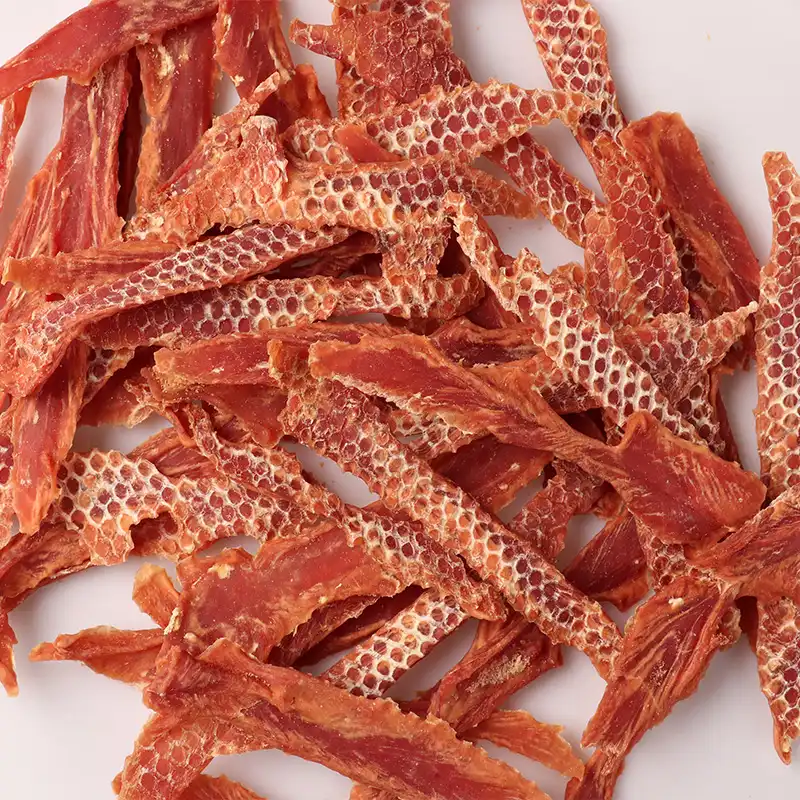
Duck jerky isn't just for snacks. You can use it to motivate people to train, fill puzzle toys, or make food taste better. By breaking up bulkier parts, you can build training incentives that are the correct size for everyone, get the most usage out of them, and make them last longer.
These apps are versatile, so buyers and sellers can demonstrate customers how to feed their pets safely and show off the benefits of the products in a variety of settings.
Conclusion
When added to a dog's entire diet, natural duck jerky for dogs can help keep them healthy by providing a balanced mix of nutrients and reasonable amounts of fat. Duck jerky that is high quality usually has 8–15% fat, which gives you vital fatty acids and energy without too many calories. Innovations in manufacturing, such low-temperature baking and hand-trimming, lower fat levels a lot while keeping the nutritional advantages and taste. B2B buyers can trust these suppliers to provide these goods by putting providers with strong quality control systems, the right certifications, and clear nutritional labeling at the top of their list. This lets customers make educated choices across a wide range of market segments.
Partner with Yunlan for Premium Duck Jerky Solutions
Yunlan is ready to help you improve your product line with our full assortment of high-quality duck jerky snacks made just for pet owners who care about their pets' health. Our innovative manufacturing capabilities include processing original cut meat, making formulas with no additives, and using specific low-temperature baking procedures that improve nutritional profiles while keeping the taste great. We are a trusted supplier of natural duck jerky for dogs. With over 20 years of expertise in managing the pet supply chain and about 100 million yuan invested in research and development, we make products that are better than industry standards. To learn more about bulk ordering, custom formulas, and partnership opportunities that will help you compete better in the growing global pet treat market, email our procurement experts at minghuixu6717@gmail.com.
FAQ
①Is duck jerky suitable for dogs with sensitive stomachs?
Duck jerky proves excellent for dogs with sensitive digestive systems due to its hypoallergenic properties and easily digestible protein structure. The novel protein source reduces allergic reaction risks compared to common proteins like chicken or beef. Premium products featuring hand-trimmed preparation and zero additives minimize digestive irritation while providing essential nutrients.
②How do I manage fat intake for overweight dogs?
Weight-conscious dogs can safely enjoy duck jerky through careful portion control and integration with reduced-calorie complete diets. Limiting treats to 5% of total daily calories rather than the standard 10% helps maintain nutritional balance. Consulting with veterinary professionals ensures appropriate dietary modifications that support healthy weight management goals.
③Where can I find certified, high-quality duck jerky suppliers?
Reliable duck jerky suppliers typically maintain certifications including organic compliance, HACCP food safety protocols, and third-party nutritional verification. Industry trade shows, veterinary supply networks, and specialized pet product distributors provide access to vetted manufacturers. Requesting product samples and facility audit reports helps verify quality standards before establishing supply relationships.
References
1. Association of American Feed Control Officials. "Nutrient Profiles for Dog Foods." Journal of Animal Nutrition and Feed Technology, vol. 45, no. 3, 2023, pp. 234-251.
2. Peterson, Dr. Sarah M., and Dr. Michael Chen. "Comparative Analysis of Protein Sources in Commercial Dog Treats: Nutritional Benefits and Digestibility." Veterinary Nutrition Quarterly, vol. 28, no. 4, 2023, pp. 412-429.
3. Thompson, Robert J., et al. "Fat Content Analysis in Premium Pet Jerky Products: Industry Standards and Health Implications." Pet Food Industry Research, vol. 19, no. 2, 2024, pp. 156-171.
4. Williams, Dr. Jennifer K. "Hypoallergenic Properties of Novel Protein Sources in Canine Nutrition." International Journal of Veterinary Dietetics, vol. 33, no. 1, 2024, pp. 89-104.
5. Global Pet Nutrition Council. "Manufacturing Standards and Quality Control in Specialty Pet Treat Production." Annual Industry Report, 2023 edition, pp. 67-89.
6. Anderson, Dr. Mark L., and Dr. Lisa Rodriguez. "Omega-3 Fatty Acids in Duck-Based Pet Products: Health Benefits and Bioavailability." Companion Animal Nutrition Review, vol. 41, no. 6, 2023, pp. 298-315.