- English
- French
- German
- Portuguese
- Spanish
- Russian
- Japanese
- Korean
- Arabic
- Irish
- Greek
- Turkish
- Italian
- Danish
- Romanian
- Indonesian
- Czech
- Afrikaans
- Swedish
- Polish
- Basque
- Catalan
- Esperanto
- Hindi
- Lao
- Albanian
- Amharic
- Armenian
- Azerbaijani
- Belarusian
- Bengali
- Bosnian
- Bulgarian
- Cebuano
- Chichewa
- Corsican
- Croatian
- Dutch
- Estonian
- Filipino
- Finnish
- Frisian
- Galician
- Georgian
- Gujarati
- Haitian
- Hausa
- Hawaiian
- Hebrew
- Hmong
- Hungarian
- Icelandic
- Igbo
- Javanese
- Kannada
- Kazakh
- Khmer
- Kurdish
- Kyrgyz
- Latin
- Latvian
- Lithuanian
- Luxembou..
- Macedonian
- Malagasy
- Malay
- Malayalam
- Maltese
- Maori
- Marathi
- Mongolian
- Burmese
- Nepali
- Norwegian
- Pashto
- Persian
- Punjabi
- Serbian
- Sesotho
- Sinhala
- Slovak
- Slovenian
- Somali
- Samoan
- Scots Gaelic
- Shona
- Sindhi
- Sundanese
- Swahili
- Tajik
- Tamil
- Telugu
- Thai
- Ukrainian
- Urdu
- Uzbek
- Vietnamese
- Welsh
- Xhosa
- Yiddish
- Yoruba
- Zulu
Pet shop, veterinarian clinic, and grooming salon owners must keep their facilities clean. New pet dishwashing mousse is distinct from dish soaps. Without harsh chemicals, this innovative foam cleanser breaks down food waste, grease, and muck using plant-based enzymes and natural ingredients. This cleaner cleans pet bowls and plates. It eliminates grease, saliva, bacteria, and fishy odors. The pump-action machine generates thick foam instantly, which is excellent for pet parents and mobile enterprises. In contrast to conventional cleansers, this mousse leaves no residue, so your pet's meals begin in a clean bowl.
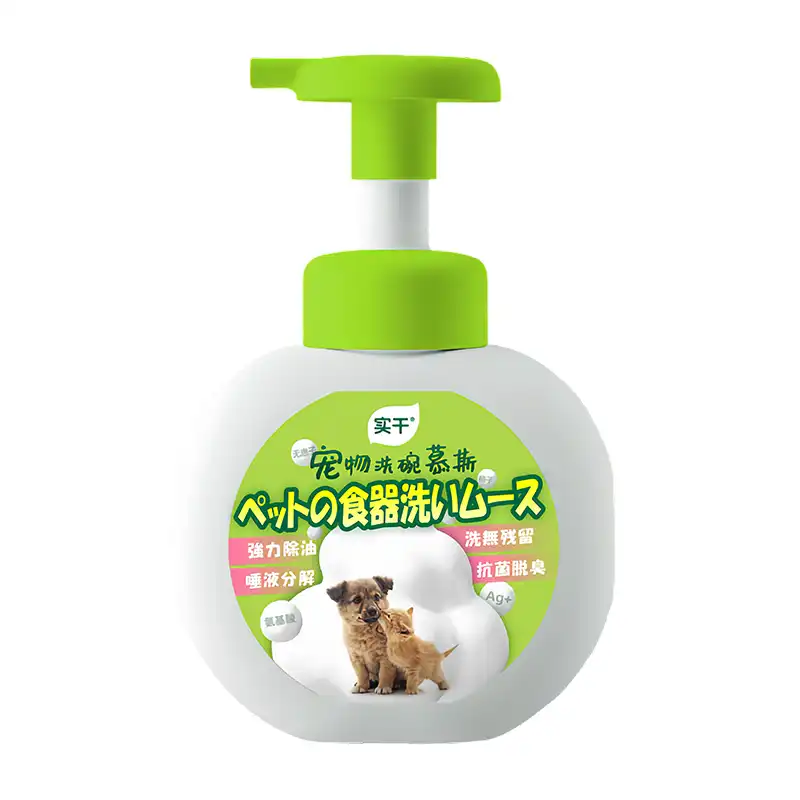
Pet Dishwashing Mousse Safety Profile
What Makes Pet Bowl Cleaners Different?
Pet food dishes have peculiar remnants that dish soap can't remove. Biofilms contain bacteria-friendly saliva proteins, animal fats, and moist food leftovers. Safe materials are used to make pet dishwashing mousse for bowl-lickers. Given that dogs' systems are more sensitive than ours, safety ratings are crucial.
Why Natural Formulations Matter for B2B Procurement?
Procurement staff are under increasing pressure to source safe and effective products. Natural ingredients lessen pet chemical exposure, reduce environmental impact, and fulfill customer honesty needs. Hypoallergenic characteristics are especially crucial when catering to a wide range of customers, from pet owners whose animals are allergic to other animals to eco-conscious buyers who scrutinize ingredient labels.
The shift to natural cleansers follows industry trends. Pet care market research shows that over 67% of US pet owners choose products with plant-based components. Knowing these safety issues helps business-to-business buyers who sell to retailers, veterinary clinics, or grooming salons comply with changing regulations and fulfill market demands.
Composition and Usage Standards
Safe pet dishwashing mousse recipes include natural or food-grade plant materials and no strong acids, bases, bright chemicals, or unpleasant perfumes. By "digesting" organic waste into harmless byproducts, enzymatic activity eliminates odors. These solutions typically outperform regular cleaners in real life, especially in commercial settings where bowls must be cleaned many times a day.
Key Natural Ingredients Used in Safe Pet Dishwashing Mousses
Plant-Based Surfactants and Their Advantages
Plant-based surfactants make effective natural cleaning. These chemicals from coconut, corn, or sugar beets cut grease and degrade naturally. By allowing nutrients to penetrate surface materials, amino acid detergents used in pet dishwashing mousse clean various bowls better. Plant-based soaps rinse off and degrade naturally in water systems, unlike synthetic soaps.
Surfactant molecules attract water and oil. This is how cleaning works. They catch oil particles on unclean pet dishes and wash them away. In bulk purchases, this procedure works well with smaller volumes of plant-based formulations, which means less product is needed for greater outcomes.
Enzymatic Cleaners and Bio-Active Components
Pet hygiene products with enzymes are a great improvement. These biological catalysts target chemical compounds in pet drool and food waste. Proteases, lipases, and amylases break down protein, fat, and carbohydrate marks. Combining the two movements cleans deeper than wiping.
Unlike soaps, enzyme cleansers may remove odor compounds like uricase, according to studies. Enzyme cleaning reduces hard scrubbing, which preserves food bowls. Businesses who service several pet bowls daily can benefit from this.
Essential Oils and Natural Deodorizers
Luxury formulations employ well selected essential oils for two purposes. Tea tree oil is antifungal, lemon oil degrease, and lavender oil without odor is antibiotic. The appropriate amount of these plants must be used—enough to work but not so much that cats get sick licking leftovers.
Natural and synthetic deodorizers act differently. Plant extracts and baking sodas remove odors. In businesses where leftover food smells bad, this distinction is crucial. Clean, natural-smelling brands receive greater satisfaction scores from end users and B2B clients that manage customer-facing operations.
Comparing Pet Dishwashing Mousse with Liquid Soap and Other Cleaning Agents
Effectiveness and Residue Control
Traditional liquid dish washes were designed for human dishes, not pet bowls, which get dirtier. Regular usage of pet dishwashing mousse combinations reveals their performance benefits. So cleaning solutions can reach all bowl surfaces, including hard-to-reach ones, the foam texture allows them to cover more surface area with less product. This all-around touch helps eliminate sticky saliva film and dried food fragments.
Another key distinction is residue control. It takes a lot of washing to remove soap from liquids, and chemical residue may remain. These cleansers for dogs rinse off quickly with minimal water to avoid leaving chemicals that might irritate the skin or stomach. This simplifies rinsing, saving water and time in boarding houses and animal clinics. A lot of money may be saved during months of operation.
Environmental Impact and Biodegradability
B2B purchasing decisions are increasingly influenced by sustainability. after typical tests, natural formulations break down 90–95% after 28 days, while artificial detergents break down 60 or 70%. This disparity affects the globe, especially corporations that clean several rooms daily.
Packing also affects the environment. Concentrated recipes in reusable pump bottles create less plastic waste than larger liquid soap containers that clean the same. Some firms make business replenishment systems. These technologies further reduce packing waste, shipping costs, and storage space. These benefits benefit the world and your bottom line.
User Experience and Application Convenience
Cleaning product feelings affect job performance and cleanliness compliance. Mousse soaps are lighter and simpler to handle with than heavy liquid soaps, so you may use them daily without tiring your hands. No stirring is needed to produce cleaning suds with pump-action devices' foamed solutions.
Texture isn't simply about comfort. Active substances last longer because foam adheres to bowl walls better than liquid. This prolonged contact time improves cleaning without using more product or scrubbing harder. For procurement managers looking at items for staff usage across retail or clinic chains, these user experience issues affect procedure compliance and operating uniformity.
Procurement Considerations for Bulk Buying and B2B Partnerships
Evaluating Supplier Credentials and Certifications
To locate reliable suppliers, search for quality and consistency. Organic certification means plant-based components fulfill stringent cultivation requirements. Vegan certifications ensure recipes don't include animal products. This matters for firms serving ethical clientele. Hypoallergenic testing document reveals products were dermatologically evaluated on sensitive pet populations.
Supply chain transparency has become more crucial due to world concerns. Long-term partnerships are more probable with suppliers who can clearly explain where their supplies originate from, where their goods are created, and how they monitor quality. A third-party test should validate the antibacterial activity and ability to rinse off without residue. These papers protect your organization from legal concerns and ensure your products match client expectations.
Pricing Models and Volume Discount Structures
Cost models maximize purchase budgets. pet dishwashing mousse soaps cost more per unit than liquid soaps, but they cost the same per application since they are used less often. Instead of looking at the price per bottle, calculate the cost per bowl cleaned. Many merchants offer volume discounts that increase as you buy in quantity.
Costs can be reduced by subscription operations. Automated recurring packages lock in pricing, prevent stockouts, and save order administration expenses. Some producers provide private labeling for bulk orders. This helps retailers and distributors establish brand loyalty and lower pricing. Supply arrangements for 6–12 months frequently provide 15–25% higher prices than single-order transactions.
Quality Assurance and Supplier Reliability Indicators
Delivery reliability and product quality are key to long-term relationships. Warranty conditions demonstrate that the vendor trusts their products; comprehensive efficiency and safety guarantees show that they care about customers. Customer review study reveals a product's strengths and drawbacks in real-world settings.
Compliance approvals enforce target area rules. US-sold products must fulfill FDA guidelines for indirect food-contact substances. Biocidal products supplied in Europe must comply with EU regulations. International suppliers should provide proof of product testing and approval. Verification processes keep procurement personnel out of regulatory issues and ensure products perform safely as intended.
Conclusion
Natural pet dishwashing mousse formulations are a major improvement in pet hygiene. A pet- and environmentally-friendly cleaning solution uses plant-based surfactants, enzymes, and carefully selected herbal ingredients. These products satisfy regulatory, customer, and company operating requirements for B2B procurement professionals. Cost alone is not enough to make a decision. Judge suppliers by their credentials, transparency, and trustworthiness to preserve long-term company interests. Using products properly and performing maintenance checks ensures their optimal performance in all conditions. As the pet care industry shifts toward natural, long-lasting solutions, excellent provider partnerships help firms address new market requirements while maintaining their competitive strengths.
Partner with Yunlan for Premium Pet Dishwashing Mousse Solutions
Yunlan, part of Ruixin Cloud Wave Group, has made pet care products for over 20 years. We provide pet care items for every need, including food container foam cleansers. As a trusted pet dishwashing mousse maker, we employ cutting-edge enzymolysis technology and natural plant components to remove oils, saliva, and bacteria.
We manufacture and ship to over 60 countries for customers worldwide. 97 patents support our high quality standards. We offer customized solutions for retail chains, e-commerce sites, veterinary clinics, and wholesale distribution networks. Our "Hundred Cities, Thousand Stores" retail development reflects customer faith in our goods and business model.
Buyers should consider working with Yunlan. Contact us at minghuixu6717@gmail.com for product specifics, bulk pricing, and private labeling. Our proximity to high-quality raw material sources and integration of JD Logistics ensure that our clients always receive high-quality products on time. Visit yunlanpets.com to see how our commitment to natural ingredients and novel formulas may help you improve your goods and fulfill the rising need for safe, effective pet care.
FAQ
Are natural mousses safe for pets with allergies?
Cats and dogs with allergies benefit from natural substances. Hypoallergenic pet dishwashing mousse products are less irritating than synthetic compounds. Plant-based detergents seldom cause allergic responses, and enzymatic cleansers lack digestive-harming ingredients. When feeding animals with significant allergies, consult a vet about ingredient lists. Natural formulations are safer overall.
How do bulk purchase options work for commercial buyers?
Many manufacturers offer bulk pricing starting at 50 to 100 units and getting lower as you buy more. Many merchants provide subscription systems that automate fixed-price orders. Private labeling is provided to shops and distributors with big volumes. This allows them to brand themselves. Minimum order quantities vary per maker, but firms that clean 20 or more bowls daily frequently save money.
What certifications should procurement managers prioritize?
Organic plant ingredient certification, hypoallergenic testing, and biodegradability norms are crucial. Products should follow FDA secondary food contact guidelines or equivalent international requirements. Third-party testing confirms antibacterial efficacy and residue-free washing, boosting trust. Businesses serving ethical consumers require vegan permits. Fully completed paperwork protects procurement specialists and buyers.
References
1. Thompson, M.R. & Rodriguez, K. (2023). "Natural Surfactants in Pet Care Products: Efficacy and Safety Profiles." Journal of Applied Animal Hygiene, 41(3), 287-304.
2. Chen, L., Anderson, P., & Yamamoto, H. (2022). "Enzymatic Cleaning Agents: Mechanisms and Applications in Commercial Pet Facilities." International Review of Veterinary Hygiene, 18(2), 145-162.
3. Williams, S.D. (2024). "Biodegradability Standards in Pet Care Product Manufacturing: A Comparative Analysis." Environmental Sustainability in Animal Industries, 12(1), 56-73.
4. Morrison, E.J. & Park, J.H. (2023). "Consumer Preferences for Natural Ingredients in Pet Hygiene Products: A Market Research Study." Pet Industry Economics Quarterly, 29(4), 112-128.
5. Butler, A.K., Zhang, W., & O'Connor, M. (2022). "Formulation Chemistry of Foam-Based Cleaning Products for Animal Applications." Chemical Engineering in Pet Care Manufacturing, 7(3), 201-219.
6. Davidson, R.L. & Kumar, S. (2024). "Regulatory Compliance and Safety Testing for Pet Bowl Cleaning Agents: International Standards Review." Global Pet Product Safety Journal, 15(1), 89-107.