- English
- French
- German
- Portuguese
- Spanish
- Russian
- Japanese
- Korean
- Arabic
- Irish
- Greek
- Turkish
- Italian
- Danish
- Romanian
- Indonesian
- Czech
- Afrikaans
- Swedish
- Polish
- Basque
- Catalan
- Esperanto
- Hindi
- Lao
- Albanian
- Amharic
- Armenian
- Azerbaijani
- Belarusian
- Bengali
- Bosnian
- Bulgarian
- Cebuano
- Chichewa
- Corsican
- Croatian
- Dutch
- Estonian
- Filipino
- Finnish
- Frisian
- Galician
- Georgian
- Gujarati
- Haitian
- Hausa
- Hawaiian
- Hebrew
- Hmong
- Hungarian
- Icelandic
- Igbo
- Javanese
- Kannada
- Kazakh
- Khmer
- Kurdish
- Kyrgyz
- Latin
- Latvian
- Lithuanian
- Luxembou..
- Macedonian
- Malagasy
- Malay
- Malayalam
- Maltese
- Maori
- Marathi
- Mongolian
- Burmese
- Nepali
- Norwegian
- Pashto
- Persian
- Punjabi
- Serbian
- Sesotho
- Sinhala
- Slovak
- Slovenian
- Somali
- Samoan
- Scots Gaelic
- Shona
- Sindhi
- Sundanese
- Swahili
- Tajik
- Tamil
- Telugu
- Thai
- Ukrainian
- Urdu
- Uzbek
- Vietnamese
- Welsh
- Xhosa
- Yiddish
- Yoruba
- Zulu
What Makes Dried Mealworms for Chickens a Sustainable and Consistent Animal Protein Solution?
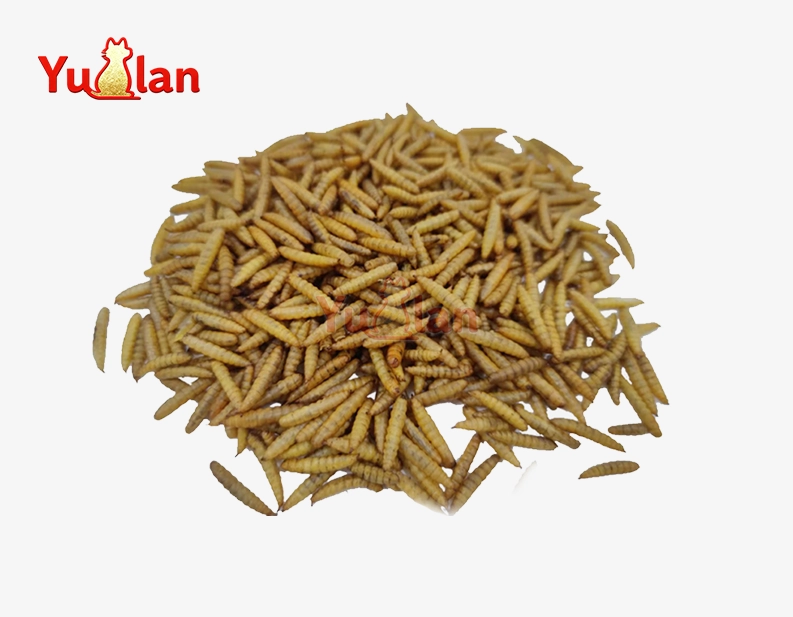
The global feed industry faces mounting pressure. Poultry producers require reliable, high-quality protein sources. Traditional protein supplements often carry significant environmental footprints or suffer from severe price volatility. Consequently, forward-thinking B2B partners are investigating novel inputs. Enter the insect protein sector, specifically dried mealworms for chickens. These small larvae represent a powerful convergence of sustainability, superior nutrition, and supply chain stability. This guide explores the compelling factors positioning mealworms as the next essential component in modern poultry diets.

Sustainable, Stable, and Nutritious Alternative Protein Solution
The shift toward alternative proteins is not merely a trend; it reflects necessary resilience planning within the feed industry. The reliance on soy and fishmeal exposes manufacturers to geopolitical risks and resource depletion concerns. Mealworms offer a compelling alternative pathway for protein procurement, addressing both consistency and environmental impact simultaneously. We must examine the fundamental reasons driving this robust pivot toward entomophagy in animal nutrition.
The Environmental Efficiency Advantage
Sustainability in feed production centers on input efficiency. Insects require drastically less land and water compared to conventional livestock farming. Mealworms, in particular, possess an exceptional feed conversion ratio. They convert feed input into body mass with remarkable efficiency. This means less strain on agricultural resources for the same protein yield. Furthermore, their shorter life cycle allows for rapid, scalable production schedules. This inherent efficiency greatly enhances the sustainability profile of any feed incorporating dried mealworms for chickens.
Mitigating Supply Chain Volatility
For large-scale feed production, supply chain logistics must be consistent. Changes in the market frequently affect the price and accessibility of plant-based proteins like soy. However, an indoor, regulated environment is provided by insect farming. This reduces the hazards brought on by pests, weather patterns, and political unrest in the area. Long-term contracts for dry mealworms for chickens with consistent quality standards can be obtained by manufacturers. Reliable production planning and more stable pricing models are made possible by this supply security.

Nutritional Superiority for Poultry Health
Poultry thrives on high-quality, easily digestible protein. Mealworms are naturally rich in essential amino acids crucial for growth and egg production. Beyond protein content, they offer significant levels of healthy fats, including beneficial fatty acids like lauric acid. This nutrient density contributes positively to overall bird health and vitality. For producers, this translates directly into improved feed efficiency ratios and better end-product quality, whether meat or eggs.
Processing Science and Application Value
Moving beyond the general benefits requires a deep dive into the actual material science of the processed insect product. Buyers need assurance that the raw ingredient maintains its biological value through rigorous processing.
Compositional Analysis: More Than Just Protein
While high protein content (often exceeding 50% in dried forms) is a key driver, the full spectrum of nutrients in dried mealworms for chickens adds substantial value. They contain vital micronutrients often lacking in standard cereal-based rations. These include B vitamins, minerals such as iron and zinc, and natural pigments like carotenoids. These pigments are particularly important, as they can help improve yolk color in eggs, meeting specific market demands.
The Drying Process: Stability and Safety
Consistency of the final product hinges entirely on the drying method employed. Appropriate drying eliminates pathogens and drastically extends the product's shelf life. A well-executed drying process ensures the fat content remains stable, preventing rancidity which can quickly degrade feed quality. High-quality suppliers focus on low-temperature drying technologies to preserve the delicate amino acid profile. This attention to processing safeguards the ingredient’s nutritional profile from farm to feed mill.
Digestibility and Bioavailability
For any protein source to be effective, it must be highly digestible by the target animal. Studies confirm that the protein structure in mealworms offers high bioavailability for poultry. The fats and minerals are also presented in forms readily usable by the chicken's digestive system. This superior digestibility means less waste and better utilization of the nutritional content per kilogram of feed added. This efficiency ultimately lowers the true cost of protein inclusion.

Supplier Evaluation
A supplier's demonstrated dedication to operational scalability and quality processes is the foundation of trust. B2B buyers of dried mealworms for chickens need to consider the manufacturer's whole operational infrastructure in addition to the ingredient itself.
Strict Quality Assurance and Global Accreditation
For global feed ingredients, safety and quality compliance are unavoidable requirements. Reputable vendors need to possess stringent, verifiable international certifications. These guidelines demonstrate that systematic safety management is followed along the whole production chain. ISO22000, BRC food safety certification, and IFS certifications, among others, show that the provider follows internationally recognized quality standards. Hesitant purchasers are immediately reassured by these documents.
Supply Chain Integration and Scalability
Infrastructure is necessary for a reliable supply chain, not just well-meaning people. Unmatched supply reliability is provided by a partner with several manufacturing bases, GMP-compliant plants, and direct access to raw material sourcing. Lead times are reduced by this integration, which enables responsive production cycles and steady inventory reserves. Even during periods of high market demand, this capacity guarantees that your demand for dry mealworms for chickens may be regularly satisfied.
Personalization for Formulation Achievement
Flexibility is required in the current feed industry. A top provider need to have extensive OEM and ODM skills. Supporting particular formula modifications, distinctive product alterations, or specialty packaging designs are examples of this. Adaptability guarantees that the supplied insect protein satisfies the particular regulatory criteria of your target region and seamlessly integrates into your current production lines. This capacity turns a straightforward transaction into a true cooperative relationship.

Dried Mealworms for Chickens Supplier: Suqian Ruixin Yunlan Technology
To transition confidently into utilizing insect-based protein, partner with an enterprise that exemplifies reliability and proven quality across the entire supply chain. Suqian Ruixin Yunlan Technology is a full-industry chain enterprise dedicated to providing superior pet and animal nutrition solutions for global B2B partners.
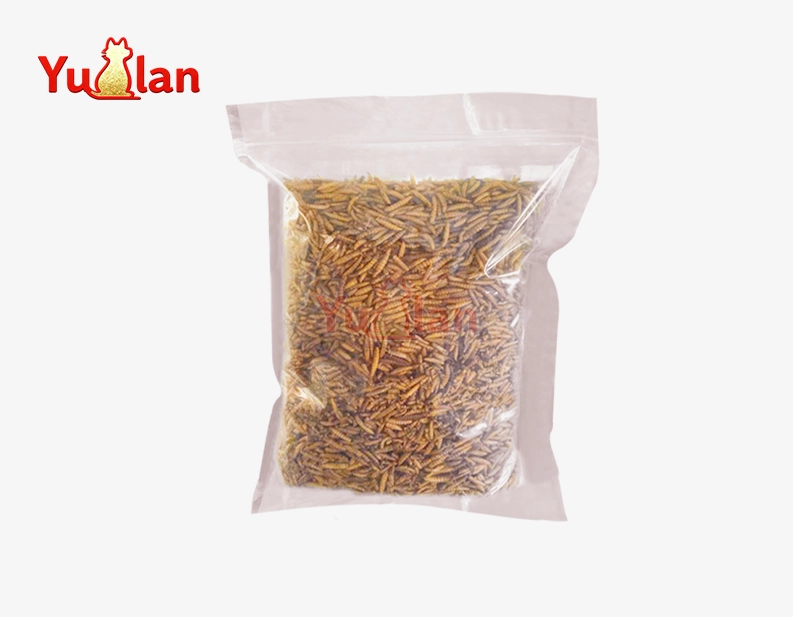
We specialize in high-quality dried mealworms for chickens, ensuring they are consistently processed to maximize nutritional value and safety. Our product suite extends beyond this core ingredient to include flavoring agents, enzymatically hydrolyzed products, environmentally friendly straw cat litter, various dried and freeze-dried pet snacks, wet pet food, and a comprehensive range of pet supplies. This diversity showcases our ability to cater to multifaceted market needs under one reliable partnership umbrella.
We pride ourselves on our strong customization capability. We fully support OEM and ODM cooperation, adapting our production flexibly for formula development or bespoke packaging needs. We commit to delivering reliable quality, fast delivery, and seamless collaboration, balancing efficiency with quality across our standard 7 to 30-day production cycle. If you are seeking a consistent, sustainable source of high-grade animal protein to enhance your poultry feed offerings, we invite you to explore a partnership with us. For quotes or detailed product specifications, simply send an enquiry to minghuixu6717@gmail.com.
FAQs
Q1: What is the difference between mealworm and soybean growing in terms of environmental impact?
A: When compared directly to soybean production, insect farming is often far more resource-efficient because it uses a lot less space, water, and feed inputs per unit of protein produced.
Q2: When using dried mealworms for hens, are diseases a concern?
A: International food safety certifications attest to the fact that reputable producers use strict processing, typically incorporating controlled drying and heat treatment techniques, to eliminate pathogenic hazards.
Q3: Can conventional protein sources in chicken feed be entirely replaced by dried mealworms?
A: Despite being extremely nutritious, dried mealworms for chickens are frequently used as a high-value supplement or partial replacement rather than a 100% complete replacement in order to optimize amino acid profiles and improve overall feed quality.
Q4: When placing an order with a fully integrated supplier, what is the average production cycle time?
A: By striking a balance between meticulous quality assurance and the requirement for on-time delivery, fully integrated suppliers frequently accomplish efficient cycles, usually spanning from 7 to 30 days.
References
- FAO reports on the environmental efficiency and scalability of insect farming compared to conventional livestock protein production.
- Poultry science journals detailing the amino acid profiles and digestibility rates of insect meal in avian diets.
- Industry documentation regarding the necessity and impact of ISO22000, BRC, and IFS certifications in the global feed ingredient market.
- Technical literature on low-temperature drying effects on fat stability and nutrient retention in entomological products.
- Market analyses highlighting the volatility trends in traditional feed protein commodities like soybean meal.