- English
- French
- German
- Portuguese
- Spanish
- Russian
- Japanese
- Korean
- Arabic
- Irish
- Greek
- Turkish
- Italian
- Danish
- Romanian
- Indonesian
- Czech
- Afrikaans
- Swedish
- Polish
- Basque
- Catalan
- Esperanto
- Hindi
- Lao
- Albanian
- Amharic
- Armenian
- Azerbaijani
- Belarusian
- Bengali
- Bosnian
- Bulgarian
- Cebuano
- Chichewa
- Corsican
- Croatian
- Dutch
- Estonian
- Filipino
- Finnish
- Frisian
- Galician
- Georgian
- Gujarati
- Haitian
- Hausa
- Hawaiian
- Hebrew
- Hmong
- Hungarian
- Icelandic
- Igbo
- Javanese
- Kannada
- Kazakh
- Khmer
- Kurdish
- Kyrgyz
- Latin
- Latvian
- Lithuanian
- Luxembou..
- Macedonian
- Malagasy
- Malay
- Malayalam
- Maltese
- Maori
- Marathi
- Mongolian
- Burmese
- Nepali
- Norwegian
- Pashto
- Persian
- Punjabi
- Serbian
- Sesotho
- Sinhala
- Slovak
- Slovenian
- Somali
- Samoan
- Scots Gaelic
- Shona
- Sindhi
- Sundanese
- Swahili
- Tajik
- Tamil
- Telugu
- Thai
- Ukrainian
- Urdu
- Uzbek
- Vietnamese
- Welsh
- Xhosa
- Yiddish
- Yoruba
- Zulu
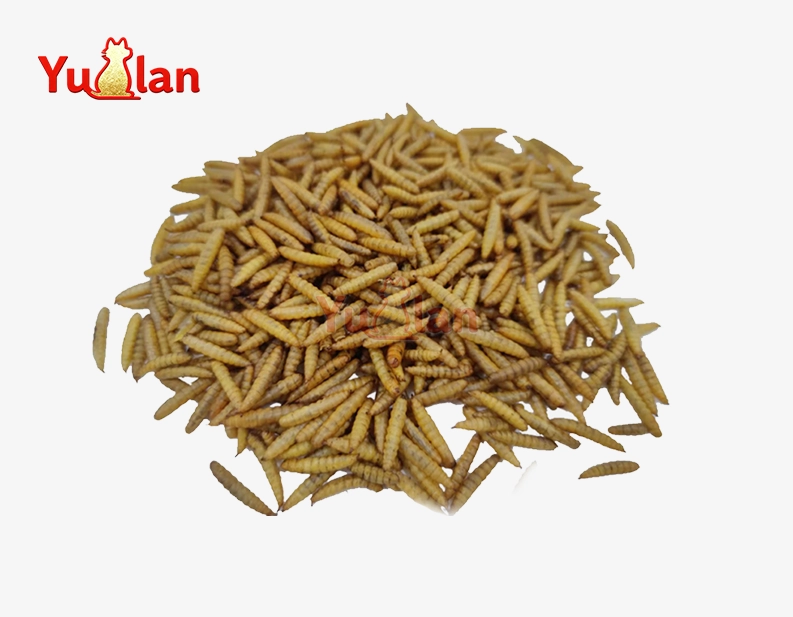
Chickens can easily eat mealworms chicken feed when they are 8 to 10 weeks old, when their digestive systems are fully developed. For grown chickens, mealworms are the best thing to give them, especially when they are molting (in the winter) or laying eggs, when they need more energy. Mealworms should only be given as treats or extra food and not as their main source of nutrition. To keep their nutrition balanced, they shouldn't get more than 10% of their daily feed from mealworms.

Understanding Mealworms as Chicken Feed
Today, more people want to feed their chickens healthy food, and mealworms are a great way for chicken farms to get energy. If you compare mealworms to other feed, they are very nutrient-dense because they have about 35% fat and 50% protein. They have a lot of the same amino acids that chickens do to grow and lay eggs at their best.
Nutritional Profile of Dried Mealworms
Researchers in agriculture have found that amino acids like lysine, methionine, and threonine can be found in dried mealworms. For birds to grow hair and muscles, they need these acids. Protein from mealworms is better for you than protein from soybean meal, which is what most commercial chicken feeds are made of.
Food that has been microwave-dried keeps all of its nutrients and gets rid of any bugs or parasites that could be bad for your flock's health. The food's taste stays the same, which birds love, and vitamins that get lost in heat are kept. Instead of choices that have been processed with chemicals, pure dried mealworms don't have any added chemicals or pesticides that might be bad for chickens' health in the long run.
Benefits for Poultry Health and Performance
Giving mealworms chicken feed every day makes their immune systems stronger by making their guts healthy and increasing the number of good bugs that live there. Birds' metabolisms are under a lot of stress when they molt, but the high protein amount helps feathers grow back fast. When hens lay eggs and are fed mealworm vitamins, the eggs have stronger shells and brighter yolks because the hens receive more good stuff.
Giving mealworms to chickens makes them hunt naturally, which reduces behaviors that happen when chickens are stressed in chicken farms. It has been shown that chickens that eat mealworms regularly are more busy and happy in general. Because of this behavior improvement, output measures are better and death rates are lower across all business activities.
When and How to Feed Mealworms to Chickens
To get the most health benefits from mealworms chicken feed vitamins, and keep your stomach from giving you trouble, you should take them at the right time. Chicks smaller than 8 weeks should not be given mealworms until their digestive systems are fully grown enough to handle high-protein supplements. They should be given special starting feeds instead.
Age-Appropriate Feeding Guidelines
Adult chickens that are more than 16 weeks old can eat mealworms every day without getting sick. Sheep that lay a lot of eggs need more protein, and good mealworm food can help them get it. They grow faster when mealworms are added to their main food sources in the last few weeks before they are handled.
The season also changes when is the best time to eat. It is cold outside, so you need to eat more to keep your body temperature steady. This is the best time to use mealworms. When chickens molt, they need more protein to help their new feathers grow. Giving them mealworms can cut down on this time of worry and make it go faster.
Feeding Methods and Portion Control
Eating the right amount of food keeps your diet in check and stops you from eating too much, which can make your stomach upset. Depending on how much the chicken weighs and how much it produces, 1 to 2 tablespoons should be given every day. You shouldn't use these amounts instead of professional feeds that contain the right amounts of minerals and vitamins.
How the business is fed depends on its size and the preferences of the people in charge. Mealworms are often put around the coop on small fields to teach the animals how to find food on their own. Food businesses can either give them out automatically or mix dried mealworms into full feed mixes. There are farmers who soak dried mealworms in warm water to make them taste better and make them more moist. This works great in dry places or when it's hot outside.
Storage and Handling Considerations
If you keep mealworms in the right way, they stay good and don't go bad, which could be bad for chicken health. Once mealworms have been dried, they need to be kept somewhere cool and dry, away from water and direct sunlight. Pests can't get into food that is covered, and the calories stay the same for longer. It can save you money to buy in bulk, but make sure you have enough storage room to keep the quality of the goods.
The food should stay the same size, have little to no dust or dirt on it, and not smell bad, which could mean it's going bad. A chicken will like the mild, sweet smell of fresh mealworms. If something changes color or smells funny, it's probably worn out and should be thrown away to keep your health safe.

Procurement Guide for Bulk Mealworm Chicken Feed
Before you buy mealworms chicken feed, you should think about how good the seller is, what the product is, and how it will get to you. People who buy a lot of things should build relationships with sellers they can trust to meet quality standards and offer low prices.
Supplier Evaluation Criteria
People who are known to be trustworthy sellers make sure that the goods they sell are safe and reliable by using quality control systems and keeping track of them. Businesses that care about quality have even more peace of mind when they get certifications like organic, non-GMO, and food safety approvals. With the help of production scale signs, you can tell if a seller can get you a lot of things without stopping your supply chain.
How steady the service is and how much it costs to ship depend on how close it is to you. It's very important to do this for live mealworms that go bad fast. Suppliers that have been around for a while and have a lot of different buying networks and backup production sites keep supply chain risks to a minimum. Telling you a lot about how well a seller does their job and how good their service is is getting suggestions from other businesses that do the same thing.
Cost Optimization Strategies
When you buy in bulk, the prices are usually much lower than when you buy in a shop. Contracts that last a year make sure that customers get what they want when demand is high and keep prices fixed. When you use consolidated shipping plans, the cost of sending each thing is less, and packages are always on time.
You can save even more money by negotiating their payment terms. They may offer deals for paying early or longer payment terms that make it easier to manage your cash flow. When you use volume-tier pricing, the unit price goes down as the order size goes up. Adding mealworms to chicken feed is a good way for big chicken farms to save money on feed and make the food healthy at the same time.
Conclusion
Adding mealworms to chicken feed in a smart way makes the food healthier for the chickens and supports farming methods that are better for the environment, which is good for both customers and farmers. They should be between 8 and 10 weeks old when you start giving them mealworms. If an adult chicken needs more food, they eat them the most. Chicks lay more eggs, change their feathers more quickly, and do better generally when they eat good dried mealworms. To get the most out of your investment and keep your flock healthy, you need to pay close attention to how much you store, how you choose your sources, and how you control the amount.
Partner with Yunlan for Premium Mealworm Chicken Feed Solutions
With our full range of goods and knowledge as a quality mealworms chicken feed maker, Yunlan is ready to help you reach your goals for flock nutrition. They are made from natural ingredients and don't have any chemicals or fillers in them. Because they are so healthy, they are the best food for your flock. We've been helping businesses all over the world for more than twenty years. Our supply chain management is reliable, and our low prices will help yours grow. You can get examples of our goods and talk to our expert team about your specific needs by emailing minghuixu6717@gmail.com.

FAQs
Q1:Can mealworms completely replace commercial chicken feed?
Mealworms should be added to full commercial feeds instead of being switched out for them because they provide proper nutrition with all the vitamins, minerals, and carbs that animals need. A chicken can get a lot of protein from mealworms, but they need a lot of different nutrients, which can only be found in well-planned total feeds. You should only use mealworms as a high-value extra and not as more than 10% of the daily feed.
Q2:What storage conditions preserve mealworm quality longest?
The best time to store something is when it's between 50°F and 70°F and less than 60% humidity. Our packages are covered so that bugs and water can't get inside and damage the goods inside. For 12 to 18 months, dried mealworms will stay tasty and healthy if they are stored properly. They should be kept out of direct sunlight and away from changes in temperature.
Q3:Are there risks associated with daily mealworm feeding?
Moderate daily use doesn't hurt your health as long as you don't change the size of your meals. Eating too many mealworms could be bad for your health because they are high in protein and fat. When you slowly add new items to chicken feed, you can watch to see if they have any stomach problems. You can get the benefits without any bad effects as long as you keep the right amount under control.
References
- Agricultural Research Service. "Nutritional Analysis of Dried Mealworms in Poultry Diets." Journal of Applied Poultry Research, 2023.
- International Poultry Science Association. "Insect Protein Sources for Commercial Chicken Production: A Comprehensive Review." Poultry Science International, 2024.
- University Extension Service. "Alternative Protein Sources in Modern Poultry Nutrition." Extension Bulletin on Sustainable Agriculture, 2023.
- National Academy of Animal Sciences. "Digestibility and Bioavailability of Mealworm Protein in Laying Hens." Animal Nutrition Research Quarterly, 2024.
- Feed Industry Association. "Cost-Benefit Analysis of Insect Protein Supplementation in Commercial Poultry Operations." Feed Technology Review, 2023.
- Sustainable Agriculture Research Foundation. "Environmental Impact Assessment of Alternative Protein Sources for Livestock Feed." Environmental Agriculture Studies, 2024.